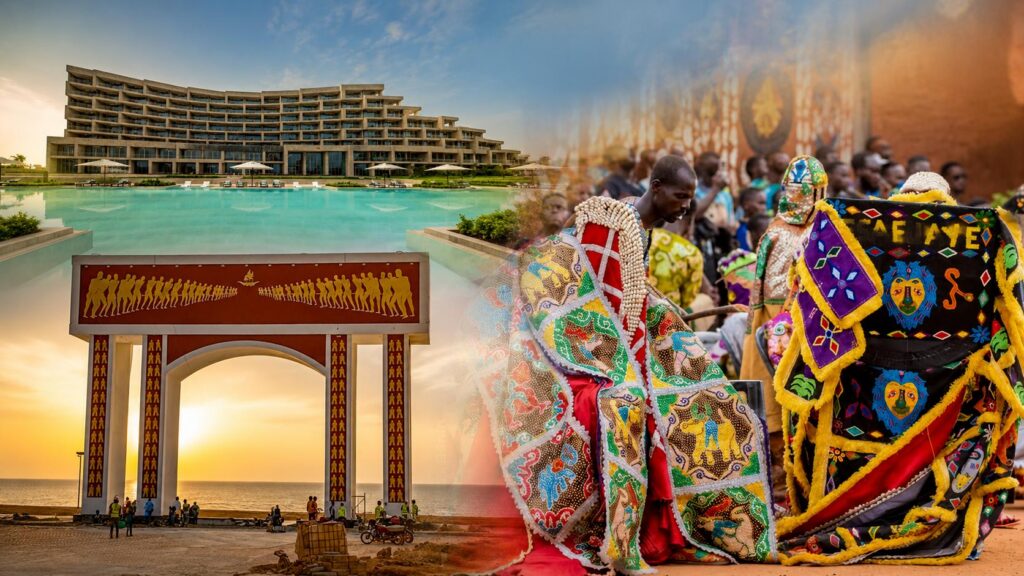
With nearly €2 billion invested in culture, heritage, and hotel infrastructure, Benin is rapidly becoming a top destination in West Africa, drawing travelers from across the region—especially from neighboring Nigeria.
Once overshadowed by more established tourist hubs in Africa, Benin has made a bold strategic move over the past decade. Through substantial public and private investments, the country has transformed its tourism landscape, reshaping both its cultural offerings and hospitality sector. The results are clear: Benin is now a magnet for travelers within the subregion, with Nigeria emerging as a key source market.
Nigeria’s growing influence on Benin’s tourism growth
At the heart of this transformation is the rising popularity of the Lagos-Cotonou tourism corridor. Just 90 minutes from Benin’s economic hub, Nigeria’s bustling commercial capital—home to over 20 million people—has become an essential driver of cross-border travel.
The impact is already visible:
- Weekend tourism surge: At the Sofitel Cotonou Marina, Benin’s first five-star hotel opened in late 2024, Nigerian guests now make up the largest share of weekend visitors, seeking relaxation, leisure, and escape.
- Easier access: Benin’s visa-free policy for all African nationals, combined with direct land travel via the Lagos-Cotonou route, eliminates the need for expensive regional flights—making the journey smoother and more affordable.
Local traditions fuel international interest
Benin’s cultural heritage is playing a central role in attracting visitors. Major festivals are drawing record crowds and positioning the country as a cultural powerhouse:
- Vodun Days in Ouidah: The 2026 edition attracted over 740,000 participants, up from 435,000 in 2025 and just 97,000 at its debut in 2024. Among 144,000 international visitors, 14.9% came from Nigeria—ranking it third among source markets, alongside Togo (20%) and France (36%).
- International Mask Festival in Porto-Novo: The third edition saw a significant rise in attendance, highlighted by the presence of the iconic Eyo mask from Nigeria and the Zaouli mask from Côte d’Ivoire, both symbols of shared West African heritage.
Expanding infrastructure to support growth
To accommodate rising visitor numbers and meet its goal of welcoming 2 million tourists annually by 2030, Benin is fast-tracking key infrastructure projects:
- International Vodun Museum (Porto-Novo): A €27 million public investment nearing completion.
- Club Med Avlékété: A luxury resort with 336 rooms, under construction for €100 million, set to open in 2027.
- Global hotel brands: Hilton is confirmed to arrive in Cotonou in 2028, and additional international hotel projects are planned for Ouidah.
To further boost economic impact, the 2027 Vodun Days festival will expand to a full seven-day event (January 2–9), maximizing local stays and revenue for communities nationwide.

More Stories
Niger’s junta turns on its own: how general Barmou’s fall exposes systemic instability
Mutiny in Niamey exposes fractures in Niger’s military leadership
What Niamey’s aid dependency means for its sovereignty claims