The human cost of expulsion: when livelihoods vanish overnight
For thousands of Burkinabè miners forcibly returned from Guinea, the triumphant rhetoric of economic sovereignty rings hollow. These young workers many of whom had built their livelihoods through artisanal gold mining now face an impossible question: how to rebuild their economic future in a country that offers no clear path to reintegration. While government statements emphasize national dignity and resource control, the reality confronting returnees is far more brutal: unemployment, financial ruin, and shattered family economies.
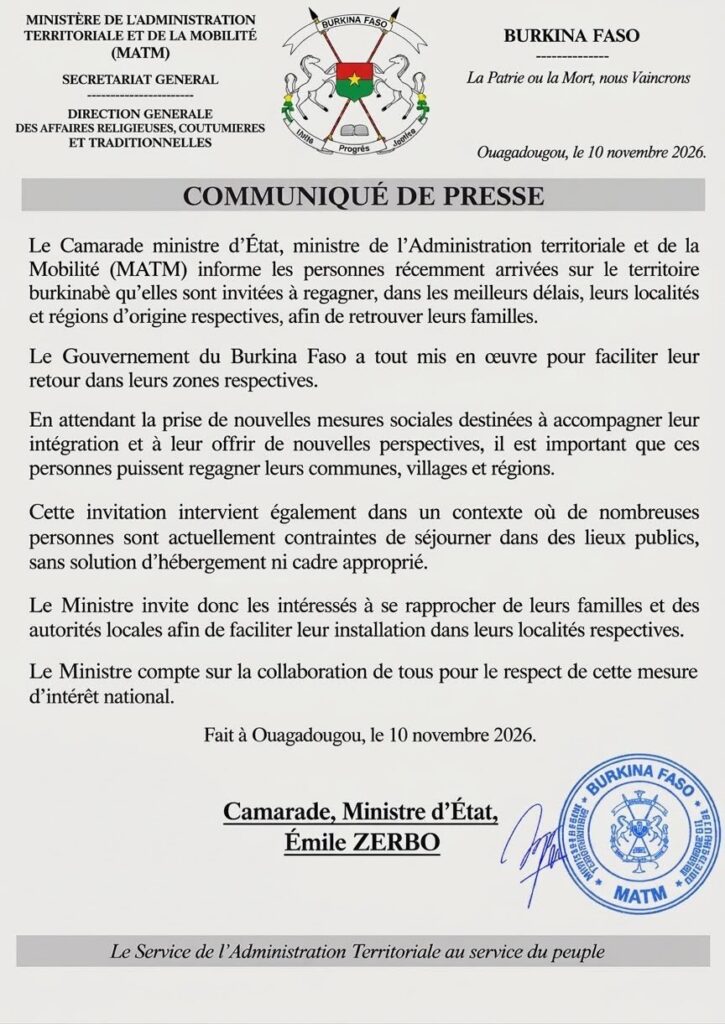
The authorities’ response has been notably vague. Rather than announcing structured reinsertion programs with measurable outcomes, returnees are advised to return to their villages and rely on family support. This administrative directive does little to address the core issue: how can a nation reclaim its mineral wealth while abandoning those who once extracted it?
From goldfields to unemployment: the broken promise of economic recovery
These miners did not leave Burkina Faso on a whim. For many, artisanal gold mining was not merely an occupation it was the sole means of supporting their families. Their expulsion from Guinea has not just relocated them; it has severed their income streams, collapsed local economies, and left entire households in financial ruin.
The government’s proposed solutions agriculture, livestock, vocational training are framed as viable alternatives. Yet these sectors demand capital, land, technical expertise, and market access resources that returnees simply do not possess. A few weeks of training without funding, or a cooperatively registered on paper without equipment, cannot replace lost earnings. Without tangible support, these recommendations amount to little more than empty gestures.
Why sovereignty must extend beyond rhetoric
The contradiction is glaring. Burkina Faso asserts control over its gold resources, yet fails to provide economic opportunities for those who once worked its mines. True sovereignty is not achieved by nationalizing deposits or denouncing foreign exploitation; it is measured by the state’s ability to transform natural wealth into jobs, income, and stability for its people.
If the government’s mining policy prioritizes industrial scale over artisanal workers, it risks deepening inequality. Thousands of returnees skilled in extraction but with no alternative income now find themselves trapped in a cycle of poverty they had once escaped through migration.
The missing link: sustainable financing for returnees
Access to capital remains the single greatest barrier to reintegration. Many returnees exhausted their savings to finance their return, while others arrive with no financial cushion. Without microcredit, startup funds, or public guarantees, the call to “reconvert” is meaningless. A one-size-fits-all approach ignores the diversity of returnees’ skills and needs some may thrive in agriculture, others in trade, but none can succeed without resources.
Moreover, the social consequences extend beyond individual hardship. Families dependent on mining incomes now face school fees, medical bills, and debt pressures that push households deeper into vulnerability. The government’s silence on these systemic challenges underscores a critical failure: its policies do not account for the human cost of expulsion.
Regulated artisanal mining: a viable path forward?
Burkina Faso’s push for mineral sovereignty must include a framework for legal, safe, and sustainable artisanal mining. This means establishing regulated sites, improving safety standards, and creating official gold-buying channels. Such measures would not only preserve livelihoods but also combat illegal mining, environmental degradation, and exploitative practices.
Yet without concrete investment in cooperatives, infrastructure, and market access, these initiatives remain theoretical. The government cannot claim to champion economic independence while abandoning the workers who once powered the sector.
A test of governance: from promises to results
The expulsion crisis has exposed a gaping flaw in Burkina Faso’s economic narrative. National dignity cannot be sustained on slogans alone. The true measure of leadership lies in tangible outcomes: how many returnees secure stable incomes? How many families escape poverty through government support? How many see their sacrifices rewarded with opportunity?
Until these questions are answered with data, budgets, and timelines not just speeches the plight of expelled miners will remain a stain on the government’s claim to sovereignty. The time for action is now; the cost of inaction is measured in broken lives and lost potential.
By Emmanuel Mbarga — Journalist