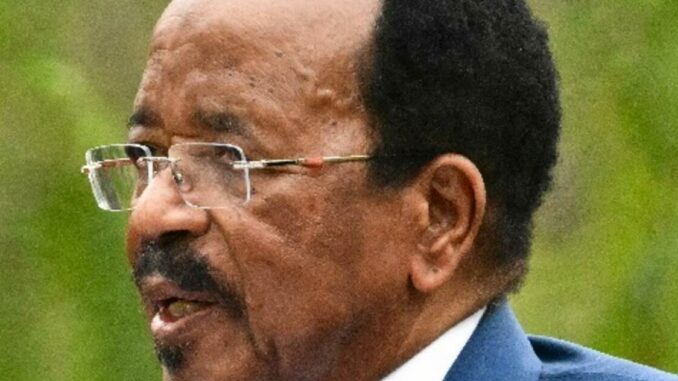
Eight weeks have now passed since Cameroonian President Paul Biya departed for what was described as a “short private stay in Europe,” yet he remains abroad. At 93 years old, the head of state inadvertently intensifies questions regarding his capacity to govern, while the conspicuous silence from authorities only amplifies speculation within an already uncertain post-electoral political landscape.
The government is actively working to temper the controversy. Several officials affirm that Paul Biya continues to fulfill his presidential duties remotely, underscoring that no constitutional provision dictates a time limit for a presidential visit overseas. From Yaoundé’s perspective, there is no power vacuum or institutional crisis; state affairs, according to official statements, are proceeding without interruption.
However, this official narrative struggles to convince opposition factions. The Movement for the Renaissance of Cameroon (MRC), led by Maurice Kamto, decries a significant lack of transparency. They contend that the Cameroonian populace deserves to be fully informed about the president’s health status and his ability to effectively carry out his responsibilities. For the MRC leadership, the secrecy surrounding the European sojourn merely exacerbates existing questions rather than allaying them.
Other opposition figures adopt a more institutionally focused interpretation. Cabral Libii, president of the PCRN, posits that the true challenge lies less in the head of state’s absence and more in the inherent weaknesses within the legal framework governing the exercise of power. In his view, the legislative and municipal elections slated for early 2027 present a crucial opportunity for comprehensive institutional reform.
With Paul Biya’s new mandate set to commence in just eight months, this prolonged absence reignites a long-standing debate concerning governance, presidential succession, and the critical need for enhanced transparency at the highest echelons of government. Far more than a mere dispute over a presidential trip, it starkly illuminates the vulnerabilities of a political system largely structured around a single individual who has held power for over four decades.
More Stories
Mali’s information war: can the public still trust the news when Maliweb.net amplifies the army’s narrative?
Will West Africa’s sleeping savings finally become its financial lifeline?
Can Benin and Spain turn cultural diplomacy into a lasting strategic advantage?