Six years of judicial standstill ends with partial renewal
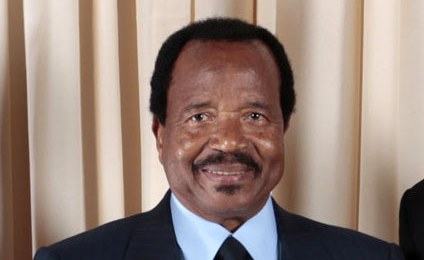
On June 2, 2026, President Paul Biya issued a decree renewing the composition of the Supreme Judicial Council—an institution that had remained inactive for nearly six years. While the move formally ends a prolonged legal and administrative uncertainty, it does little to address the backlog of unresolved cases that have accumulated during this period of institutional hibernation.
For six years, the Supreme Judicial Council—tasked with overseeing judicial appointments, promotions, sanctions, and safeguarding judicial independence—operated in near-total silence. Magistrates waited for career advancements, promotions stalled, and disciplinary proceedings remained unresolved, leaving both legal professionals and citizens in legal limbo.
Renewal without reform: A marginal overhaul
The presidential decree, signed on June 2, 2026, partially renews the Council’s membership. Ten of the fourteen titular members retain their positions, while Goni Mariam replaces Ali Mamouda as a new titular member. Among the alternates, four new faces—Alioum Fadil, Donald Malomba Esembe, Sockeng Roger, and Sali Dairou—join the ranks, replacing Abe Mikhael Ndra, Ernest Njumbe, Amadou Ali, and Goni Mariam, who was promoted to titular status.
The changes are minimal, reflecting a preference for stability over reform. No announcements have been made regarding the scheduling of future sessions or the processing of the backlog, leaving many to question whether this renewal will translate into tangible action.
The Council’s role and its prolonged inactivity
The Supreme Judicial Council, chaired by the Head of State, is constitutionally mandated to advise on judicial appointments, promotions, transfers, and disciplinary measures. In theory, it serves as a bulwark against executive interference in judicial independence. However, its prolonged dormancy—dating back to 2020—has rendered it a hollow institution.
Observers note that the Council’s last meaningful sessions occurred just before the global health crisis. Since then, it has operated in name only, leaving a trail of stagnant careers and unresolved cases. Magistrates have waited years for decisions on promotions and disciplinary actions, while new recruits remain in administrative purgatory.
A timeline of institutional failure
- 2020: The Council’s final active sessions.
- 2021–2024: A growing backlog of unresolved matters, including career advancements and disciplinary cases.
- 2025: Mandates of Council members expire without renewal, plunging the institution into legal uncertainty.
- June 2, 2026: Partial renewal of members, but no concrete steps toward resuming operations.
What the decree omits
The presidential decree marks a necessary administrative step, but it is telling for what it does not address. There are no indications of when the Council will reconvene, how pending cases will be processed, or what measures will prevent a recurrence of this paralysis.
No official communication has accompanied the decree to announce upcoming sessions or a working agenda. This distinction is critical: the Council’s paralysis was not merely a matter of expired mandates but a systemic failure to function. Renewing members alone does not restore an institution’s vitality.
Structural implications for judicial governance
Beyond the Supreme Judicial Council, this episode underscores a broader challenge in Cameroon’s judicial governance: the overreliance on executive will to activate key institutions. When an institution chaired by the president ceases to meet, it is not a technical anomaly but a reflection of policy choices with tangible consequences—delayed careers, unresolved cases, and frustrated litigants.
The independence of the judiciary hinges on institutions that operate with regularity, predictability, and transparency. An organ whose sessions depend solely on the president’s agenda cannot credibly uphold this mandate.
What comes next?
The June 2, 2026, decree signals an acknowledgment that the status quo was unsustainable. Yet, renewal alone will not satisfy magistrates, litigants, or independent observers. They demand action: resumed sessions, processed promotions, and resolved disciplinary cases. Most importantly, they await the transformation of the Supreme Judicial Council into the functional, constitutionally mandated body it was designed to be.
The true measure of progress will not be the decree’s publication but the date of the Council’s next meeting.