With President Paul Biya nearing 94 years old and absent from public view for 57 days, Cameroon finds itself on a precarious edge. His prolonged stay in Geneva—officially described as a ‘private visit’—has triggered a cascade of military reshuffles that many interpret not as routine administrative moves, but as a dangerous descent into ethnic factionalism and power vacuum.
The president’s departure on June 7, 2026, accompanied by First Lady Chantal Biya, was framed as a brief sojourn. Yet, two months later, no public appearances have been made, no clear statement issued. Government spokesperson René Sadi insists the president is ‘alive and returning soon,’ but skepticism has taken root across Yaoundé and beyond.
Military reshuffle raises red flags during presidential absence
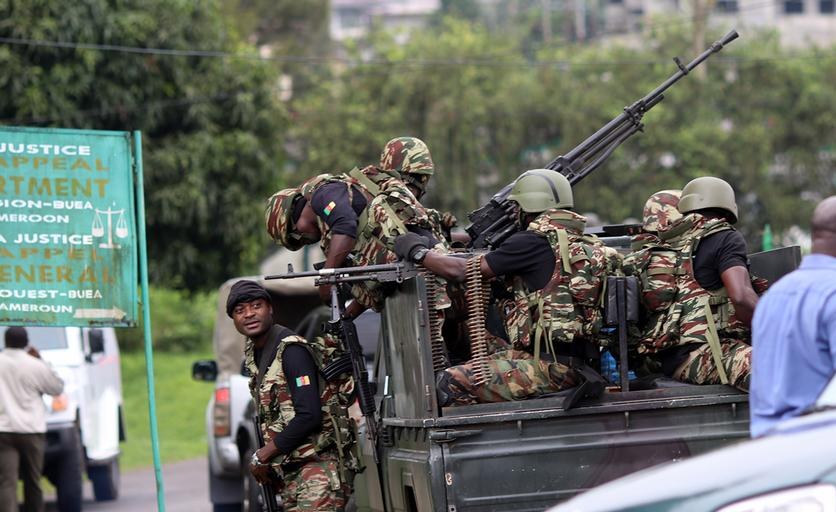
While Biya remains unseen, the inner circle has acted swiftly. A presidential decree—Decree No. 2026/265 on August 3, 2026—appointed General Beko’o Abondo Raymond Jean Charles as head of the Presidential Guard, a critical role responsible for the security of the head of state and the presidential palace. This was not an isolated move. Five new brigade generals, a new army chief of staff (General Ebaka Hippolyte), and six regional military commanders were also installed across four of Cameroon’s five military zones.
One retired colonel, speaking on condition of anonymity, emphasized a stark truth: ‘No one can make such high-level military appointments without the president’s direct authorization.’ The timing—amidst Biya’s unexplained absence—has fueled suspicions that these changes are part of a preemptive power consolidation, potentially along ethnic lines.
Two rival factions vie for control behind closed doors
Beneath the surface, a silent struggle rages within the corridors of power. Two dominant factions have emerged:
- Franck Biya’s clan: The president’s eldest son, seen as the guarantor of the regime’s continuity.
- Chantal Biya’s faction: Centered around the First Lady and Ferdinand Ngoh Ngoh, Secretary-General of the Presidency, a figure of immense influence.
This internal rivalry intensified following a constitutional revision in April 2026 that reintroduced the office of vice president—ostensibly to stabilize succession. Yet, the position remains vacant, leaving the mechanism paralyzed and the nation in limbo.
Constitutional paralysis deepens national uncertainty
The absence of a vice president means Cameroon cannot legally declare a power vacuum, even as Biya’s prolonged absence stretches into its ninth week. Opposition leader Maurice Kamto and his Movement for the Rebirth of Cameroon (MRC) have taken legal steps, with deputies urging the Constitutional Council to recognize a constitutional crisis. Jean-Michel Nintcheu, a prominent MRC lawmaker, declared bluntly: ‘The Council must acknowledge the vacancy at the head of the State.’
But without the vice-presidential safeguard, the process is blocked. Cameroon is trapped in a constitutional deadlock, with no clear path forward.
Whispers of a grim scenario: is Biya’s health beyond recovery?
Speculation swirls around Biya’s health. Some reports suggest a knee surgery in early July, while others hint at post-operative complications. Yet, no official medical update has been provided. Public frustration is palpable. Roger Justin Noah, Secretary-General of the MRC, questioned the legitimacy of the government’s silence: ‘Why manipulate the electoral calendar only to vanish abroad for weeks? If the president is unwell, the Cameroonian people deserve to know.’
The government has denied rumors of falsified decrees, yet doubts persist. The combination of Biya’s prolonged absence, the controversial military appointments, and the constitutional impasse has led some analysts to question whether key figures are preparing for a post-Biya era—one that may already be underway.
Ethnic militarization: a path that history warns against
Analysts draw chilling parallels to Rwanda’s 1994 genocide, where ethnic manipulation of the military accelerated a descent into catastrophe. In Cameroon, ethnic tensions simmer beneath the surface. The idea of any single ethnic group ‘owning’ the state has long been a corrosive force, threatening the fragile national compact.
Jean-Pierre Bekolo, a prominent commentator, warns: ‘We are witnessing the militarization and tribalization of succession—a path whose outcome no one can predict.’
Can Cameroon avert disaster?
The warning signs are clear, but the outcome is not yet written. Three decisive actions could still restore stability:
- Transparency: The government must disclose Biya’s health status and expected return timeline.
- National dialogue: A structured dialogue between political forces to de-escalate ethnic and regional tensions.
- Vice-presidential appointment: Filling the vacant vice-presidential post to restore constitutional order and public trust.
Time is running out. As Bekolo cautioned, ‘History will remember not only the actions taken, but the silences kept.’ Cameroon stands at a crossroads. The choice between reckless power grabs and responsible leadership will determine whether the nation slides into chaos or steers back toward stability.
More Stories
Can Ousmane Sonko and Sadio Mané’s Bambali agro park truly transform Sédhiou?
Senegal’s palm oil gambit: can 60,000 hectares and Indonesian expertise finally end import reliance?
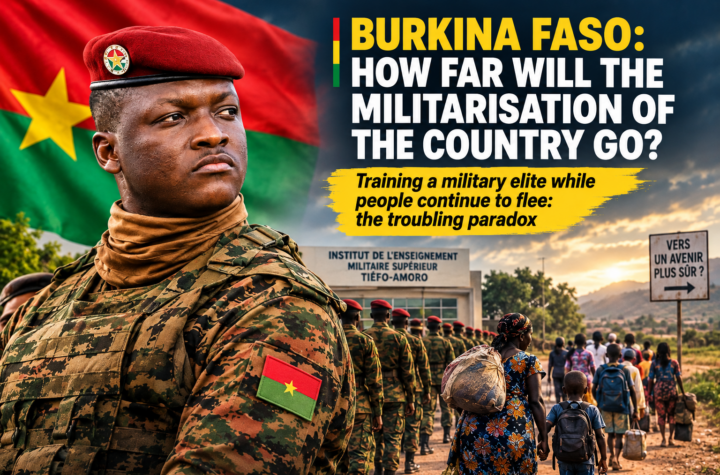
Can Burkina Faso’s military buildup succeed while its people keep fleeing?