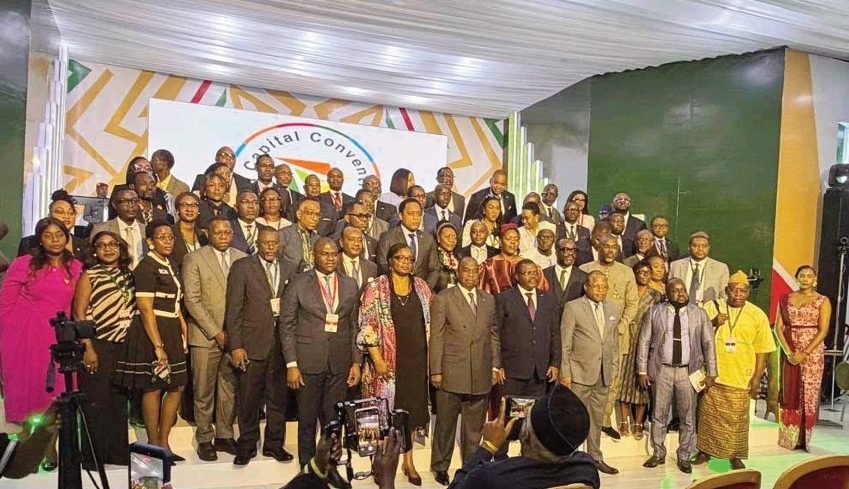
As Cameroon’s finance minister, Louis Paul Motazé, outlined bold new priorities at the Diamond Capital Convention in Douala, one critical question looms: Can the region’s capital markets actually deliver the funding needed to transform local economies, or are they being left behind?
On September 24, 2026, Louis Paul Motazé, Cameroon’s Minister of Finance, addressed the opening ceremony of the inaugural Diamond Capital Convention in Douala. This high-level gathering brought together government officials, investors, financial institutions, businesses, regulators, and market stakeholders to address the pressing challenges of mobilizing capital for real economic needs across Cameroon and the Central African Economic and Monetary Community (CEMAC).
The minister’s central message was clear: the current capital market infrastructure in Cameroon and CEMAC is not deep enough, dynamic enough, or attractive enough to fully support the scale and ambition of the region’s economic transformation. He called for urgent action to strengthen financial ecosystems, arguing that without deeper, more liquid markets, the region risks missing out on critical opportunities for growth and diversification.
Redirecting capital toward productive sectors
In his keynote address, Minister Motazé highlighted the need to mobilize capital more effectively and direct it toward high-impact areas that drive economic activity, job creation, and long-term value. This includes strategic sectors such as industrialization, local processing of raw materials, infrastructure development, energy, and digital transformation.
He emphasized that these sectors are not only essential for economic resilience but also offer the highest potential for return on investment and sustainable development. By aligning financial flows with productive economic activities, Cameroon and CEMAC can reduce reliance on external borrowing and foster homegrown prosperity.
Mobilizing domestic savings: a game-changer for local economies
Beyond redirecting capital, another key focus of Motazé’s strategy is mobilizing domestic savings. The development of a robust, credible, and inclusive capital market is seen as a pathway to unlocking the financial potential of households and businesses across the region.
This requires improving transparency, governance, and investor protection. It also demands the creation of innovative financial instruments tailored to local needs and conditions. A market that inspires trust will encourage greater participation from citizens and businesses, channeling savings into productive investments rather than speculative or short-term ventures.
Building trust through regulation and transparency
Trust, according to the minister, is the foundation of any successful capital market. He pointed to the need for strong regulatory oversight, reliable financial reporting, and clear rules to protect investors. These measures are not just about compliance—they are about ensuring that the market functions fairly, efficiently, and in the public interest.
By fostering a culture of transparency and accountability, the government aims to attract both local and international investors, reduce risk perceptions, and create a stable environment where long-term capital can thrive.
From promise to progress: what’s next for Cameroon and CEMAC?
The Diamond Capital Convention served as a platform to turn ambition into action. Stakeholders at the event explored concrete solutions to strengthen capital markets, including policy reforms, financial innovation, and stronger collaboration between the public and private sectors.
The goal is to transform Cameroon and CEMAC into economic powerhouses powered by vibrant, resilient financial systems. For businesses, this means better access to financing. For investors, it means new opportunities. And for citizens, it means jobs, infrastructure, and a stronger economy.
The challenge now is execution. Policymakers, regulators, and market players must move from dialogue to tangible outcomes—ensuring that the capital markets of Cameroon and CEMAC become engines of sustainable growth, not just financial sideshows.

More Stories
Is the AES currency a real game-changer for West Africa or just political rhetoric?
Is Senegal’s 2026 budget revision pushing the economy to the brink?
Burkina Faso’s 300 armored vehicles: Is the ‘Made in Burkina’ success story built on fact or fiction?