Congo constitutional crisis: tshisekedi’s retreat amid c64 pressure
14 august 2026In the Democratic Republic of the Congo, President Félix Tshisekedi has opted to return the referendum law to Parliament for a second review, despite the Constitutional Court’s recent validation of the text with minor reservations. This move comes as the ultimatum issued by the opposition coalition C64 reaches its deadline this Saturday.
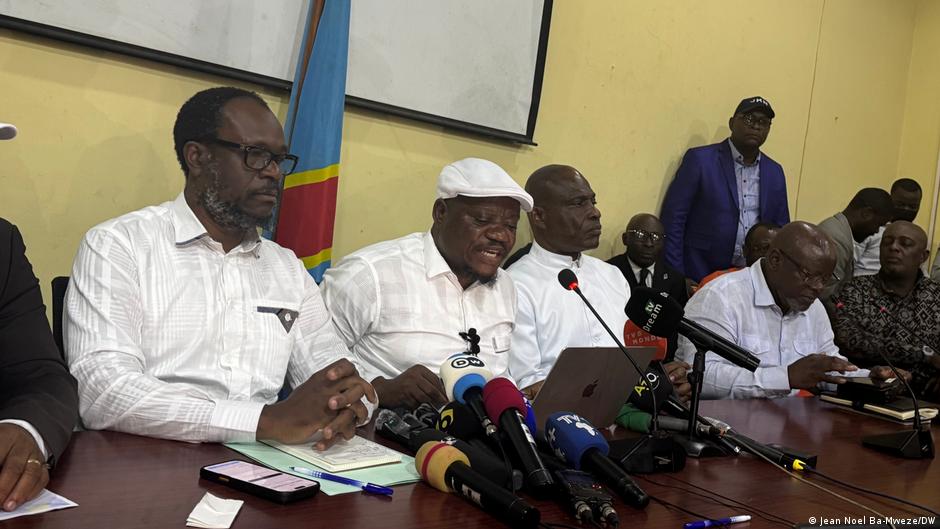
The C64 coalition, along with over sixty civil society organizations, insists that President Tshisekedi abandon his constitutional reform plans by August 15 and reject the referendum law. They are also calling for an inclusive national dialogue, though no date has yet been set for such discussions.
A tactical retreat by Tshisekedi under mounting pressure
Many had assumed the referendum law was already in effect due to the lack of presidential promulgation within the 15-day constitutional deadline. Instead, Tshisekedi has chosen to send the law back to Parliament for further deliberation, incorporating the Constitutional Court’s observations.
Professor Bob Kabamba, a political scientist at the University of Liège, Belgium, views this decision as a tactical retreat by Tshisekedi. However, he cautions that this does not signal an end to the president’s efforts to secure a path to remain in power beyond 2028, the end of his second term.
“It’s important to recognize the significant pressure from both domestic opposition and regional actors. These combined forces, alongside internal consultations, have pushed Tshisekedi to backtrack by requesting a second review of the law. It’s a setback, but one that doesn’t rule out his determination to find alternative routes to extend his tenure beyond 2028,” Kabamba explains.
C64 prepares for post-august 15 actions
The C64 coalition has welcomed the law’s return to Parliament but remains unyielding in its demands. As the August 15 deadline approaches, the coalition is preparing a series of decisive actions, though specifics remain undisclosed.
“At midnight on August 15, we will confirm that no progress has been made. We will then announce a series of precise, targeted operations led by our C64 strategy team. These measures are designed to restore reason to a regime that has stripped us of our freedoms and now threatens our national sovereignty,” declares Franklin Tshiamala, Secretary-General of Leadership for Governance and Development (LGD), linked to former Prime Minister Augustin Matata Ponyo.
The standoff deepens
From the government’s perspective, the referendum process remains a legitimate political and institutional initiative. The ultimatum from C64 is dismissed as an attempt to dictate the president’s agenda.
“The C64 ultimatum is their own construct, perhaps to satisfy external backers. But the Republic operates independently,” asserts Adolphe Amisi Makutano, a senior member of the Union for Democracy and Social Progress (UDPS), the party of President Félix Tshisekedi.
The political tug-of-war shows no signs of easing. The August 15 deadline could mark the beginning of a new chapter in the Democratic Republic of the Congo’s turbulent political landscape.
More Stories
Burkina Faso: can the official narrative on four years of Ibrahim Traoré’s rule withstand scrutiny?
Cameroon press freedom crisis: Can Vision 4’s suspension silence critical trial coverage?
Can Cameroon’s oil sector rebound from Thali permit’s financial crisis?