Congo politics: Tshisekedi’s strategic retreat as opposition keeps pressure on
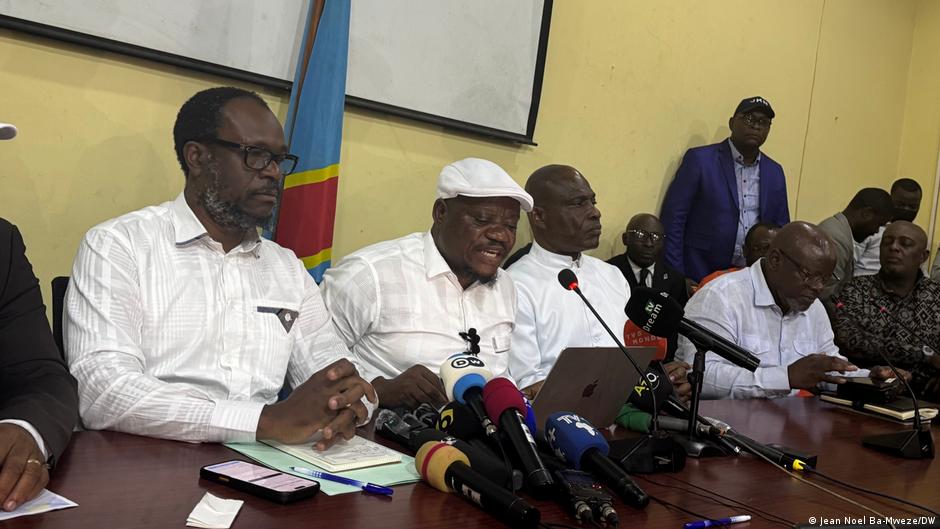
In the Democratic Republic of the Congo, President Félix Tshisekedi has decided to return the controversial referendum law to Parliament for a second reading, following the Constitutional Court’s conditional validation. This move comes just days before the ultimatum issued by the opposition C64 coalition expires on August 15. The coalition, alongside over 60 civil society organizations, has been demanding that the president abandon his constitutional reform plans and reject the referendum law by the deadline. They also insist on the immediate convening of an inclusive national dialogue, though no date has been set.
Tshisekedi’s tactical maneuver under mounting pressure
While many anticipated the referendum law would take effect automatically due to the lack of presidential promulgation within 15 days (as per Article 140 of the Congolese Constitution), President Tshisekedi chose instead to send the text back to Parliament. This decision follows the Constitutional Court’s observations, signaling a strategic retreat rather than an abandonment of his reform agenda.
Professor Bob Kabamba, a political scientist at the University of Liège in Belgium, views this as a retreat for Tshisekedi—but one that does not necessarily indicate a willingness to step down after his second term ends in 2028. “We must remember that there has been significant pressure from both the opposition and regional actors,” Kabamba explains. “These pressures, combined with internal consultations, have forced Tshisekedi to backtrack, at least temporarily, by requesting a second reading of the law. It’s a setback, but it won’t stop him from exploring other avenues to extend his time in office beyond 2028.”
C64 vows continued resistance beyond August 15
The C64 coalition has welcomed Tshisekedi’s decision to return the law to Parliament but remains steadfast in its demands. With the ultimatum set to expire at midnight on August 15, coalition leaders have hinted at decisive actions to follow. Franklin Tshiamala, Secretary-General of Leadership for Governance and Development (LGD) under former Prime Minister Augustin Matata Ponyo, warns: “Come August 15, we will confirm that nothing has been done. We will unveil a series of targeted operations through our C64 laboratory to force this regime to reverse course—it has already stolen our freedom and now seeks to steal our national sovereignty.”
The power struggle intensifies
From the government’s perspective, the referendum process remains a legitimate political and institutional initiative. The C64 ultimatum, officials argue, is an illegitimate demand that cannot dictate the president’s agenda. Adolphe Amisi Makutano, a senior member of the Union for Democracy and Social Progress (UDPS), Tshisekedi’s party, dismisses the coalition’s deadline as irrelevant: “This is their ultimatum, perhaps crafted to please their backers. But the Republic continues to function normally.”
The political showdown in Kinshasa is far from over. As the August 15 deadline approaches, the Democratic Republic of the Congo stands at the precipice of a new and uncertain political chapter, with both sides digging in for a prolonged battle.
More Stories
Can Senegal’s local elections be Bassirou Diomaye Faye’s make-or-break moment?
Senegal’s parliament: What power does Ousmane Sonko hold to derail the 2026 budget?
Senegal’s December 2 dilemma: can Diomaye Faye’s gamble reshape the nation’s future?