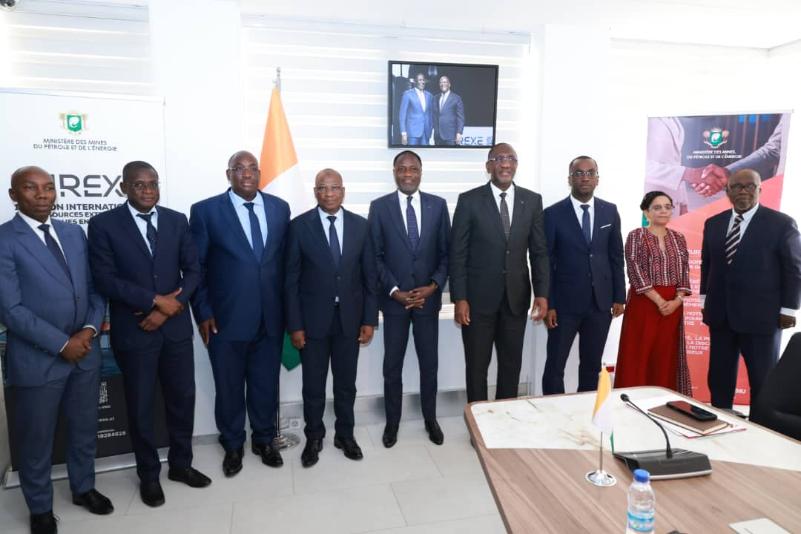
The National Energy Pact Steering Committee convened its inaugural session this Tuesday, August 4, 2026, at Abidjan’s SCIAM building under the leadership of Dr. Souleymane DIARRASSOUBA, Minister of Planning and Development. In attendance were key officials including Mamadou SANGAFOWA-COULIBALY, Minister of Mines, Petroleum, and Energy; the Deputy Chief of Staff from the Ministry of Economy, Finance, and Budget; the Deputy Chief of Staff of the Prime Minister; and the Technical Advisor to the Minister and Director of Cabinet of the President of the Republic. The gathering focused on strengthening the National Energy Committee’s operations and aligning commitments under the Pact.
The Committee assessed progress on current initiatives and greenlit a roundtable to secure funding for priority projects.
The National Energy Pact is part of the Mission 300 initiative, a joint effort by the World Bank and African Development Bank to bring electricity to 300 million people across Sub-Saharan Africa by 2030. Côte d’Ivoire adopted its Pact in January 2025, with its Prime Minister, Robert Beugré MAMBÉ, presenting it at the African Heads of State Energy Summit in Dar es Salaam, Tanzania. The country was selected as a model nation by Mission 300 partners. Twenty-nine African countries have now established similar national pacts. The implementation of Côte d’Ivoire’s Pact is valued at 6.56 billion dollars—approximately 3,980 billion CFA francs—between 2025 and 2030, with 1,177 billion CFA francs expected from private investments.
The governance structure includes a steering committee, a technical committee, and a coordination unit for the National Energy Pact (PNE).
During the session, the Minister of Planning and Development outlined the Pact’s four core objectives: universal electricity access, clean cooking solutions for households, a 45% renewable energy share in the energy mix, and financial sustainability of the sector. He emphasized alignment with the National Development Plan—the public policy framework—and the UN’s seventh Sustainable Development Goal, underscoring energy’s pivotal role in the nation’s economic and social progress.
The progress report presented to the Committee highlighted advancements toward 2030 targets. In 2025, Côte d’Ivoire connected 684,735 households—nearly 3.6 million people—exceeding its annual target by 105.3%. Since 2024, the country has extended electricity access to 7.7 million citizens, with a goal of 17 million by 2030. The national electrification rate now stands at 81.1%.
Reforms are progressing in parallel with these achievements.
The investment portfolio presented to the Committee for 2026–2030 encompasses priority projects valued at nearly 2,840 billion CFA francs, currently under financing mobilization efforts.
The Committee set new deadlines for pending actions and committed to ensuring their timely execution.
This rollout is built on a robust regional foundation. Côte d’Ivoire’s power system ranks among the largest in West Africa, and the country has long played a key role in sub-regional electricity exchanges. The projects outlined in the Pact will further integrate Côte d’Ivoire into the emerging West African electricity market.

More Stories
What price did Niger’s junta pay for survival after the August mutiny?
Will Benin’s 6.6 billion FCFA CCI budget for 2027 actually deliver for small businesses?
Can Ousmane Sonko and Sadio Mané’s Bambali agro park truly transform Sédhiou?