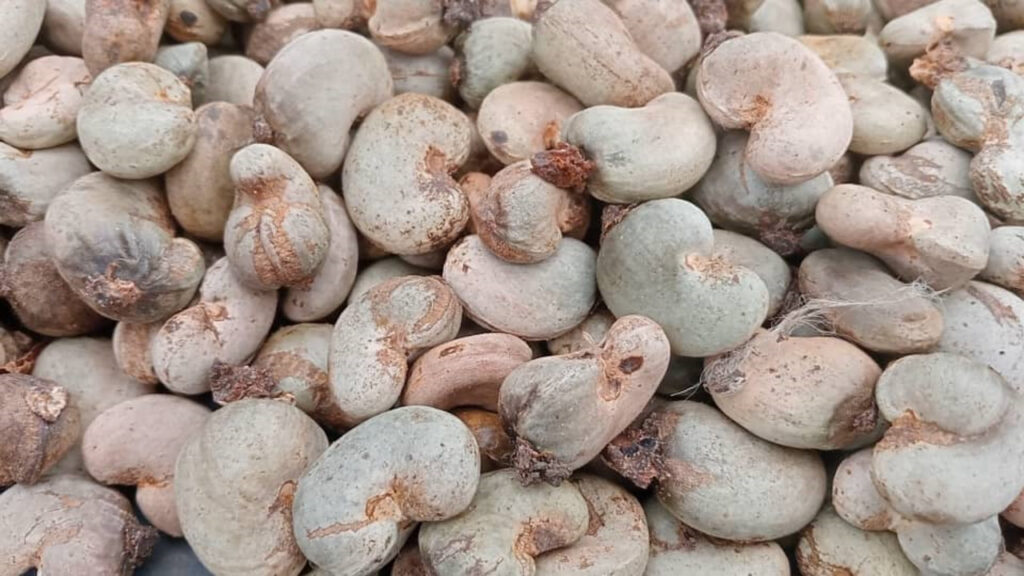
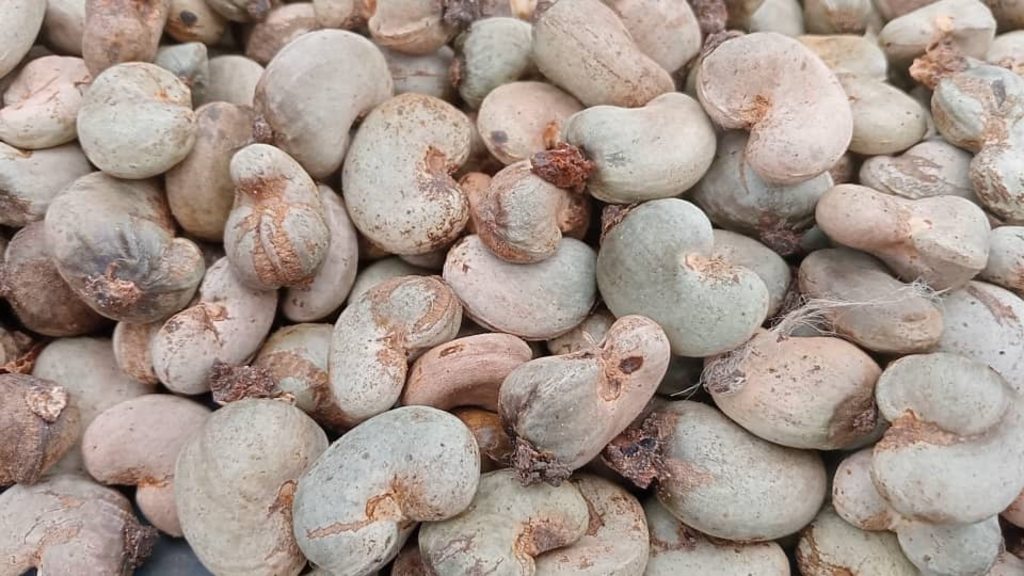
Côte d’Ivoire’s cashew harvest plummets in Bounkani due to climate shifts
Côte d’Ivoire’s cashew marketing campaign is in full swing, with the Cotton and Cashew Council projecting over 1.3 million tons this year. Yet, production may dip by 200,000 tons compared to last season. The northern region of Bounkani, already grappling with climate challenges, faces severe shortfalls due to erratic rainfall patterns disrupting cashew tree flowering cycles.
From Bouna, our special correspondent
Kouamé Ouattara tends to a 3-hectare cashew plantation that has yielded almost nothing this season. « Three years ago, I could harvest 500 kg per hectare. Now, I barely gather two bags across the entire 3 hectares. » The farmer blames the sharp decline on disrupted rainfall patterns. « Normally, heavy rains between November and December trigger flowering. This year, rains stopped in October, leaving a dry spell from October through February. Once flowering fails, recovery takes a full year—so the entire harvest is lost. »
Beekeepers maintaining hives in cashew orchards are also reeling from the crisis. « Honey production has collapsed, » notes Koffi Ouattara, president of the Koflangué beekeepers’ association. « Last year, we harvested 100 liters; this season, only 30 liters. It’s a devastating loss. »
Farming practices exacerbate the crisis
Beyond climate factors, experts point to suboptimal farming practices. Dr. Sibirina Soro, a researcher at Daloa University and national cashew project coordinator, highlights overcrowded plantations as a major issue. « Many orchards resemble dense forests because initial planting density wasn’t controlled. » He recommends restoring orchards to the recommended 100 trees per hectare.
Soro also conducts annual training to combat pest infestations, stressing the need for better farmer support. « In Côte d’Ivoire, cashew growers avoid chemical use, making them vulnerable to total crop failure during droughts. »