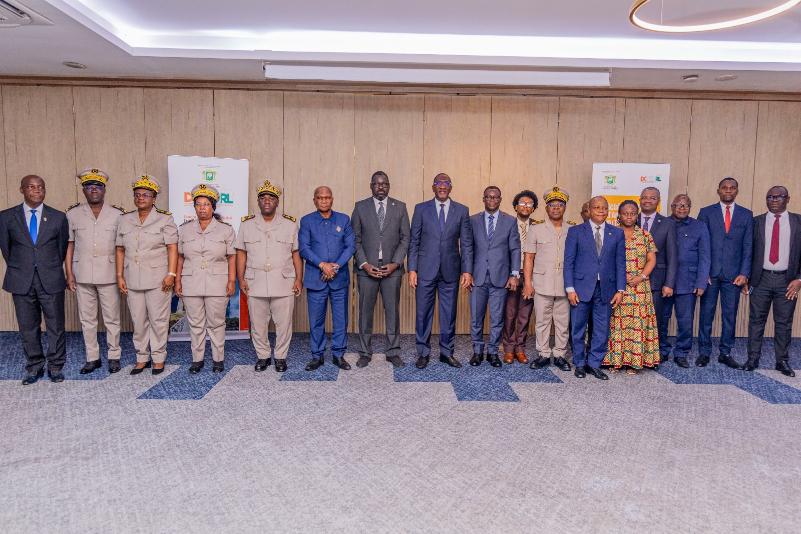
A landmark step forward has been taken in Côte d’Ivoire’s territorial development journey, with the Minister of Planning and Development, Dr. Souleymane DIARRASSOUBA, leading a major national workshop in Abidjan to validate the study for the National Spatial Planning Scheme (SNAT CI-2045). The gathering brought together a diverse coalition of stakeholders, including government officials, prefectural authorities, local governments, technical and financial partners, private sector representatives, civil society, academics, independent experts, and media professionals.
This milestone paves the way for the adoption of Côte d’Ivoire’s first-ever national territorial planning reference. The SNAT CI-2045 will equip the state with a comprehensive framework to guide both public and private investments, enhance policy effectiveness, and promote balanced regional development across the country.
Strategic vision under presidential leadership
Under the visionary leadership of President Alassane Ouattara, the Ivorian government is reinforcing its national strategic planning infrastructure. This initiative is designed to support the country’s economic, social, and environmental transformation over the coming decades.
Territorial planning is central to this strategy. It ensures a fairer distribution of investments, highlights the unique strengths of each region, and strengthens the coherence of development policies nationwide.
SNAT CI-2045: the long-term roadmap for balanced growth
The SNAT CI-2045 serves as the definitive blueprint for long-term spatial development. It maps out where public and private investments should be concentrated, aligns state, regional, and sectoral actions, and assigns specific development roles to each territory based on its potential.
« The 2026–2030 National Development Plan (PND) sets the medium-term priorities and investment pathways for national growth. The SNAT CI-2045 translates these into a territorial vision for the long term and will serve as the foundation for future National Development Plans. Together, these two frameworks ensure consistent, coherent public action across the entire country. As the ministry responsible for territorial planning and regional and local development, our mission is to ensure each area plays its full part in the national development story, » Dr. Souleymane DIARRASSOUBA emphasized.
Inclusive, evidence-based strategy emerges from broad consultation
The approved guidelines are the result of a rigorous, multi-level participatory process. They draw on an in-depth analysis of the national territory and address critical challenges: closing regional disparities, managing rapid urbanization, boosting local competitiveness, improving governance, protecting natural resources, and strengthening regional integration.
Five pillars for a resilient and prosperous Côte d’Ivoire
The SNAT CI-2045 is built on five strategic pillars: fostering balanced territorial development, optimizing urban and rural networks, strengthening local governance, building a high-performing and inclusive economy, and accelerating climate transition.
Next steps: from cabinet to parliament
Following the validation workshop, the draft scheme will be submitted to the government for endorsement, then forwarded to parliament for adoption under the proposed National Spatial Planning Act. Once enacted, Côte d’Ivoire will have its first-ever national territorial planning reference—a powerful tool to steer public and private investments toward the regions where they will have the greatest impact and to drive more equitable, nationwide development.




More Stories
What price did Niger’s junta pay for survival after the August mutiny?
Will Benin’s 6.6 billion FCFA CCI budget for 2027 actually deliver for small businesses?
Can Ousmane Sonko and Sadio Mané’s Bambali agro park truly transform Sédhiou?