
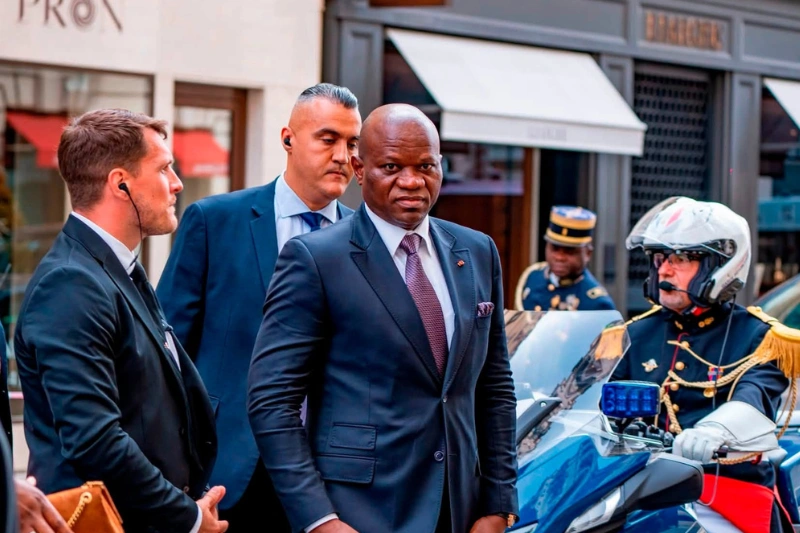
The State visit of President Oligui Nguema to France has set a new course for Gabonese-French relations, marking a historic turning point after more than four decades without such a high-level diplomatic engagement. The two nations are now committed to building a renewed partnership, moving away from past imbalances to establish a relationship built on mutual respect and equality.
At the heart of this shift is a bold economic vision championed by President Oligui Nguema, who seeks to end the long-standing practice of foreign firms extracting Gabon’s wealth without tangible benefits for the country. His approach emphasizes on-site processing of raw materials as a pathway to true sovereignty. This principle was clearly demonstrated during discussions on manganese, a critical resource for Gabon. Following intensive negotiations, a landmark agreement was reached with French group Eramet to accelerate local processing capabilities, with production targets set for 2031—a notable milestone despite falling slightly short of Libreville’s initial 2029 goal.
Manganese processing and economic autonomy
The agreement represents a strategic step toward reducing Gabon’s reliance on raw material exports by fostering domestic value addition. While further adjustments may be necessary, the commitment to building local processing infrastructure stands as a significant victory for Gabon’s economic independence. The timeline, though extended, underscores the complexity of large-scale industrial projects while remaining a clear advance toward self-sufficiency.
Modernizing Gabon’s infrastructure
Beyond minerals, the visit also yielded progress in infrastructure development. An agreement was signed to modernize the Transgabonais railway, a vital artery for national connectivity and trade. Financing through Proparco will enable critical upgrades, addressing long-standing operational challenges and reinforcing Gabon’s logistical competitiveness.
Meanwhile, defense cooperation took on a new dimension as Gabon redefined its security partnerships. This recalibration aligns with the country’s broader ambition to diversify alliances and reduce dependence on any single foreign power, a theme President Oligui Nguema has consistently emphasized.
Diversification and strategic autonomy
During his Paris visit, President Oligui Nguema underscored Gabon’s commitment to broadening its international partnerships. While France remains a key ally, Gabon is actively pursuing collaborations with China, Turkey, and India to enhance resilience and economic leverage. His remarks—“Yesterday, Paris was our historical partner. Today, we engage with many. Gabon is a magnet for opportunity and will remain open to all.”—signaled a clear departure from dependency toward a more dynamic, multipolar engagement strategy.
The message resonated strongly in European capitals: Gabon is no longer content with passive participation in global trade. Instead, it is asserting its role as a proactive, sovereign actor shaping its economic and security future. As the agreements take shape, the Gabonese people await tangible outcomes, confident that this visit has laid a solid foundation for progress.
More Stories
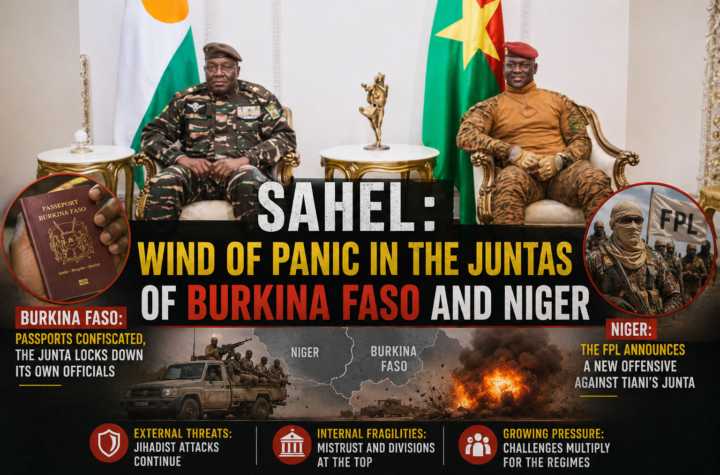
Sahel: escalating pressures confront military authorities in Burkina Faso and Niger
Niger-ECOWAS: navigating the diplomatic thaw after the coup
Nigeria backs polisario front in western Sahara dispute