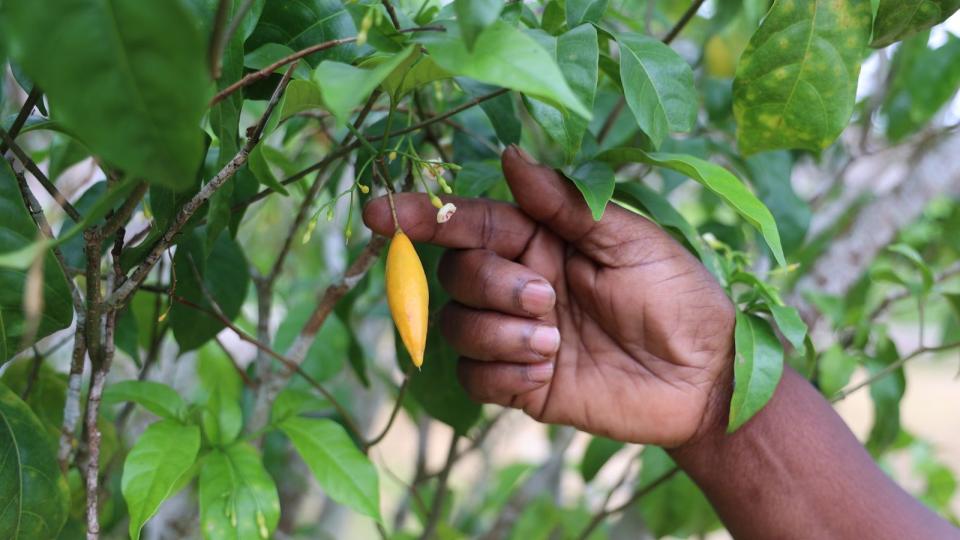
Deep within Gabon’s lush forests grows a sacred shrub whose roots hold the key to a modern medical revolution. Iboga, long revered in traditional rituals, is now at the center of a bold national strategy to reclaim control over its most valuable natural treasure. As opiate addiction ravages communities worldwide, this unassuming plant has emerged as a promising solution—sparking international demand that Gabon is determined to meet on its own terms.
For decades, foreign operators exploited Gabon’s iboga without sharing its economic rewards. That era is ending. Local advocates and conservationists are rallying to protect this cultural heritage. Near Cap Esterias, the NGO IDRC Africa has begun integrating iboga into sustainable farming projects. Ulysse Bekale, a local land-use planner involved in these efforts, emphasizes the urgency: “This is our birthright—we must defend it.” He envisions a future where Gabon doesn’t just export raw iboga, but develops its own certified medicines to disrupt the black market.
From forest to pharmacy: mastering the science of healing
Transforming a plant steeped in spiritual tradition into a regulated medical product is no small feat. Pioneering Gabonese researchers, including Dr. Yoan Mboussou, have already developed iboga-based derivatives such as capsules, therapeutic teas, and even chocolate formulations. Their next goal? Uniting Gabon’s medical research community under a single, standardized framework to ensure quality, safety, and reproducibility.
To compete on the global stage, Gabon must build state-of-the-art extraction facilities capable of isolating iboga’s active compounds with precision. The vision includes specialized clinics where patients can access iboga therapy under strict medical supervision—a far cry from the unregulated practices that have tarnished its reputation abroad.
Stronger laws and global ambition: Gabon’s green diplomacy push
Gabon has taken decisive legal action to safeguard its iboga heritage. A new decree now regulates every stage of the plant’s use—from sustainable harvesting to ethical commercialization. Yet industry leaders insist this is only the beginning. They’re calling for increased funding for local farmers, expanded training programs, and a bold cultural diplomacy strategy to position Gabon as the global leader in iboga-based medicine.
Demand from abroad is growing rapidly. In the United States, federal agencies are urging faster progress in iboga research, particularly for treating post-traumatic stress disorders. While the plant remains classified as a controlled substance in much of Europe, Gabon sees a historic chance to turn its mystical shrub into a cornerstone of 21st-century healthcare—on its own terms, with full sovereignty over its natural and intellectual resources.