West Africa’s security crisis drives unprecedented military collaboration
As pirate attacks surge and armed groups expand their reach in West Africa, the multinational military exercise GEX 2026 has emerged as a defining moment in reshaping regional security dynamics. Bringing together military forces from France, Côte d’Ivoire, and Gabon, this landmark operation signals a strategic pivot in how African nations and their European partners confront shared threats. More than just a training drill, GEX 2026 represents a fundamental reassessment of military cooperation in the Gulf of Guinea, where economic stakes and security risks collide.
The numbers behind GEX 2026: a logistical and operational challenge
The exercise unfolds in two distinct phases, with each country hosting a segment that tests different operational capabilities. The first phase, “FANGHA 2026,” takes place in Côte d’Ivoire from November 7 to 14, 2026, while the second, “WAIYA 2026,” is conducted in Gabon from November 24 to 29. With over 2,000 soldiers deployed and a mix of land, air, and naval assets, the operation demonstrates France’s commitment to maintaining a flexible military footprint in West Africa.
The participation figures underscore the scale of the endeavor: Côte d’Ivoire contributes 1,181 military personnel, France fields 850, and Gabon provides around 100. Observers from Benin, Guinea, Liberia, and Senegal further emphasize the exercise’s regional significance. These numbers reflect not just troop strength but a broader shift toward multilateral defense partnerships.
Operational ambitions: from training to interoperability
GEX 2026 goes beyond traditional military training by testing the ability of allied forces to conduct complex joint operations. The exercise focuses on three critical areas: seamless coordination between ground, air, and naval units; improved tactical communications; and the development of shared intervention procedures. For African militaries, this represents a crucial step in overcoming the fragmentation that has historically hindered regional cooperation.
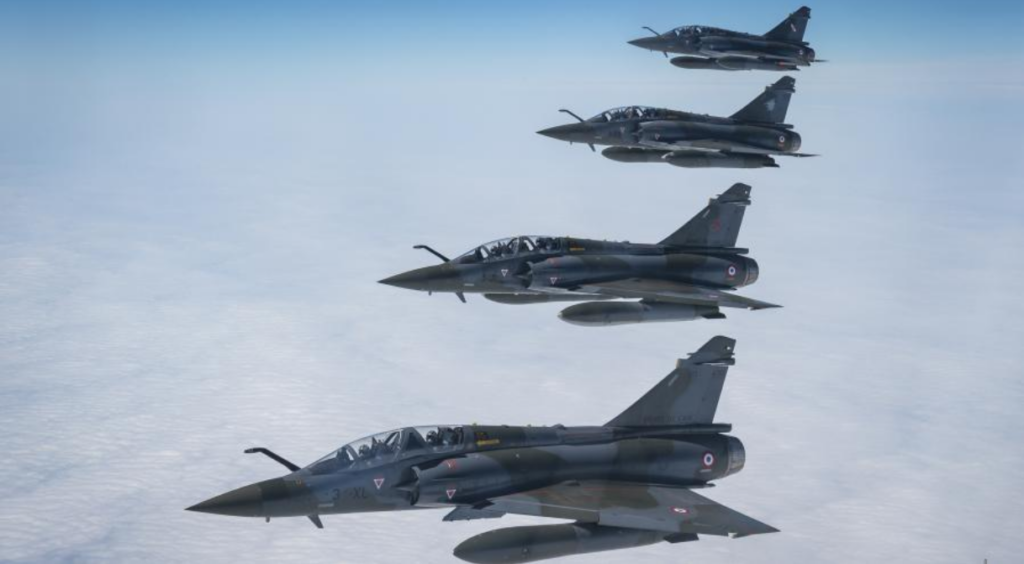
France’s military contributions highlight its expeditionary capabilities. The amphibious assault ship Mistral, along with Mirage 2000 fighter jets, enables scenarios that integrate maritime deployment, amphibious landings, aerial support, and ground operations. These assets allow participants to train in environments that mirror real-world threats, from piracy to territorial incursions.
Real-world threats, real-world training
- Maritime security: The Gulf of Guinea’s waters, rich in oil and shipping lanes, face persistent piracy and smuggling. GEX 2026’s naval component directly addresses these challenges by simulating anti-piracy patrols and interdiction operations.
- Cross-border threats: The spread of instability from the Sahel into coastal nations like Côte d’Ivoire requires coordination across borders. The exercise’s dual-phase structure tests the ability to respond to crises that span multiple territories.
- Aerial coordination: With Mirage 2000 jets providing close air support, the exercise demonstrates how airpower can enhance ground operations without relying solely on permanent bases.
The Gulf of Guinea: Africa’s new security frontier
The strategic importance of the Gulf of Guinea cannot be overstated. Home to critical energy resources and vital shipping routes, the region sits at the crossroads of global trade. Yet, it remains vulnerable to a range of threats: illegal fishing, human trafficking, arms smuggling, and attacks on offshore installations. The instability in neighboring Sahel nations only compounds these risks, creating a domino effect that threatens coastal stability.
For Côte d’Ivoire, located at the heart of West African trade, security in the Gulf of Guinea is non-negotiable. The country’s northern regions are already feeling the spillover effects of Sahel conflicts. Gabon, with its extensive Atlantic coastline and offshore oil fields, is equally exposed. By hosting GEX 2026, both nations are taking proactive steps to safeguard their economic lifelines.
France’s evolving role: from bases to partnerships
GEX 2026 marks a departure from France’s traditional military presence in Africa. Recent withdrawals from Mali, Burkina Faso, and Niger have forced Paris to rethink its strategy, shifting from large permanent bases to more agile, partnership-based models. The exercise in Côte d’Ivoire and Gabon exemplifies this new approach, blending temporary deployments with long-term training and capacity-building.
The transformation is already underway. In 2025, France handed over control of the Port-Bouët base in Côte d’Ivoire, marking a new chapter in bilateral defense cooperation. Simultaneously, France’s presence in Gabon has evolved from a static footprint to a flexible, mission-oriented arrangement. These changes reflect a broader trend: European powers are adopting more adaptive security frameworks that prioritize local ownership and shared responsibility.
What’s in it for Côte d’Ivoire and Gabon?
For African nations, the benefits of GEX 2026 extend far beyond enhanced military skills. The exercise offers a platform to diversify defense partnerships, reduce reliance on foreign powers, and assert regional leadership. Côte d’Ivoire and Gabon are not merely passive participants; they are active architects of a new security architecture that prioritizes self-sufficiency.
- Local capacity building: Training in joint operations and interoperability reduces dependence on external support during crises.
- Cost efficiency: Mobile exercises like GEX 2026 are more sustainable than maintaining large, permanent bases.
- Strategic autonomy: By developing indigenous command structures, African militaries gain greater control over their security destinies.
A regional ripple effect: could this become the new normal?
GEX 2026’s observer nations—Benin, Guinea, Liberia, and Senegal—signal the exercise’s potential to expand into a broader regional initiative. The inclusion of these countries suggests a growing appetite for multilateral defense cooperation. But can this momentum translate into lasting change?
The long-term success of GEX 2026 hinges on two critical factors. First, the ability to convert temporary operational gains into permanent structures, such as shared intelligence networks and maritime surveillance systems. Second, the determination of African nations to take ownership of these initiatives, ensuring they are not merely tools of foreign policy but pillars of regional security.
The Gulf of Guinea’s future may well depend on the outcomes of this exercise. If successful, GEX 2026 could set a precedent for military cooperation that blends African leadership with international support—a model that balances sovereignty and collaboration.
The bigger picture: geopolitics and security in transition
GEX 2026 is more than a military drill; it is a microcosm of shifting geopolitical realities. For France, the exercise is an opportunity to maintain influence while adapting to a post-interventionist era. For Côte d’Ivoire and Gabon, it is a chance to position themselves as vital players in West Africa’s security landscape.
Yet, the stakes are higher than diplomatic maneuvering. The Gulf of Guinea’s security challenges are existential. Without coordinated action, the region risks becoming a hotspot for transnational crime, terrorism, and economic disruption. GEX 2026, with its emphasis on practical cooperation, offers a glimmer of hope—but only if the lessons learned translate into action beyond the exercise grounds.
The world will be watching to see whether this unprecedented collaboration can deliver on its promises. Will it mark the beginning of a new era of African-led security, or remain a symbolic gesture? The answer may well define the future of West Africa’s stability.