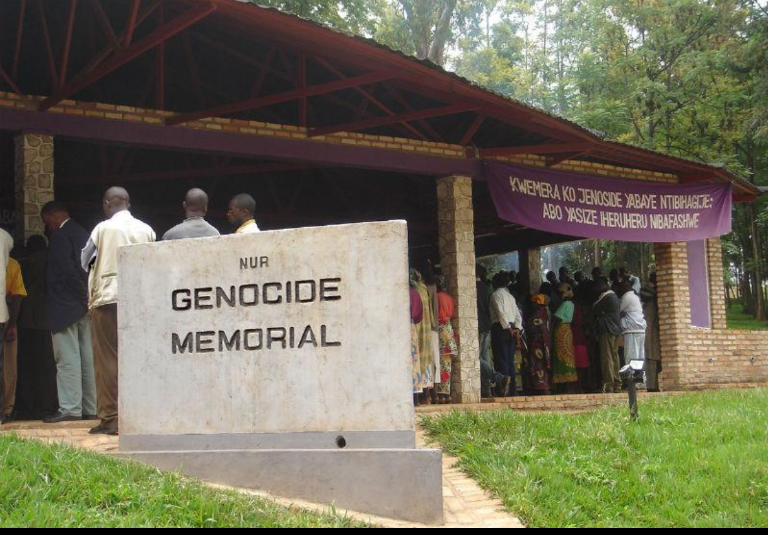
Teganya’s expulsion after decades abroad marks a new phase in Rwanda’s justice efforts
A former student accused of playing a role in Rwanda’s 1994 genocide has been returned to the country from the United States, nearly 32 years after fleeing the violence. Jean Léonard Teganya, 55, arrived in Kigali on November 9, 2026, following his expulsion from the U.S. after serving a prison sentence for immigration fraud and perjury. His deportation opens the door for him to face long-standing accusations of genocide and crimes against humanity in Rwanda’s courts.
For survivors and families of victims, Teganya’s return has reignited long-awaited hopes for accountability. The case highlights the enduring consequences of Rwanda’s 1994 tragedy and the ongoing global efforts to bring fugitives to justice—even decades later. Teganya, who studied medicine in Butare before the genocide, now faces a judicial reckoning in the country where authorities say his alleged actions contributed to systematic violence.
How Teganya evaded justice for over 30 years
Teganya fled Rwanda in July 1994 as the genocide was unfolding, making his way through what is now the Democratic Republic of the Congo, Kenya, and India before settling in Canada in 1999. There, he applied for asylum—a request that was ultimately denied due to evidence linking him to atrocities in Butare.
Undeterred, Teganya later moved to the U.S., where he was arrested in Maine in 2014 after crossing from Canada. His asylum bid in America led to federal charges of immigration fraud and perjury. In 2019, a Boston jury convicted him on two counts of immigration fraud and three counts of perjury, resulting in a 97-month prison sentence. Though his U.S. conviction stemmed from immigration violations, it did not address the genocide accusations—a legal void Rwanda’s justice system now aims to fill.
Allegations and the long shadow of 1994
Rwandan prosecutors have charged Teganya with genocide and crimes against humanity, alleging his involvement in the killings that took place in the former Butare Prefecture—today part of Huye District in southern Rwanda. Investigators claim he was affiliated with the MRND (the former ruling party) and its militia wing, the Interahamwe, during the genocide. Eyewitness accounts and evidence presented in U.S. immigration proceedings reportedly linked him to the targeting of Tutsi patients and refugees who sought refuge in the Butare university hospital where he trained.
The charges also include allegations of sexual violence and extrajudicial killings. However, these claims will now undergo scrutiny in Rwanda’s judicial system, where Teganya will have the opportunity to present his defense. His case marks the eighth instance since 2007 in which the U.S. has expelled or extradited a genocide suspect to Rwanda—a reflection of international cooperation in addressing one of history’s darkest chapters.
What’s next: Teganya’s day in court
Upon arrival in Kigali, Teganya was handed over to Rwandan authorities and placed in police custody for initial questioning. His case has since been transferred to prosecutors, who will determine the next steps in a process designed to uphold due process and transparency. For many in Rwanda, this moment signals progress in a decades-long journey toward closure and reconciliation.
The case also serves as a reminder that time does not erase accountability for international crimes. Even after 32 years, the survivors of the 1994 genocide continue to seek justice—and Teganya’s return represents a step toward that goal.