Strengthening regional cooperation against financial crime
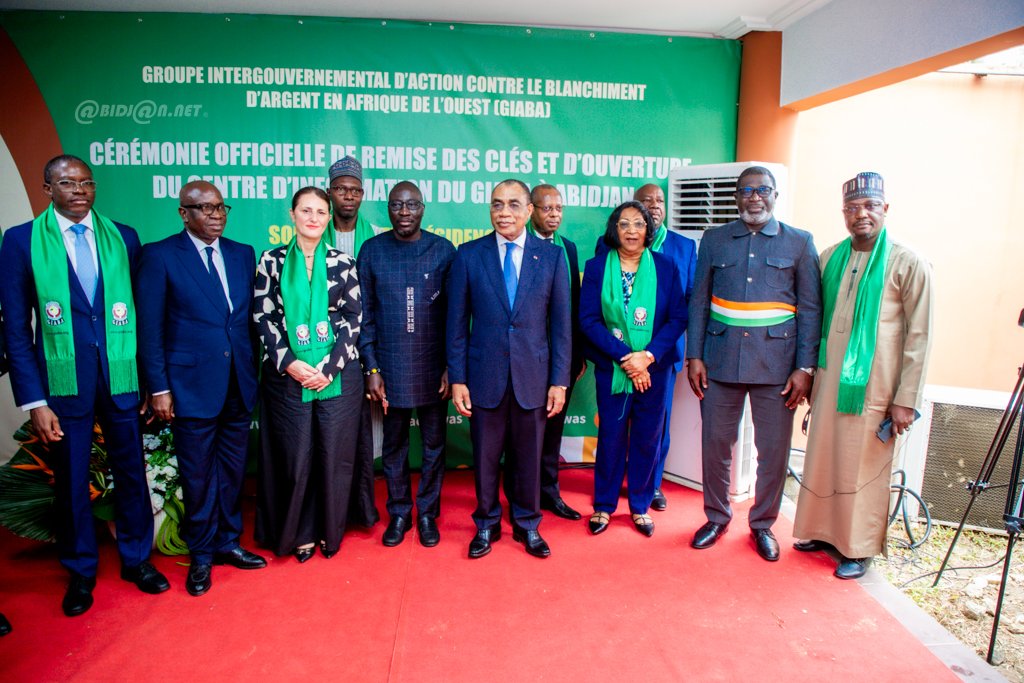
The Minister of Economy, Finance and Budget, Adama Coulibaly, officially inaugurated the newly renovated GIABA Information Center in Cocody on August 12, 2026. This state-of-the-art facility, provided by the Ivorian government under the terms of the Headquarters Agreement, marks a significant milestone in the fight against money laundering and financial crime across West Africa.
From vision to reality: the journey of the Abidjan center
The initiative traces back to a 2010 decision by the ECOWAS Council of Ministers during its 65th ordinary session in Abuja. This landmark resolution authorized the establishment of two regional information hubs: one in Lagos, Nigeria, serving English-speaking countries, and another in Abidjan, Côte d’Ivoire, supporting Francophone and Lusophone member states.
The Abidjan center opened its doors on September 21, 2015, following the signing of the Headquarters Agreement on March 29, 2014, in Yamoussoukro, during the 44th ECOWAS Heads of State summit.
Enhanced capabilities for a complex threat landscape
At the inauguration ceremony, Minister Coulibaly emphasized the growing sophistication of money laundering and terrorist financing schemes, requiring coordinated regional responses. He underscored that no single country can address these challenges alone, making shared intelligence, expertise, and resources essential.
The new facility is designed to serve as a regional platform for awareness-raising, capacity building, research, documentation, and communication, supporting ECOWAS member states and the broader West African community.
GIABA’s outgoing director highlights transformative impact
Edwin W. Harris Jr., Director General of GIABA, reflected on the center’s achievements since 2015, including public awareness campaigns, youth engagement activities, media training, religious leader workshops, and civic society seminars. The center has also played a key role in strengthening mutual evaluation processes among member states.
The newly expanded space is poised to become a regional hub for knowledge, innovation, and cooperation in combating money laundering and terrorist financing. Harris called on governments, financial institutions, regulatory bodies, universities, and civil society to actively participate in the center’s programs, particularly young professionals and researchers.
A cutting-edge training facility
A major innovation in the upgraded center is the Computer-Based Training (CBT) system, offering specialized modules tailored to different user groups. These include law enforcement, financial institutions, magistrates, investigators, academics, and students. Participants can earn certifications, enhancing regional expertise in illicit financial flows prevention and detection.
A lasting legacy
Harris’s mandate concludes on August 31, 2026, making the timing of the center’s inauguration particularly symbolic. The launch ensures member states and stakeholders gain a durable tool for improving cooperation, information sharing, and skills development in the fight against financial crime.

More Stories
Will Togo’s Faure Gnassingbé broker the breakthrough east DRC needs?
Can Nigeria’s military campaign end the kidnapping economy in the north?
Can Algeria’s expertise truly reshape Benin’s defense strategy?