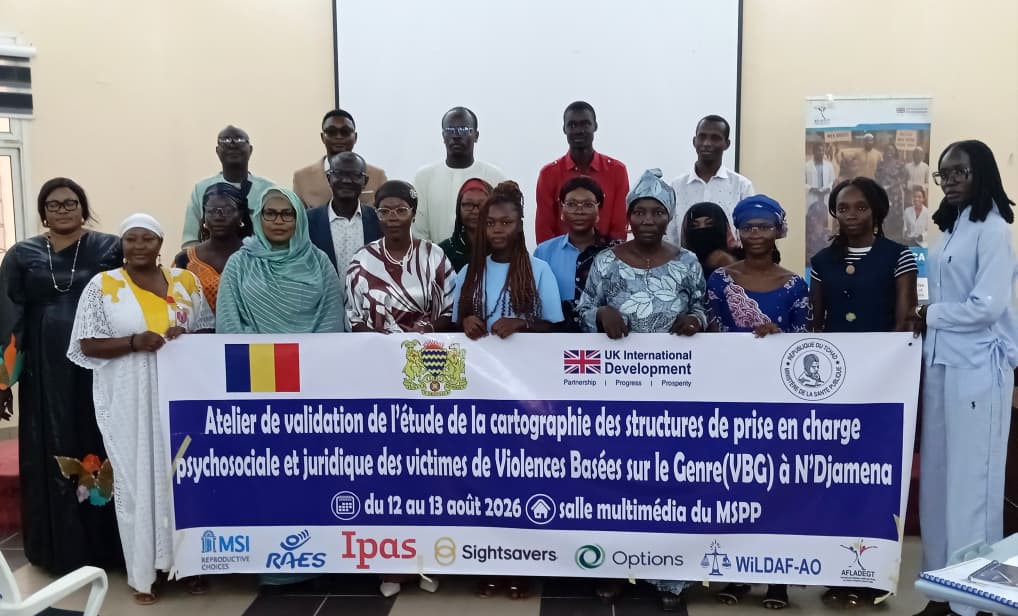
N’Djamena is set to host a pivotal gathering aimed at strengthening the fight against gender-based violence (GBV) in Chad. The Association of Feminist Leaders for Access to Rights and Gender Equity in Chad (AFLADEGT) is convening a two-day workshop from August 12 to 13, 2026, to validate a groundbreaking study mapping out legal and psychosocial support services for GBV survivors.
The initiative, part of the WISH 2-WACA project, seeks to streamline victim referrals and bolster coordination among service providers. Participants will include government officials, civil society representatives, technical and financial partners, and specialized agencies, all tasked with reviewing and enhancing the study’s findings.
Why this mapping matters
At the workshop’s opening, AFLADEGT’s president, Wouténé Mélissa, emphasized the transformative potential of this tool. She described it not merely as a document but as a vital instrument for guiding victims to appropriate services, fostering inter-agency collaboration, and advocating for policy changes to better protect survivors.
« A woman or girl who survives violence should never struggle to find help, » Mélissa stated. « Every survivor deserves swift access to the right resources and tailored support. »
Key challenges uncovered
The study highlights critical gaps in service coverage, victim awareness, referral mechanisms, and resource allocation. Mélissa stressed that these findings must translate into actionable recommendations to enhance existing services, improve referral pathways, and secure additional funding.
Dr Kadidja Amadaye Abgrene, director of reproductive health, underscored the severity of GBV as a violation of fundamental human rights. While acknowledging government efforts—such as strengthening legal frameworks and expanding multisectoral service centers—she noted persistent hurdles.
Obstacles to justice
Data reveals that fewer than 11% of identified GBV survivors receive effective legal assistance. Complications include the prevalence of out-of-court settlements, limited victim awareness, and inefficient referral systems. The mapping also exposes uneven service distribution across N’Djamena’s districts, a lack of secure, confidential spaces for survivors, and shortages in human and material resources.
Dr Amadaye Abgrene called the study’s results a roadmap for policymakers, urging their use to refine victim referrals, improve cross-sector coordination, and inform evidence-based decisions.



More Stories
Cameroon’s youth online: a double-edged sword or a digital trap?
Morocco reaffirms commitment to safeguarding children amid armed conflicts
Mali’s leader assimi goïta navigates the sensitive debate on female genital mutilation