The July 2023 coup in Niger and the subsequent imposition of sweeping regional sanctions sent shockwaves through the Cotonou-Niamey corridor, sealing borders and sparking a spiral of mutual recrimination. Yet beneath the surface of this standoff lay a more subtle reality: while the Alliance of Sahel States (AES) stood firm, Benin never abandoned its quest for dialogue.
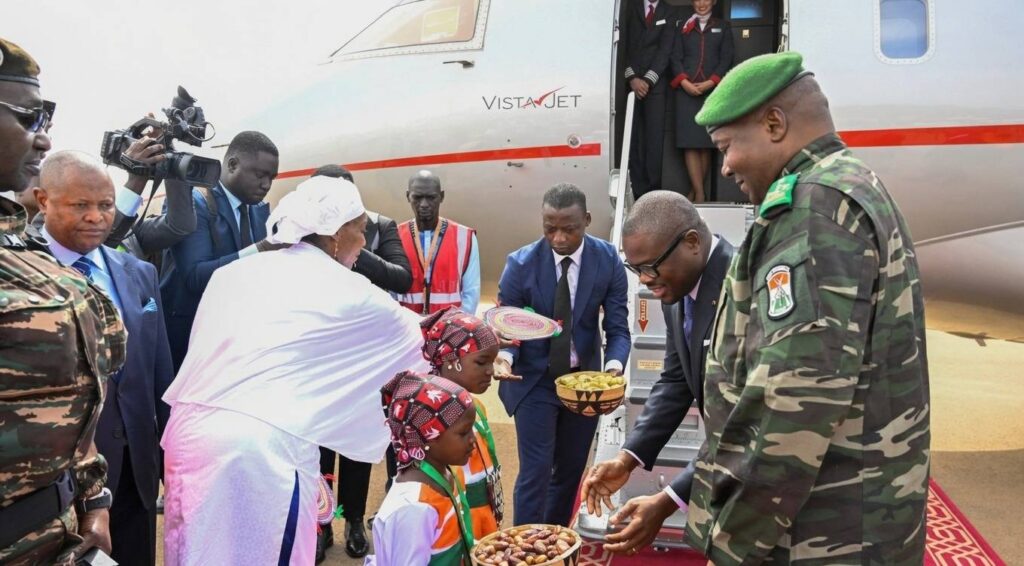
The landmark official visit of Benin’s new president, Romuald Wadagni, to Niamey marks the culmination of a deliberate policy of outstretched hand diplomacy and a tangible sign of Cotonou’s genuine commitment to reconciliation.
A steady hand in the face of escalation
Despite the hardening of positions over time, Benin acted early to ease tensions:
- Economic sanctions lifted ahead of schedule: By late 2023, Benin had already resumed the transit of goods destined for Niger through the Port of Cotonou. This move aimed to restore Niamey’s economic lifeline, even as Niamey maintained its border closure on security grounds.
- Track-two diplomacy in motion: As the crisis deepened, Benin facilitated discreet mediation efforts led by prominent figures, including former presidents Nicéphore Soglo and Thomas Boni Yayi. Their summer 2024 missions to Niamey underscored Cotonou’s unwavering determination to rebuild channels of communication beyond political divides.
- Protecting shared infrastructure: Despite heated debates surrounding the WAPCO crude oil export pipeline, Benin ensured the continued operation of this critical link. This pragmatic stance prevented an irreversible rupture and preserved the only remaining technical lifeline between the two nations.
Romuald Wadagni’s presidency: a fresh chapter
Romuald Wadagni’s election and May 2026 inauguration as Benin’s president opened a pivotal window of opportunity. A respected technocrat and former finance minister, Wadagni brings a rare political neutrality—untainted by the contentious decisions taken in the aftermath of the 2023 Niger coup.
The first unmistakable sign came from Niamey itself, when Prime Minister Ali Mahamane Lamine Zeine traveled to Cotonou to attend Wadagni’s inauguration, breaking months of diplomatic isolation.
A bold gesture of goodwill
By making Niamey the destination of one of his earliest official trips, Romuald Wadagni has delivered the unequivocal proof of good faith long sought by the AES leadership. This presidential visit signals that Benin places regional reconciliation at the very top of its agenda. By meeting directly with General Abdourahamane Tiani and Captain Ibrahim Traoré, Wadagni’s government has demonstrated readiness to engage in honest, pragmatic, and unapologetic dialogue.
Interdependence demands pragmatism
This thaw is not merely symbolic; it responds to urgent, shared imperatives:
- Security imperatives: Armed violence in the shared W-Arly-Pendjari transboundary area surged by nearly 86% between 2024 and 2025. No country can counter the jihadist threat in isolation. Restoring bilateral military cooperation is now a matter of survival for border communities.
- Economic lifelines: Niger relies on the Beninese corridor to reduce living costs and secure essential supplies, while Benin seeks to boost revenues at the Port of Cotonou.
With this visit, Romuald Wadagni has decisively turned the page on misunderstandings. Benin has shown respect for its neighbors’ sovereignty and full commitment to shared stability and prosperity in the subregion. The ball now rests in Niamey’s court to convert this diplomatic opening into a full reopening of the border.