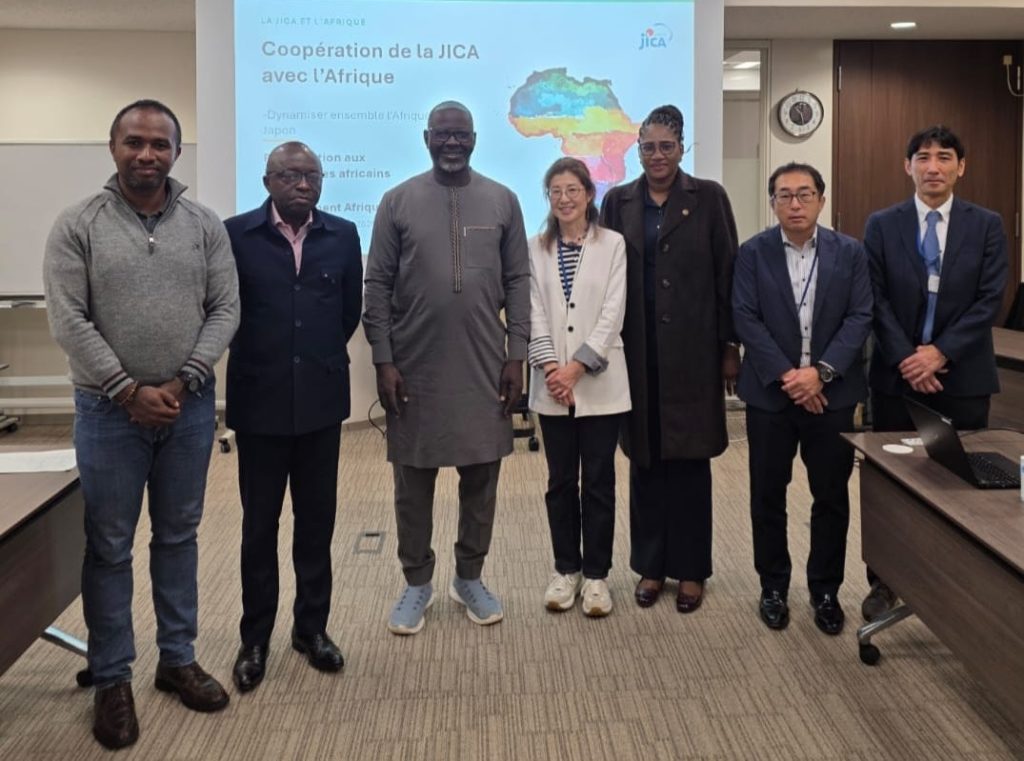
As global power dynamics shift and African nations seek to diversify their partnerships, Burkina Faso and Japan are exploring new opportunities to strengthen their collaboration through the Japan International Cooperation Agency (JICA). With the country facing pressing economic challenges while holding significant agricultural, human, and economic potential, this growing alliance could redefine development outcomes for its citizens.
Powering economic growth through agricultural transformation
Burkina Faso’s economy remains heavily reliant on agriculture, yet climate change, water scarcity, and outdated irrigation systems threaten food security and rural livelihoods. The JICA-supported Irrigated Perimeters Revitalization Capacity Building Project (2022–2025) has already begun addressing these issues by training Burkinabè engineers in modern irrigation maintenance and improving data management for water use.
A 1.405 billion yen grant announced in February 2026 for the Ouagadougou Maintenance Workshop will further enhance the durability of hydro-agricultural infrastructure by ensuring proper equipment upkeep. Building on this progress, future initiatives could include:
- Regional agricultural equipment maintenance centers
- Specialized training programs for mechanics in solar-powered irrigation and crop processing
- Support for small-scale rice, maize, sesame, and vegetable processing units
- Adoption of Japanese best practices in cooperative management and market access
The ultimate goal? Shifting from subsistence farming to an integrated agricultural model that links production, storage, processing, and sales—boosting both food security and rural incomes.
Building a skilled workforce to drive progress
Education remains a cornerstone of Burkina Faso’s development, yet many schools lack proper infrastructure and training programs that match labor market demands. In May 2026, an initiative supported by JICA, the Burkinabè government, and UNICEF inaugurated eight new schools—five general secondary schools and three polyvalent colleges—bringing the total constructed since 2022 to 26.
Beyond bricks and mortar, the focus must now be on:
- Expanding vocational training in agricultural mechanics, solar energy, and industrial maintenance
- Launching exchange programs between Burkinabè technical schools and Japanese institutes
- Introducing Japan’s Kaizen method—continuous improvement—to promote efficiency, accountability, and quality culture
Investing in resilient infrastructure and sustainable livelihoods
From water scarcity to waste management and climate resilience, Burkina Faso’s environmental challenges demand innovative solutions. Leveraging Japan’s expertise in disaster prevention, urban planning, and resource management, the JICA could spearhead:
- Pilot programs for rainwater harvesting in schools and health centers
- Community-based organic waste composting and plastic recycling initiatives
- Rural road maintenance and hydraulic structure upkeep to extend infrastructure lifespan
- Integrated waste management models involving local governments, women-led cooperatives, and youth associations
Such projects could turn environmental pressures into economic opportunities—creating jobs and fostering local entrepreneurship.
Strengthening health systems and social cohesion
The healthcare sector stands to benefit significantly from deeper Japan-Burkina Faso cooperation. Priorities include:
- Training biomedical technicians and maintaining medical equipment
- Improving cold chain systems for vaccines and essential medicines
- Strengthening primary healthcare through community health worker training
- Linking school nutrition programs with local agriculture
With over 1,000 professionals already trained through the JICA Knowledge Co-Creation Program and 400 Japanese volunteers deployed in public services since 2000, there’s a strong foundation to expand. Establishing a network of alumni could help multiply skills transfer, mentorship, and job creation—especially for women and youth.
Five strategic pillars for long-term impact
For this partnership to yield lasting results, both nations should align on five complementary priorities:
- Productive Burkina Faso: Modern irrigation, agricultural mechanization, and local value addition
- Skilled Burkina Faso: Vocational training, technology transfer, and youth entrepreneurship
- Resilient Burkina Faso: Water management, climate adaptation, and disaster risk reduction
- Modern Burkina Faso: Sustainable infrastructure, digitization, and public service efficiency
- United Burkina Faso: Education, health access, women’s empowerment, and social cohesion
The real measure of success: sustainable development from within
The strength of international cooperation ultimately lies not in external aid alone, but in the lasting capacities it builds. By prioritizing knowledge transfer, local ownership, and measurable outcomes, the Burkina Faso-Japan partnership can help transform foreign investment into homegrown expertise.
In a world where development must be self-driven and sustainable, this collaboration offers more than financial support—it provides a pathway to resilience. The challenge now is to convert training into talent, infrastructure into income, and programs into progress that endures long after the initial investment fades.