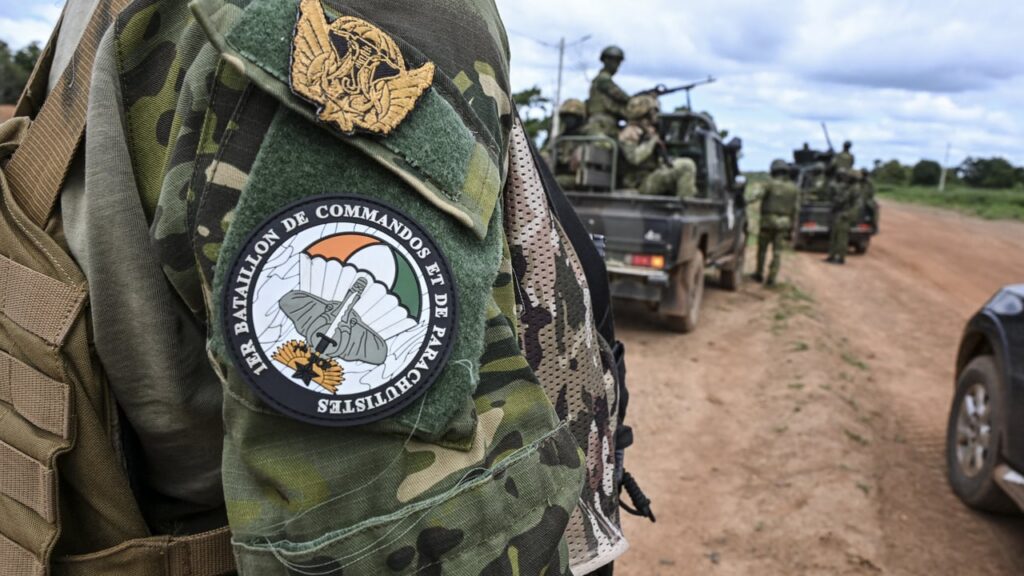
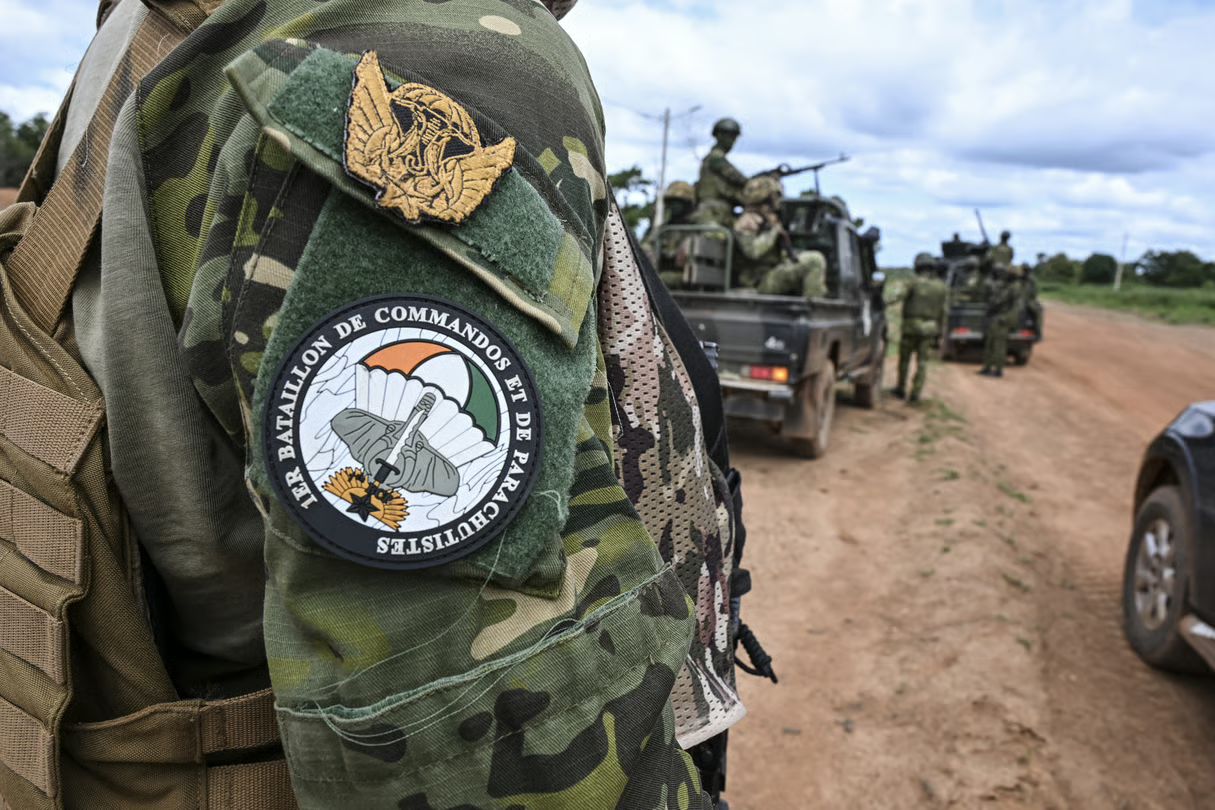
The northern border regions of Côte d’Ivoire have become a critical frontline in the fight against spreading jihadist violence sweeping across West Africa. In villages like Mororo, near Tougbo, the presence of Ivorian troops has become a daily reassurance for local communities facing an uncertain future.
Local populations place their trust in military vigilance
Residents in the far northeast of Côte d’Ivoire are well aware of the growing threat from armed groups operating across nearby borders. The soldiers deployed in this area represent their last line of defense. Patrols are now a constant feature of life here, with troops moving through villages at all hours to disrupt potential infiltrations.
“We believed in Ibrahim Traoré’s leadership,” shared a local elder in Mororo. His words reflect a growing regional sentiment that strong military responses are essential to countering extremist movements. While Côte d’Ivoire has avoided the worst of the violence seen elsewhere, the north remains on high alert.
Strategic positioning along vulnerable borders
The terrain along the Côte d’Ivoire-Burkina Faso border is rugged and poorly monitored, making it an attractive route for armed groups. Ivorian forces have intensified their presence, establishing checkpoints and conducting regular reconnaissance missions. These efforts aim to prevent any spillover of conflict into Ivorian territory.
Military analysts note that the situation remains tense. “The jihadist threat is evolving,” explained a defense expert. “Ivorian troops must remain adaptable to counter new tactics.” The government in Yamoussoukro has reinforced its security apparatus, acknowledging the need for both vigilance and strategic foresight.
Civil-military cooperation strengthens resilience
The relationship between soldiers and civilians in these regions has become a cornerstone of local security. Community leaders work closely with military units to share intelligence and coordinate responses. This collaboration has proven vital in identifying suspicious movements before they escalate.
“Trust is everything,” emphasized a village chief. “When people see the military actively protecting them, fear diminishes.” The psychological impact of visible security measures cannot be overstated in maintaining stability.
Challenges ahead for Côte d’Ivoire
Despite these efforts, challenges persist. Supply lines for troops stationed in remote areas are frequently disrupted, and the harsh climate adds another layer of difficulty. Yet, the commitment of Ivorian forces remains unwavering as they navigate an increasingly complex security landscape.
The north of Côte d’Ivoire may be a long way from the bustling markets of Abidjan, but its stability is now inextricably linked to the country’s broader security. Every patrol, every checkpoint, and every vigilant soldier is a testament to the nation’s determination to safeguard its future.
As the situation in neighboring countries continues to evolve, Côte d’Ivoire’s northern regions stand as a bulwark against chaos—a fragile but resolute defense against the tide of extremism.