- Société
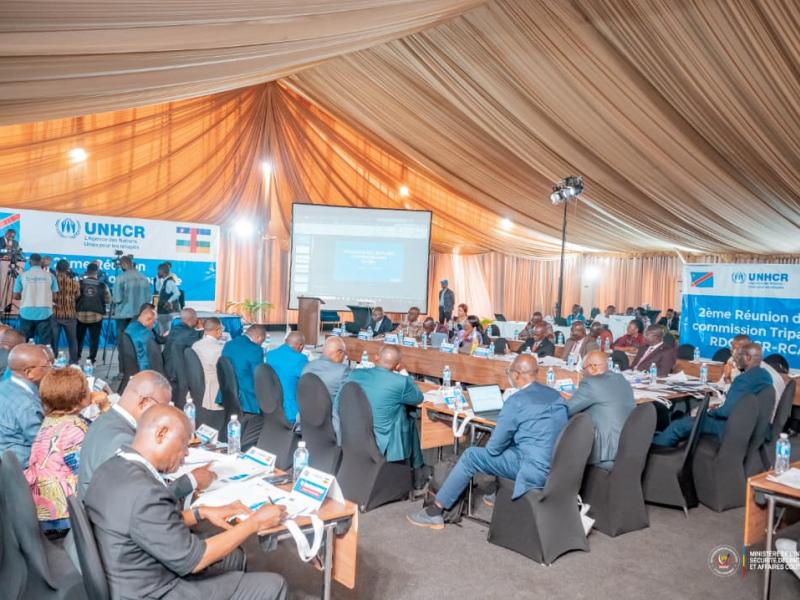
From Tuesday, June 9, to Thursday, June 12, Kinshasa is hosting the second tripartite meeting between the Democratic Republic of Congo, the United Nations High Commissioner for Refugees, and the Central African Republic. The focus is on repatriating Central African refugees living in DRC. Experts from the three parties are gathered for this session.
Pierre Atchom, the UNHCR country representative in DRC, reported during his speech that 22,604 biometrically registered Central African refugees remain in the country. They are mostly in the provinces of North Ubangi, South Ubangi, and Bas-Uélé. Additionally, 65,000 new Central African asylum seekers arrived in May 2025 in the locality of Zapaï, in the Ango territory of Bas-Uélé.
Éric Mukandila, permanent secretary of the National Commission for Refugees (CNR) and head of the DRC delegation, reminded participants that voluntary repatriation of Central African refugees resumed after conflict-affected areas were pacified, following an agreement signed in July 2019 between DRC, CAR, and UNHCR.
“This accord was reinforced by the 2022 Yaoundé Declaration, which promotes a regional approach to finding and implementing durable solutions for people forcibly displaced by the Central African crisis,” said the Congolese delegate. He noted that from 2019 to date, 40,000 Central Africans have already returned to CAR safely and with dignity, thanks to UNHCR and the two governments’ collaboration.
“Faced with the anger and discouragement of candidates for return, a thorough examination is essential to identify solutions that ensure a safe and dignified return to the country,” he urged.
Mesmin Guenguebe Mbari, advisor for land planning in CAR and head of the Central African delegation, welcomed the fact that over 43% of returnees from DRC have been repatriated under this agreement. He announced his country’s forecast for this year: the potential return of nearly 60,000 refugees from various asylum countries, supported by an innovative strategy of development hubs in return zones within CAR territory. He called for pragmatic and frank discussions, recommending a methodological pause to scientifically evaluate real returnees’ experiences, analyze their community integration, and measure the actual impact of aid allocated to them.