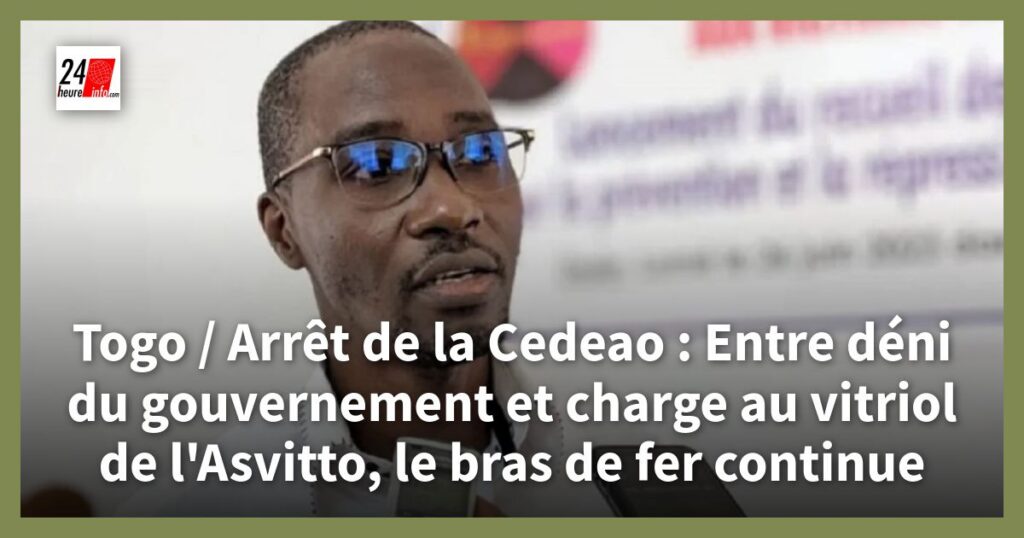
Togo’s constitutional dispute fuels clash with ECOWAS court ruling
The Togolese government and civil society remain locked in a heated standoff following a Community Court of Justice ruling that struck down the country’s 2024 constitutional reforms. While authorities insist the regional court lacks jurisdiction, the Association of Victims of Torture in Togo (ASVITTO) has escalated its criticism, accusing the administration of state-backed criminality.
The government’s legal counterattack
In response to the ECOWAS Court’s decision, Togo’s leadership swiftly dismissed the ruling, arguing that the tribunal had no authority to review domestic constitutional changes or intervene in national legislative processes. This stance aims to invalidate the court’s verdict within the country’s legal framework.
ASVITTO fires back: ‘A denial of reality’
The civil society group ASVITTO took to social media to condemn the government’s refusal to accept the ruling, calling it a blatant refusal to acknowledge the truth. In a scathing statement, the organization accused officials of orchestrating a constitutional coup, warning that those behind the move were trapped in their own desperation.
« Their long-standing pattern of ignoring and disrespecting ECOWAS rulings speaks volumes. This latest maneuver only confirms their disregard for regional justice, » the association declared.
The group pointed to the continued detention of political prisoners in Lomé as evidence of the government’s defiance, despite multiple regional court orders demanding their release.
Demanding accountability: ASVITTO’s appeal to ECOWAS
ASVITTO has now taken its fight directly to the regional bloc, urging ECOWAS to enforce its January 2026 ruling (case no. ECW/CCJ/JUD/01/26), which declared the constitutional reforms incompatible with the African Charter on Democracy, Elections, and Governance. The organization described the situation as state-sanctioned gangsterism that must be stopped across the subregion.
Political deadlock leaves detainees in limbo
The standoff has left the regional court’s decision in legal purgatory, with the government refusing to comply and civil society demanding justice. Meanwhile, political prisoners remain behind bars, their fate hanging in the balance as verbal battles overshadow their plight for freedom.
More Stories
Mali’s information war: can the public still trust the news when Maliweb.net amplifies the army’s narrative?
Will West Africa’s sleeping savings finally become its financial lifeline?
Can Benin and Spain turn cultural diplomacy into a lasting strategic advantage?