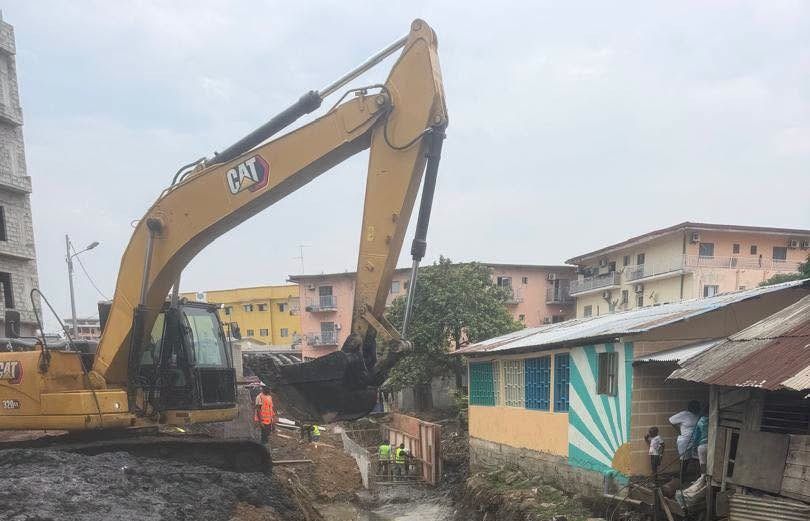
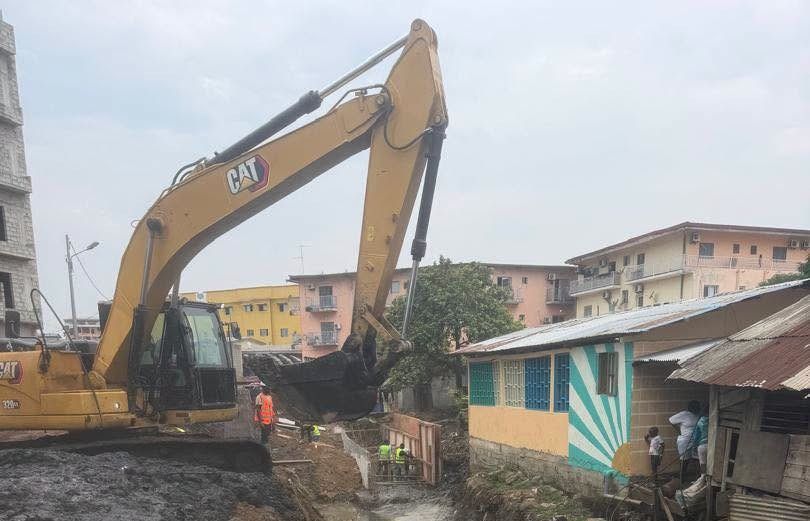
The urban landscape of Libreville is about to undergo a profound metamorphosis. Starting June 26, 2026, the first demolition phases will commence in the Baie des Cochons sector, located within the capital’s third arrondissement. This marks a decisive step in a long-anticipated structural overhaul.
Beyond the heavy machinery arriving on-site, this project represents a cornerstone of the modernization strategy championed by President Brice Clotaire Oligui Nguema. The initiative aims to fundamentally redesign traffic flow, improve public sanitation, and better integrate several key neighborhoods into the city’s growing infrastructure.
The operations will focus on a strategic corridor encompassing Sipagel, the Léon Mba intersection, and the stretch running alongside the Société d’énergie et d’eau du Gabon facilities toward the Petit-Paris roundabout. By prioritizing large-scale infrastructure, the government is addressing the challenges of rapid urban expansion, though it must also navigate the delicate task of modernizing without alienating long-standing local communities.
Opening up a changing capital
The Baie des Cochons is a vital artery in Libreville’s spatial layout. Positioned at the crossroads of intense economic and human activity, the area has historically suffered from severe congestion, particularly between the Mont-Bouët market, the city center, and Boulevard Bessieux.
The plan involves constructing a new primary axis supported by secondary roads to streamline travel. These improvements will enhance the connection between the Centre Hospitalier Universitaire de Libreville, Petit-Paris, and the Léon Mba crossroads. During a site inspection on June 23, Mays Mouissi, the Minister of Housing, Habitat, Urbanism, and Cadastre, engaged with residents to outline these objectives, emphasizing that clearing public space is a mandatory precursor to the construction phase.
In addition to traffic management, the project seeks to solve the chronic flooding that plagues thousands of residents every year. The technical program includes cleaning existing gutters, repairing damaged hydraulic structures, and installing advanced rainwater drainage systems to tackle both mobility and sanitation simultaneously.
The social challenges of urban renewal
As with any major redevelopment, the promise of future benefits brings immediate disruption. Many families have lived in the targeted areas for decades, while others rely on local economic activities for their livelihood. Consequently, the start of demolitions has sparked a mix of concern and expectation regarding compensation and relocation.
The success of such an ambitious undertaking in Gabon will be judged not just by the quality of the asphalt, but by the humanity of the transition. Issues surrounding indemnification and social support are as critical as the engineering itself. The Ministry has indicated a preference for dialogue with those affected, and the coming weeks will serve as a barometer for how well the state balances the public interest with the protection of vulnerable citizens.
A defining test for modernization
Today, Baie des Cochons stands as a symbol of a city outgrowing its past. To combat demographic pressure and environmental hurdles, Libreville must upgrade its infrastructure. Persistent traffic jams, limited access for emergency services, and isolated neighborhoods have become significant barriers to economic progress.
This project is more than a construction site; it is a political and social test. It evaluates the government’s ability to drive bold reforms while maintaining national cohesion. A modern city requires more than concrete and drainage; it requires the trust and participation of its people. As work begins in Gabon, the real measure of success will be the tangible improvement in the daily lives of the inhabitants of Libreville.




More Stories
Can a €544,042 pledge from Benin redefine Africa’s HIV response?
Can Benin’s port workforce transformation hinge on a €15 million Luxembourg gamble?
Burkina Faso’s shrinking public payroll: a household burden as schools reopen