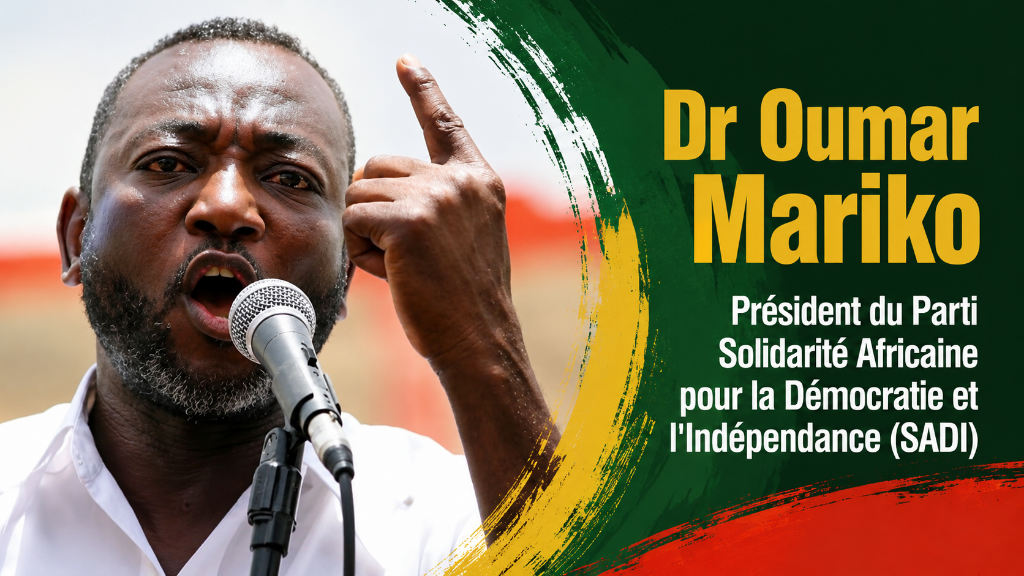
Mali’s political climate grows increasingly tense after armed raid on exile opponent’s residence
The Bamako home of Dr Oumar Mariko, a prominent opposition leader currently living in exile, became the target of a heavily armed raid on May 30. Masked assailants conducted a thorough search lasting nearly three hours, confiscating numerous documents. This incident reflects a broader pattern of intensifying repression by the transitional authorities, particularly following recent military setbacks in the country’s northern regions.
Nocturnal intrusion sparks fear and intimidation
Around midnight on May 30, the quiet residential area where the SADI (Solidarité Africaine pour la Démocratie et l’Indépendance) party leader resides was disrupted by a squad of heavily armed, hooded men. According to relatives, the operation lasted approximately three hours. Though no physical violence was reported against those present, the method was deliberately aggressive: the front door was forced open to access locked rooms. The intruders methodically searched the premises before departing with a substantial collection of administrative and personal documents. For Mariko’s family and supporters, the message is unmistakable—intimidation and an attempt to fabricate incriminating evidence against a persistent critic, even from afar.
Military setbacks fuel authoritarian crackdown in Bamako
This aggressive raid is not an isolated incident but a symptom of growing anxiety within Mali’s ruling military junta. The timing coincides with a major security shock just days earlier, when a coordinated offensive by the Forces Libérées de l’Azawad (FLA) and the Jama’at Nusrat al-Islam wal Muslimin (JNIM) overwhelmed government forces. The assault resulted in the loss of several strategic villages and the symbolic city of Kidal, shattering the official narrative of a successful territorial recovery. In the wake of defeat, a wave of suspicion has gripped Bamako’s leadership, leading to accusations of internal betrayal and conspiracies.
A widening crackdown on dissent
Faced with mounting criticism over its handling of both security and governance, the transitional government has escalated its suppression of dissent. What activists and rights observers describe as a systematic witch hunt now targets politicians, civil society leaders, journalists, and even ordinary citizens who voice criticism of the transition’s direction or military strategy. The tactics are familiar: abductions, arbitrary arrests, and detentions in undisclosed locations. The raid on Mariko’s home exemplifies this broader campaign to silence opposition—whether at home or abroad—by any means necessary.
Mali at a crossroads of instability and repression
The forced entry into Dr Oumar Mariko’s residence underscores the authoritarian drift currently reshaping Mali’s political landscape. By prioritizing the suppression of dissent over national reconciliation and reform, the authorities risk deepening social fractures and undermining long-term stability. With public discontent rising amid economic hardship and food shortages, the strategy of fear is proving counterproductive. The real challenge for Mali is not silencing voices in Bamako—but uniting the nation against the existential threats tearing the country apart.