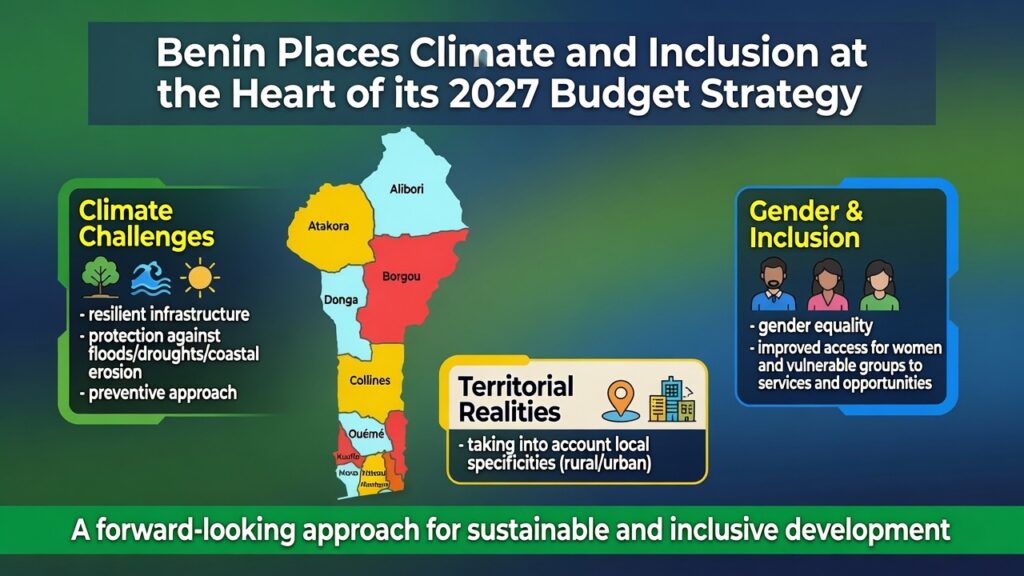
In a decisive move toward modernizing its public policies, Bénin is setting a new benchmark with its 2027 budget framework. This initiative, spearheaded by the administration during the first term of the seven-year mandate, strategically embeds climate resilience, gender equality, and territorial realities at the core of fiscal planning. Far from being a mere procedural update, this approach redefines public investment as a catalyst for sustainable development and long-term stability.
Anticipating crises through forward-looking fiscal policy
The 2027 budget framework emerges in response to escalating environmental and social pressures. Recurrent extreme weather events, mounting strain on natural resources, and entrenched social disparities demand a shift from reactive crisis management to proactive risk mitigation. The government’s strategy reflects this urgency by prioritizing preventive measures over post-disaster recovery, thereby minimizing future economic and humanitarian costs.
Climate resilience as a cornerstone of fiscal planning
A groundbreaking aspect of this initiative is the integration of climate risks into budgetary allocations. This ensures that infrastructure projects are designed to withstand environmental shocks, while vulnerable communities receive enhanced protection against threats such as flooding, droughts, and coastal erosion. Beyond immediate safeguards, this climate-conscious approach enhances governance by reducing the financial and social toll of future disasters.
Gender equality: a pillar of inclusive development
The 2027 budget framework also marks a significant stride toward gender mainstreaming in public finance. By acknowledging that policies often yield disparate impacts on different segments of the population, the government underscores its commitment to equitable resource distribution. This ensures that women, youth, and marginalized groups gain better access to essential services, economic opportunities, and social protection mechanisms, fostering a more inclusive growth model.
Territorial equity: aligning national policies with local needs
Recognizing the diversity of challenges across Bénin’s regions, the budget framework places greater emphasis on territorial specificity. Urban and rural areas face distinct developmental hurdles, and a one-size-fits-all approach often falls short. By incorporating local realities into fiscal planning, the state enhances the relevance and effectiveness of its interventions, bridging the gap between national policies and grassroots needs.
Strategic positioning for sustainable growth
This forward-thinking budgetary approach signals Bénin’s readiness to navigate the complexities of the 21st century. By embedding climate resilience, social inclusion, and territorial equity into its fiscal strategy, the government not only strengthens its domestic resilience but also bolsters its appeal to international partners. Donor institutions increasingly prioritize nations that demonstrate a commitment to sustainable development, making this framework a key asset in attracting climate financing and developmental aid.
The 2027 budget is more than a financial roadmap—it is a manifesto for sustainable and balanced progress. It embodies the state’s resolve to cultivate a resilient, inclusive, and adaptive economy, ensuring that the benefits of growth are widely shared across all segments of Bénin’s society.