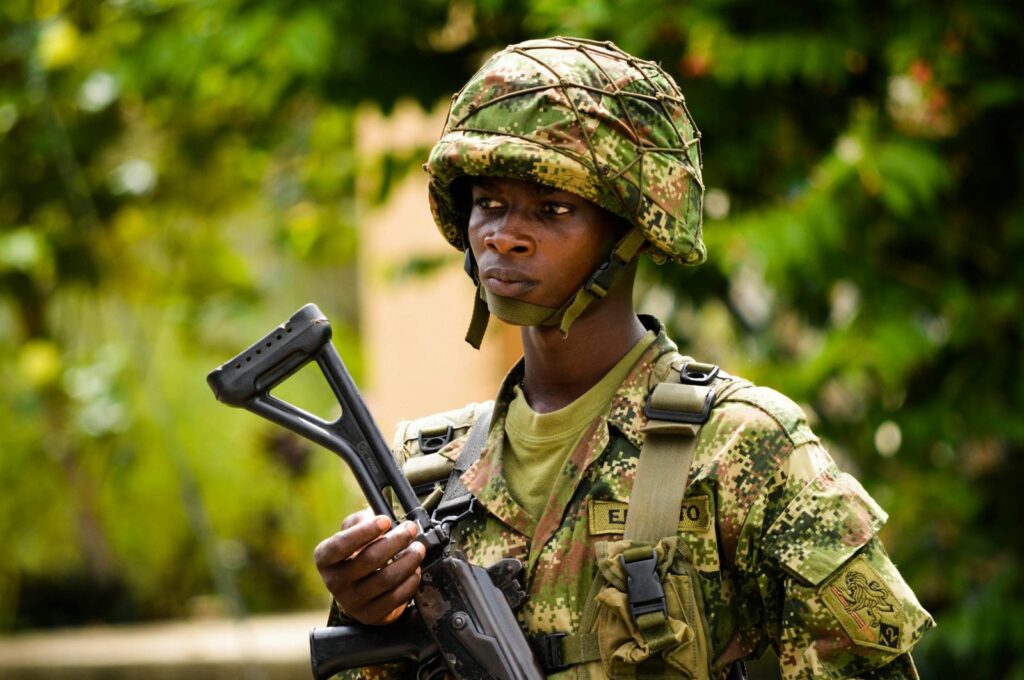
Mali has escalated its counterterrorism efforts by introducing a bold financial incentive program. The transitional government in Bamako unveiled a public reward scheme aimed at anyone providing actionable intelligence leading to the capture or elimination of key figures from two armed groups: the Group for the Support of Islam and Muslims (JNIM), an Al-Qaeda-affiliated coalition, and the Azauad Liberation Front (FLA). The announcement, made via national television, marks a significant shift in strategy, signaling the government’s push to enlist civilian support in a conflict the military has struggled to contain on its own.
Targeted rewards for high-value jihadist and rebel commanders
The initiative specifically targets the leadership of two of Mali’s most formidable armed groups. The JNIM, led by Iyad Ag Ghaly and operating across the Sahel, has intensified attacks on military outposts and critical supply routes in recent years. Meanwhile, the FLA, rooted in Tuareg separatist movements, continues to challenge Bamako’s authority in the northern regions of Kidal, Gao, and Timbuktu.
By offering monetary compensation, the Malian authorities are adopting a tactic widely used in Western counterterrorism doctrines but rarely deployed in West Africa. This move reflects a pragmatic acknowledgment of the limitations of conventional military operations and the need to leverage grassroots intelligence networks for decisive action against insurgent leaders.
Strategic realism in the face of worsening insecurity
The announcement comes at a time when Mali’s security landscape has deteriorated sharply. Following the withdrawal of the UN peacekeeping mission (MINUSMA) in late 2023 and the departure of French forces, the Malian Armed Forces (FAMA) now operate alongside Russian-backed groups, including the Africa Corps, which replaced Wagner. Despite regaining control of Kidal in late 2023, jihadist attacks have surged in 2024 and 2025, spreading from the capital’s outskirts to its central districts.
This financial incentive strategy underscores a tactical realism. Decapitating insurgent organizations through targeted eliminations of their leadership hinges on precise intelligence—information that local populations are uniquely positioned to provide. However, the approach carries inherent risks. Informants face potential retaliation, and the lack of clear details about reward amounts or disbursement processes may undermine the initiative’s effectiveness. The government has yet to specify payment terms or financial commitments.
Alignment with Sahel-wide security cooperation
The Malian government’s move aligns with the broader security framework of the Alliance of Sahel States (AES), a coalition formed in 2024 by Mali, Burkina Faso, and Niger. The three nations share a unified view of the threat posed by armed groups and are gradually harmonizing their military strategies. Expanding the reward system across the confederation could enhance cross-border intelligence sharing, a critical need given how insurgent groups exploit porous borders to regroup and resupply.
Yet, financing remains a critical hurdle. With external aid suspended and economic sanctions imposed by the Economic Community of West African States (ECOWAS) still in effect, Bamako must secure internal funding or seek alternative partnerships to sustain the program. Russia, Mali’s principal military ally, could play a role, though no official discussions on co-financing have been disclosed.
Beyond operational goals, the announcement serves a broader political purpose. By addressing the public directly through state media, the transitional government aims to rally civilian support for the war effort and strengthen its legitimacy. This comes at a time when the post-coup transition, initiated after the 2020 and 2021 coups, continues to delay elections. The success of this initiative will hinge on the FAMA’s ability to deliver tangible results against the designated jihadist and rebel leaders in the coming months.