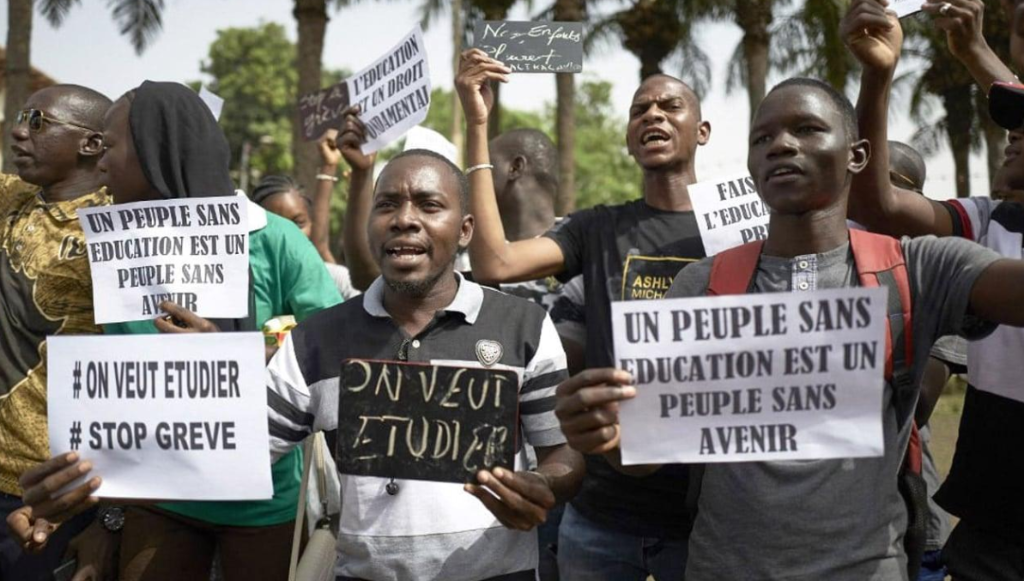
The standoff between Mali’s academic staff and the transitional authorities has reached a pivotal moment. After three weeks of sustained strikes across universities and higher education institutions, the National Union of Higher Education and Scientific Research (SNESUP) announced that its leaders have finally been received by the country’s top officials. This marks the government’s first direct response after weeks of unrest that began on October 26. But can this breakthrough bring the crisis to an end?
From silence to engagement: authorities finally face the strike
The transitional government maintained a prolonged period of inaction following the strike’s launch. Despite widespread disruptions in higher education, no concrete public measures were announced to address the core demands of academic staff. For nearly three weeks, the movement unfolded without meaningful state intervention—until now.
In a statement released on November 15, the SNESUP executive committee confirmed that its representatives had been granted high-level meetings over the past two days. This shift signals a new phase in the conflict, but key questions remain: Was this merely a symbolic gesture, or does it represent the start of genuine dialogue?
The union has yet to disclose the substance of the discussions. Before making any decisions, SNESUP leaders will consult their members to assess the government’s stance. As of now, no binding commitments have been secured regarding the long-delayed research bonus that triggered the strike.
Unresolved demands: a decade of unpaid research bonuses
The heart of the dispute dates back to 2017, when a presidential decree established a research bonus for academics. Nearly a decade later, its implementation remains unfulfilled. The SNESUP is not just seeking a one-time payment—it demands the full application of the decree, including:
- Formal determination of the bonus amount – leaving the financial scale undefined for years
- Clear payment mechanisms – ensuring consistent and transparent distribution
- Compensation for accumulated arrears – covering years of unpaid entitlements
For academics, this is not a new demand but a demand for long-overdue justice. The research bonus was meant to support scholarly work, publications, and innovation. Its absence undermines both faculty morale and the country’s research output.
Academic paralysis: who pays the price?
Every day the strike continues, its consequences deepen. University operations remain suspended, leaving students in limbo. Key concerns include:
- Delayed or canceled exams, jeopardizing graduation timelines
- Interrupted academic programs, forcing students to repeat semesters
- Uncertainty over research projects and thesis defenses
Educational disruptions extend beyond individual courses—they threaten the entire academic year. While the strike began over professional rights, its ripple effects are now felt by thousands of students whose futures depend on institutional stability.
Mediation attempts fall short: authorities step in
An earlier attempt at resolution on November 7 involved community leaders, religious figures, and local mediators. Despite their efforts, the strike persisted. This failure to resolve the conflict through informal channels has now led to direct engagement from the highest levels of government.
The SNESUP’s decision to maintain the strike while awaiting further developments underscores the depth of frustration. After years of unmet promises, academics are demanding more than words—they want action. For the transitional authorities, the challenge is clear: turn this first step into sustained negotiations and prevent the crisis from further destabilizing higher education.
What comes next? The strike’s uncertain path forward
The government’s delayed engagement has injected a fragile sense of hope into the dispute. Yet the strike persists, and so do the grievances. The SNESUP’s next move hinges on its members’ verdict after reviewing the outcomes of the meeting.
Students, researchers, and families across Mali are watching closely. With each passing day, the cost of delayed action rises—not just for academics, but for the nation’s educational system and its future generations. The fourth week of the strike begins with a glimmer of dialogue, but no clear resolution in sight.