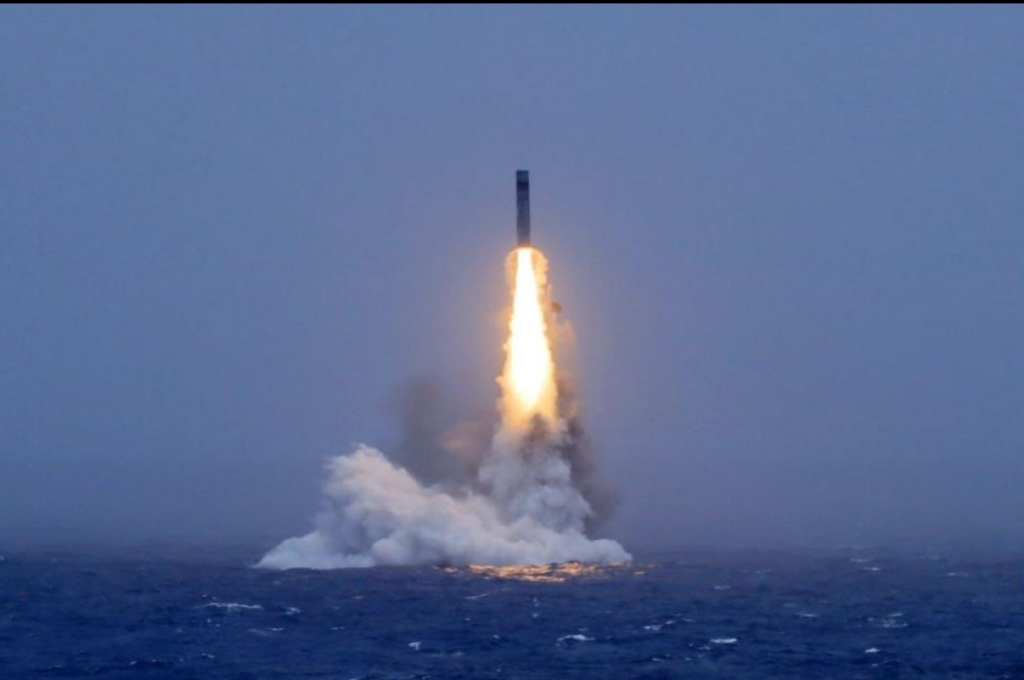
Escalating tensions and silent threats from Beijing
The Pacific waters around Taiwan are simmering with an unprecedented show of military force as China stages a massive, unannounced naval exercise involving over 100 ships. But it’s not just the size of the deployment that’s raising alarms—it’s the suspected launch of a ballistic missile from a Chinese submarine, a move that could reshape regional security dynamics overnight.
According to intelligence assessments, these drills, which began in early November, were designed to simulate a full-scale blockade of Taiwan and test Beijing’s ability to disrupt critical shipping lanes. For businesses and economies across Asia, the implications are immediate: disrupted trade, volatile energy markets, and a shifting geopolitical landscape that could ripple far beyond the Taiwan Strait.
Behind the scenes: China’s stealth strategy in action
Not all military operations come with press releases and public announcements. China’s latest maneuvers appear to be a calculated exercise in what defense analysts call “strategic ambiguity.” By keeping details vague and participation silent, Beijing aims to apply pressure without triggering a full-blown diplomatic crisis.
Sources within Taiwan’s security apparatus suggest the exercises involved coordinated attacks on both military and civilian targets, testing China’s naval and aerial capabilities across multiple theaters. The inclusion of the Liaoning carrier group underscores Beijing’s intent to project power across vast distances, from the South China Sea to the western Pacific.
While the exercises themselves are not unprecedented, the timing—just days before the APEC summit in Shenzhen—hints at a possible strategy to assert dominance ahead of high-level international dialogues. Whether this was intentional or coincidental, the message is clear: China is sending a signal that it will not be deterred from asserting its claims in the region.
What’s at stake for regional powers
The ripple effects of these drills extend far beyond Taiwan’s shores. For Japan, the exercises pose a direct threat to maritime security and energy supply lines, given its proximity to the first island chain—a critical buffer for Tokyo’s defense and trade routes. Meanwhile, the United States faces growing challenges in maintaining its operational freedom in the Pacific, especially if China continues to refine its anti-access/area-denial (A2/AD) capabilities.
Europe, through the G7, has already signaled its concerns, but statements alone may not be enough. As China’s military footprint expands, the question now is whether the international community can coordinate a response that balances deterrence with diplomacy.
Under the surface: the nuclear dimension of China’s strategy
The most provocative revelation from these drills? A suspected ballistic missile launch from a Chinese submarine in the Yellow Sea. While details remain unconfirmed, such an operation would mark a significant leap in China’s strategic deterrence, particularly in its nuclear arsenal.
Submarine-launched ballistic missiles (SLBMs) are notoriously difficult to detect and track, making them a cornerstone of any nation’s second-strike capability. If China is indeed testing such systems in live drills, it signals not just an incremental military upgrade—but a fundamental shift in how Beijing intends to wield power in the Pacific.
For now, skepticism remains about the specifics of the launch, including the missile type, trajectory, and whether it was a test or an actual demonstration. Yet the very possibility underscores the urgency of re-evaluating security postures from Seoul to Singapore.
Taiwan’s silent resistance and long-term risks
Taiwan is no stranger to military intimidation, but the scale and sophistication of this latest exercise present a new kind of challenge. Without firing a shot, China appears to be tightening the screws—simulating blockades, testing missile defenses, and probing allied responses. The goal isn’t just to weaken Taiwan’s position; it’s to erode the island’s strategic autonomy without triggering a full-scale war.
For Taiwanese businesses and policymakers, the message is clear: preparation is no longer optional. Diversifying supply chains, reinforcing cyber defenses, and deepening ties with like-minded democracies are no longer contingency plans—they’re necessities. The risk isn’t just a sudden blockade; it’s a slow squeeze that could strangle Taiwan’s economy and diplomatic options over time.
Diplomatic poker and the limits of deterrence
As the world watches, the G7’s recent warnings highlight a growing divide: can words alone prevent Beijing from translating military power into political dominance? The exercises suggest that China is testing the boundaries of global tolerance, pushing the envelope just enough to expand its influence without provoking a united counteroffensive.
Yet history shows that miscalculation is always a risk. What starts as a silent drill could escalate if perceived as weakness or indecision. The question for leaders in Washington, Tokyo, and beyond isn’t just how to respond—but when a crisis becomes inevitable.
What happens next? Navigating an uncertain future
The coming weeks will be critical. Will China dial back its exercises, or double down as a show of strength? Will Taiwan accelerate its defense reforms, or seek new alliances to counterbalance Beijing’s pressure? And crucially, will the international community tolerate a new normal where military intimidation replaces dialogue?
One thing is certain: the Pacific is no longer just a body of water. It’s the stage for a silent but seismic shift in global power—and the decisions made in the next few months could define the region for decades to come.