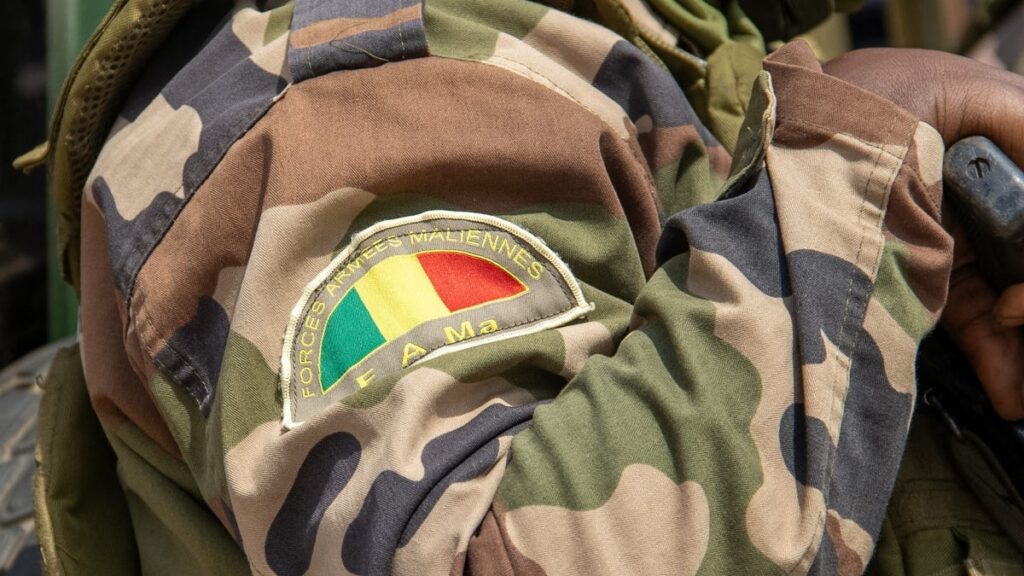
Military operations in Mali’s central Ségou region have left at least 31 civilians dead in two separate incidents involving the national army and allied militias, local witnesses and community leaders report.
On October 2, soldiers backed by Dozos—traditional hunters predominantly from the Bambara ethnic group who have supported counterinsurgency efforts for a decade—entered the village of Kamona. Within hours, at least 21 men were summarily executed, and more than 10 homes were set ablaze. Survivors describe how attackers, clad in camouflage and wearing traditional amulets, rounded up unarmed villagers accused of collaborating with armed groups.
«Those who couldn’t flee were gathered and shot,» one survivor recounted. The attack occurred despite warnings from Islamist militants that soldiers were approaching, prompting many residents to hide or flee. Yet witnesses confirm no armed clashes took place; the killings followed a pattern of collective punishment.
In a follow-up attack on October 13, military forces and Dozos entered the village of Balle, located about 55 kilometers from Kamona. This time, 10 civilians—including a 55-year-old woman—were killed in a sweeping operation that also resulted in the theft of over 100 cattle. A 24-year-old resident described how soldiers went door-to-door, assaulting men before opening fire. «From my hiding place, I heard gunshots,» he said. «When the attackers left, I found 10 bodies lying in the village center—some with broken limbs.»
Community leaders in Balle, which has been under the de facto control of the Group for the Support of Islam and Muslims (JNIM)—Al-Qaeda’s Sahel branch—for years, told of another grim reality. «We pay Islamic taxes as required,» one man explained. «Disputes are settled by the jihadists because there are no soldiers, gendarmes, or police here. The army doesn’t distinguish between us and them—we’re all presumed guilty.»
Local accounts align with findings from a recent investigation, which documented the deliberate targeting of Fulani ethnic households. In Kamona, at least 17 bodies were found under a single tree, while four more were discovered nearby. Survivors described victims with shattered skulls and multiple gunshot wounds. A 40-year-old herder recounted how he discovered the bodies after hiding with his 9-year-old daughter. «The people had been riddled with bullets,» he said. «One man’s head was completely crushed.»
military response under scrutiny
Mali’s military leadership has denied wrongdoing, claiming the October 13 operation near Balle was a successful «offensive reconnaissance» that «neutralized around twenty terrorists» and seized weapons. However, residents and local officials contradict this narrative. «People here have no choice but to comply with the jihadists’ authority,» a community elder stated. «We have no protection from the state—only fear from both sides.»
Since 2012, Mali has been locked in a brutal conflict with Islamist armed groups, leading to thousands of civilian deaths and displacing over 400,000 people. The JNIM has intensified attacks in recent months, including a siege on Bamako that disrupted fuel supplies and forced the temporary closure of schools and universities in the capital.
International humanitarian law strictly prohibits attacks on civilians, summary executions, and the destruction of property. Violations by any party—military, allied militias, or armed groups—may constitute war crimes. Despite Mali’s withdrawal from the International Criminal Court (ICC) in September, its obligations under the Rome Statute remain in effect until 2026. The ICC has been investigating alleged war crimes in Mali since 2013.
Calls for accountability have grown louder as the violence escalates. Analysts warn that unchecked abuses risk deepening communal divisions and fueling further insurgency. «The cycle of retribution only strengthens the hand of extremists,» a regional security analyst noted. «Without justice, there can be no lasting peace.»
The African Union’s Peace and Security Council has yet to take decisive action, despite repeated warnings about the deteriorating situation. Critics argue that regional bodies must move beyond symbolic statements and prioritize coordinated efforts to hold perpetrators accountable.