
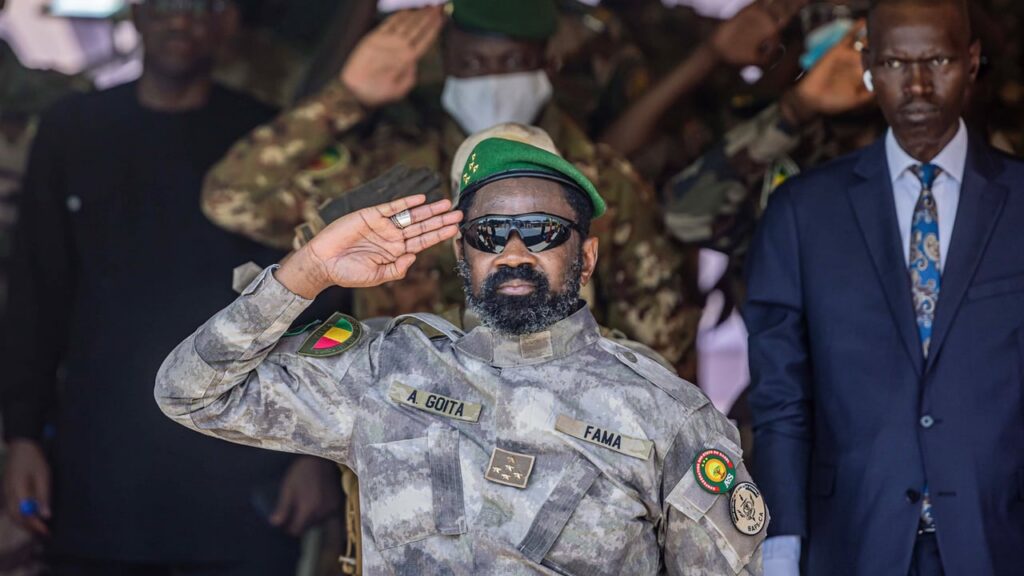

As Mali faces mounting instability, one figure has consistently stood at the forefront of its turbulent political landscape: Assimi Goïta. With the nation grappling with security threats, economic challenges, and shifting alliances, the colonel-turned-leader continues to shape the country’s uncertain trajectory.
From coup leader to head of state
Colonel Assimi Goïta first rose to prominence in August 2020, when he spearheaded a military takeover that ousted then-President Ibrahim Boubacar Keïta. The coup, widely supported by Malians frustrated with corruption and ineffectiveness in government, marked the beginning of a dramatic shift in the country’s leadership.
Initially, Goïta positioned himself as a transitional figure, pledging to restore stability and return power to civilians. Yet, history took an unexpected turn in May 2021, when he orchestrated a second coup—this time removing the interim civilian leader, Bah N’Daw. The move solidified his control, transforming him from a provisional leader into Mali’s de facto president.
A nation under pressure
Mali’s challenges have only intensified under Goïta’s watch. The country remains ensnared in a brutal jihadist insurgency that has devastated the north and spilled into central regions. Despite international support, including from regional allies and former colonial power France, the security situation continues to deteriorate, with militant groups expanding their reach.
Economically, Mali faces severe strain. Sanctions imposed by the Economic Community of West African States (ECOWAS) following the 2021 coup have crippled trade and investment. Meanwhile, rising inflation and food shortages have deepened public discontent, fueling protests and social unrest.
The political climate remains equally volatile. Goïta’s government has faced criticism for its authoritarian tendencies, including crackdowns on dissent and restrictions on press freedom. Opposition figures and civil society groups argue that his administration is prioritizing power consolidation over national reconciliation.
Regional dynamics and shifting alliances
Goïta’s leadership has also reshaped Mali’s foreign relations. Tensions with ECOWAS have escalated, leading to a breakdown in diplomatic ties and a pivot toward alternative partners. Russia’s Wagner Group, accused of human rights abuses in other African conflicts, has reportedly increased its presence in Mali, raising concerns about the country’s growing reliance on non-Western security support.
Meanwhile, the influence of the Group for the Support of Islam and Muslims (JNIM), an al-Qaeda-affiliated coalition, continues to grow. The group has exploited local grievances to expand its operations, further complicating Goïta’s efforts to stabilize the country.
The road ahead
For Malians, the future remains precarious. While Goïta’s government has vowed to hold elections and restore democratic governance, skepticism abounds. Many question whether the transitional process is genuine or merely a strategy to legitimize continued military rule.
With no clear end in sight to the insurgency and economic woes pressing harder by the day, the stakes could not be higher. As Mali navigates this pivotal moment, the decisions made by Assimi Goïta will determine whether the country edges toward recovery—or deeper crisis.

More Stories
Ousmane Sonko’s firm stance on Senegal’s FMI agreement demands full transparency
Senegal’s institutional crossroads: the unfolding dynamic between Ousmane Sonko and Bassirou Diomaye Faye
Minister abdourahmane diouf reignites feud with ousmane sonko over special credits reform