Bamako’s forgotten children: when the streets replace a failing state
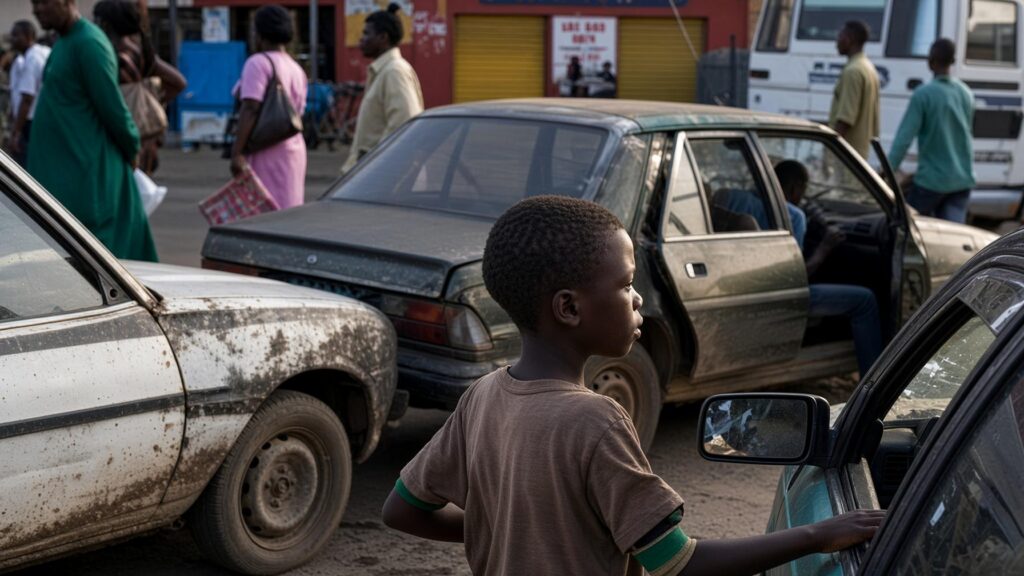
At every major intersection in Bamako, the scene repeats itself without end. Children, the elderly, and people with disabilities stretch out their hands under the indifferent gaze of passersby. Year after year, despite repeated government promises and public awareness campaigns, Mali’s battle against street begging continues to falter. What was once an issue of marginal concern has now become a structural crisis, exposing deep-rooted failures in governance that threaten the very fabric of Malian society.
The visible collapse of public order
What began as isolated instances of poverty has metastasized into a sprawling epidemic. Young children—many of them talibés sent by unregulated Quranic teachers or abandoned minors—dash between speeding vehicles at red lights, risking life and limb for a few coins. The government’s repeated operations to remove children from the streets have yielded little more than temporary results. Welfare centers lack funding, rehabilitation programs are nonexistent, and without sustained intervention, those rescued quickly return to the streets, trapped in an endless cycle of survival.
Unaddressed structural failures
The proliferation of street begging isn’t a symptom of isolated neglect—it reflects systemic breakdowns across multiple sectors:
- Collapse of essential social services: Decades of underinvestment in public education and social protection have left millions of families vulnerable. The inability to provide free, quality schooling pushes desperate parents to send their children into the unforgiving urban environment. An entire generation is being lost—not just to poverty, but to institutional abandonment.
- Unregulated religious education networks: Informal Quranic schools operate in legal gray zones, where children are routinely exploited for financial gain. Authorities hesitate to intervene, often invoking cultural and religious sensitivities as justification for inaction. Yet these same children, deprived of proper oversight, become prime targets for forced begging syndicates.
- Misuse of public resources: While Mali’s budget prioritizes security and institutional maintenance, allocations for human development remain critically low. Anti-poverty programs receive minimal funding, and humanitarian aid intended for vulnerable communities is frequently siphoned off through bureaucratic inefficiencies and outright corruption.
- Systemic corruption and lack of accountability: Social programs funded by public and international resources suffer from chronic mismanagement. Transparency is almost nonexistent, and those in need rarely see the benefits of allocated funds. Instead, resources vanish into administrative mazes or end up lining the pockets of intermediaries.
From social decay to national security threat
The consequences of this governance failure extend far beyond urban aesthetics. The tens of thousands of children living on the streets represent a ticking time bomb—exposed to exploitation, radicalization, and criminal recruitment. Growing up in a vacuum of state protection, they become easy prey for armed groups operating in Mali’s volatile regions. Without access to education, healthcare, or legal guardianship, these youths lose not only their childhood but any hope for a future within the law.
The refusal to confront this reality—coupled with hollow political rhetoric and a lack of genuine reform—has entrenched Mali in a cycle of decline. Street begging is no longer just a humanitarian issue; it is a stark indicator of a failed social contract between the state and its most vulnerable citizens. Without urgent, decisive action to overhaul governance, restore transparency, and invest in human development, Mali’s streets will continue to swell with desperate children, mirroring the slow erosion of the nation itself.
No quick fixes: why rhetoric won’t solve this crisis
Public declarations about