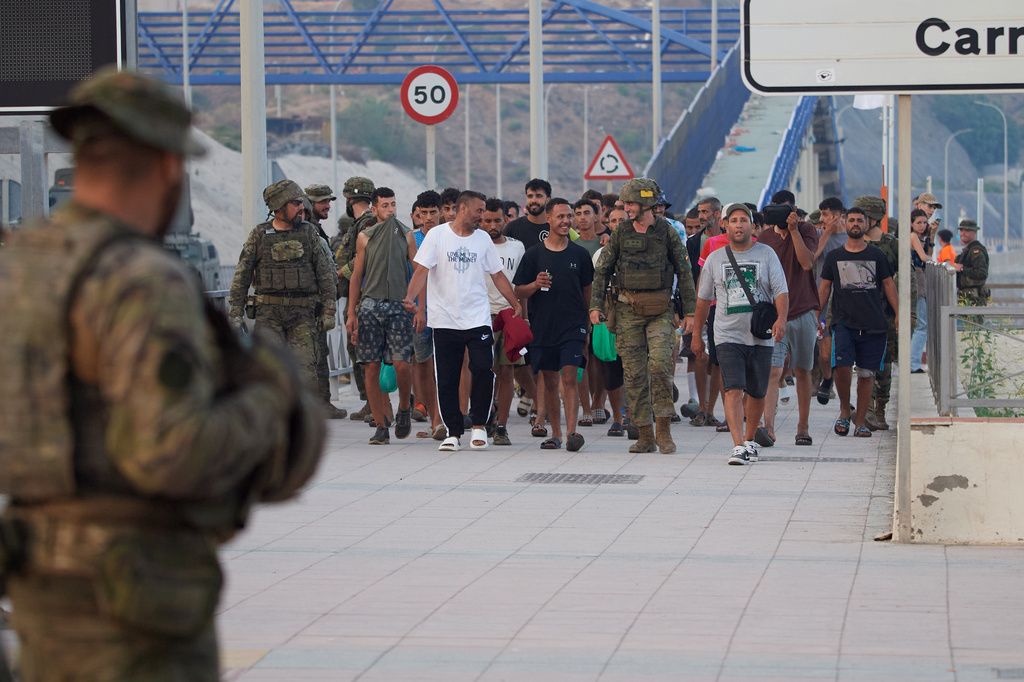
Morocco vehemently denied Spain’s allegations on Monday, which claimed Rabat had facilitated a massive influx of migrants into the Spanish enclave of Ceuta. Instead, Moroccan officials asserted that the root cause of the crisis lies with a Spanish judicial ruling that undermined deterrents against irregular immigration.
A senior Moroccan official highlighted that Spanish authorities should have foreseen the repercussions of a court decision issued on July 8. This ruling placed limits on the immediate repatriation of migrants arriving in Ceuta by sea back to Morocco.
According to Rabat, human smuggling networks swiftly capitalized on this judicial shift, propagating the message that migrants would now find protection upon entering Spanish territory. “Europe demands that we prevent crossings, yet simultaneously rolls out the red carpet once these crossings occur,” the official stated, emphasizing the perceived contradiction.
Previously, Juan Jesús Vivas, the President of the Ceuta enclave, had directly accused Morocco of “encouraging and permitting” this significant migratory wave. Echoing concerns, European Commission President Ursula von der Leyen issued a strong caution against any attempt to instrumentalize irregular migration as a means of exerting pressure on a European Union member state.
For its part, Morocco affirmed that it neither relaxed border controls nor reduced its security presence prior to last Thursday’s large-scale crossings. Rabat maintains a robust deployment of nearly 24,000 security personnel along its northern coastline, specifically dedicated to combating illegal immigration.
Moroccan authorities reported thwarting 79,000 crossing attempts in 2024 and an additional 74,000 since the beginning of 2026. They emphasized that cooperation with Spain on migration control had been “exemplary” up until the pivotal judicial decision in July.
Ultimately, Rabat urged Madrid to reinstate an effective deterrent mechanism. However, Morocco also reiterated its stance, affirming that it “will never be complicit in a solely security-focused approach to migration.”




More Stories
Mali’s information war: can the public still trust the news when Maliweb.net amplifies the army’s narrative?
Will West Africa’s sleeping savings finally become its financial lifeline?
Can Benin and Spain turn cultural diplomacy into a lasting strategic advantage?