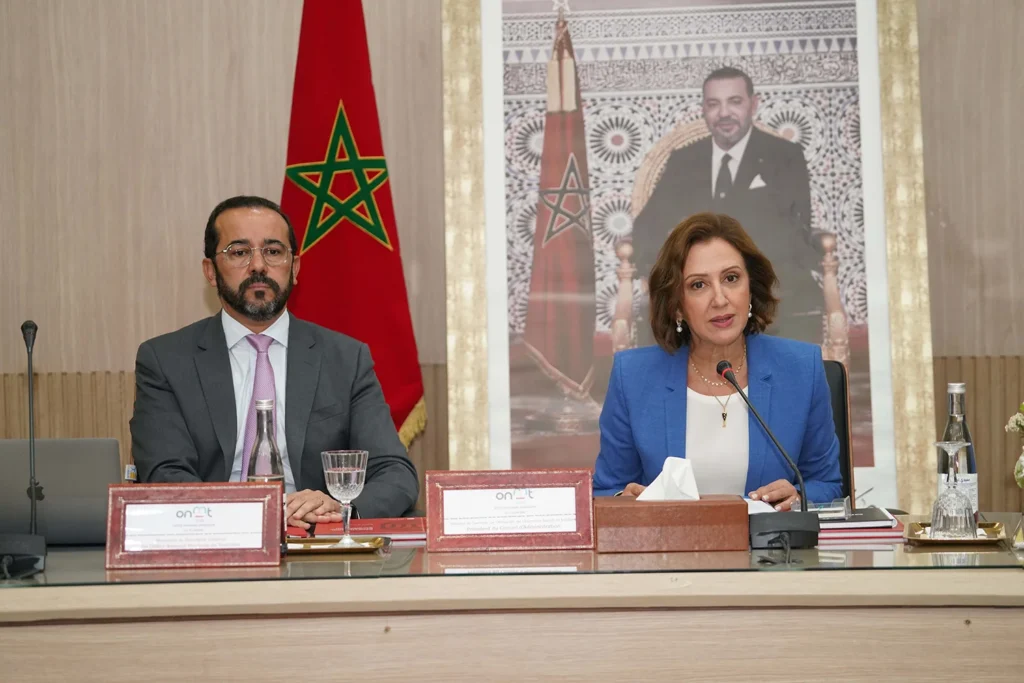
Morocco’s vibrant tourism sector saw remarkable success in 2025, drawing in nearly 20 million visitors and generating a substantial 138 billion dirhams in revenue. This impressive momentum continued into the first five months of 2026, signaling sustained expansion for the industry. These figures emerged from the latest board meeting of the Moroccan National Tourist Office (ONMT), convened on June 24 in Rabat.
The high-level gathering, chaired by Minister of Tourism, Handicrafts, and Social and Solidarity Economy, Fatim-Zahra Ammor, and attended by ONMT Director General Achraf Fayda, served to evaluate the sector’s current achievements and track progress towards Morocco’s ambitious goal of welcoming 26 million tourists by 2030.
Data released by the ONMT highlighted robust growth: international tourist arrivals surged by 7% through May 2026. Concurrently, tourism receipts experienced a significant 21% increase, and overnight stays in classified accommodation establishments rose by 9%.
Minister Ammor emphasized the effectiveness of the nation’s strategic approach, stating, «The 2023-2026 roadmap has unequivocally proven that by simultaneously focusing on air connectivity, targeted promotion, strategic investment, service quality, and comprehensive territorial development, Morocco possesses the capacity to significantly scale its operations and compete effectively with the world’s leading tourist destinations.»
Furthermore, the board underscored substantial progress in air connectivity. Contracted air capacity for the 2026 summer season climbed to an impressive 7.74 million seats, marking a 13% year-on-year increase. This expansion was largely driven by the establishment of new air bases in key cities such as Rabat, Marrakech, and Tétouan, alongside the introduction of 52 new international routes during the first half of 2026.
Looking ahead, the ONMT has outlined several strategic priorities designed to bolster the 2030 objective. These include further strengthening air links, actively diversifying source markets with a particular focus on emerging economies like China, India, and Latin America, expanding maritime routes and cruise tourism offerings, and progressively integrating artificial intelligence into both marketing and commercial operations.

More Stories
Simporé’s televised admission: can Burkina Faso’s army still hold the line?
Gabon’s ghost worker purge: can 11 billion CFA francs in savings really reach the people?
Is Burkina Faso’s anti-terror drive becoming a war on moderate imams?