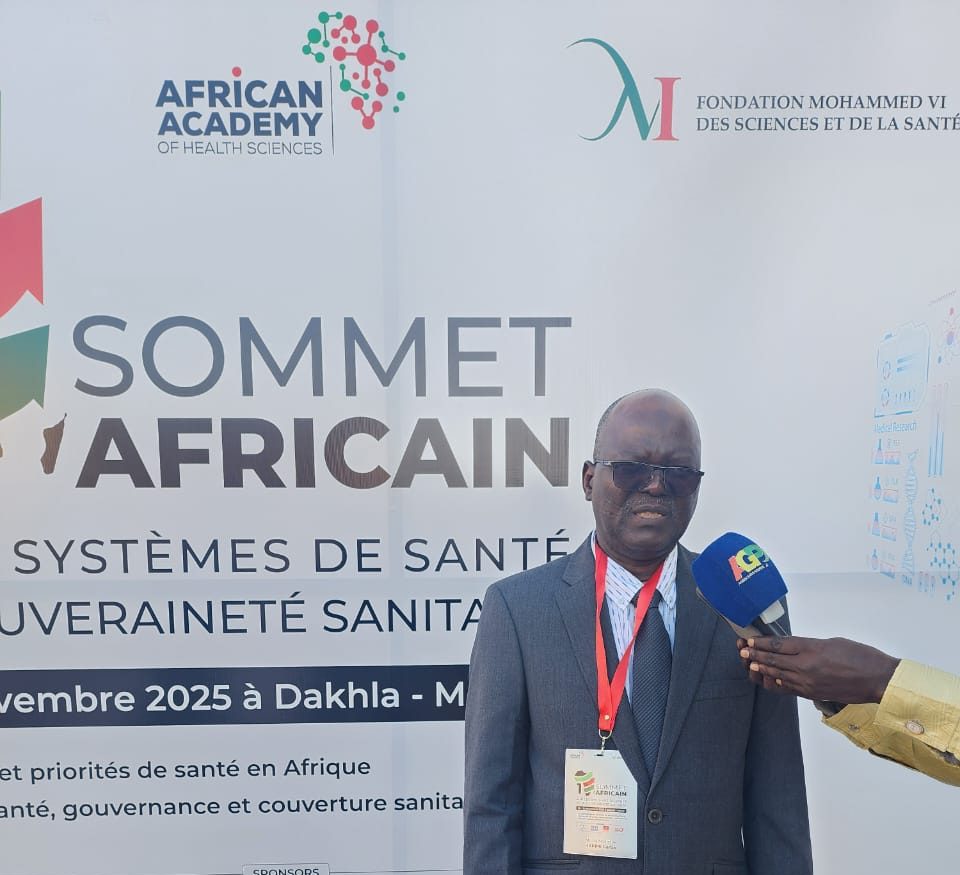
The Nigerien Minister of Public Health and Hygiene, Colonel Major Garba Hakimi, declared on November 29 in Dakhla, Morocco, that Niger is fully committed to achieving health sovereignty. This statement came during an interview with the National Press Agency (ANP) following the two-day First African Summit on Health Systems and Health Sovereignty, which he attended in the Moroccan province.
Niger’s leadership champions health sovereignty
The minister emphasized that health sovereignty is a priority for Niger’s top authorities, including President General Abdourahmane Tiani and the Prime Minister, who are spearheading significant efforts to strengthen the country’s health sector. These initiatives include the construction of new hospitals and integrated health centers nationwide, aimed at enhancing community-based primary healthcare. As Hakimi noted, “A robust health system begins with foundational infrastructure capable of delivering primary care.”
Strategic investments in health infrastructure and technology
Recent years have seen substantial progress in Niger’s healthcare infrastructure, with new facilities designed to improve diagnostic and curative services. The minister highlighted the acquisition of advanced medical equipment across the country, enabling healthcare professionals to provide accurate diagnoses and effective treatment. He also underscored the importance of training, stating, “Equipment alone is insufficient without skilled personnel. That’s why continuous professional development and specialization programs are underway.”
Policy reforms to expand healthcare access
The government has implemented key policy changes to reduce financial barriers to healthcare, including a 50% reduction in public health facility fees and free services for vulnerable groups, such as maternal care and child health services for children under five. These measures, combined with expanded infrastructure, aim to make healthcare more accessible and support the country’s push toward universal health coverage.
Hakimi expressed confidence in Niger’s trajectory, asserting, “With these reforms, we are moving closer to achieving health sovereignty. Insha’Allah, we will succeed.”
African health summit identifies key challenges and solutions
During the Dakhla summit, African health experts reviewed the continent’s health systems, acknowledging both progress and persistent challenges. Among the critical issues identified were weak health infrastructure, governance gaps, and financing constraints. The minister stressed the need for actionable strategies to build resilient, high-performing health systems capable of achieving sovereignty.
He praised the summit’s outcomes, particularly the inauguration of the African Academy of Health Sciences, a project championed by His Majesty King Mohammed VI of Morocco. The academy, along with new university hospitals and training facilities in Dakhla, reflects a vision for developing skilled human resources—an essential component of health sovereignty.
Hakimi remarked, “A strong health system requires more than infrastructure; it demands a skilled workforce. His Majesty’s vision must be embraced by African leaders to drive meaningful progress.”
Financing and innovation: pathways to health sovereignty
The minister advocated for increased domestic investment in health, citing the 15% budget allocation recommendation for health sectors across African countries. He also highlighted the growing adoption of innovative financing models to ensure sustainable funding for health systems. “Health sovereignty is achievable through self-reliance. We must stop waiting for external assistance and focus on building our own capacity,” he asserted.
The Dakhla Declaration outlines a five-pillar roadmap for health sovereignty, covering epidemiology, human capital and training, research and innovation, financing and governance, and equitable infrastructure. Hakimi concluded, “By focusing on these pillars, we can make health sovereignty a reality. The work begins now.”