

Published on February 7 at 12:30 PM, updated February 11 at 4:44 PM Reading time: 8 minutes.
An unprecedented attack struck right in the heart of Niamey. In the early hours of Wednesday, January 28, to Thursday, January 29, dozens of Islamic State fighters in the Greater Sahara (EIGS) stormed the Nigerien capital’s international airport alongside the adjacent 101st military base. They opened fire on civilian aircraft and torched military planes. A video released by the attackers showed heavily armed militants moving through the facilities.
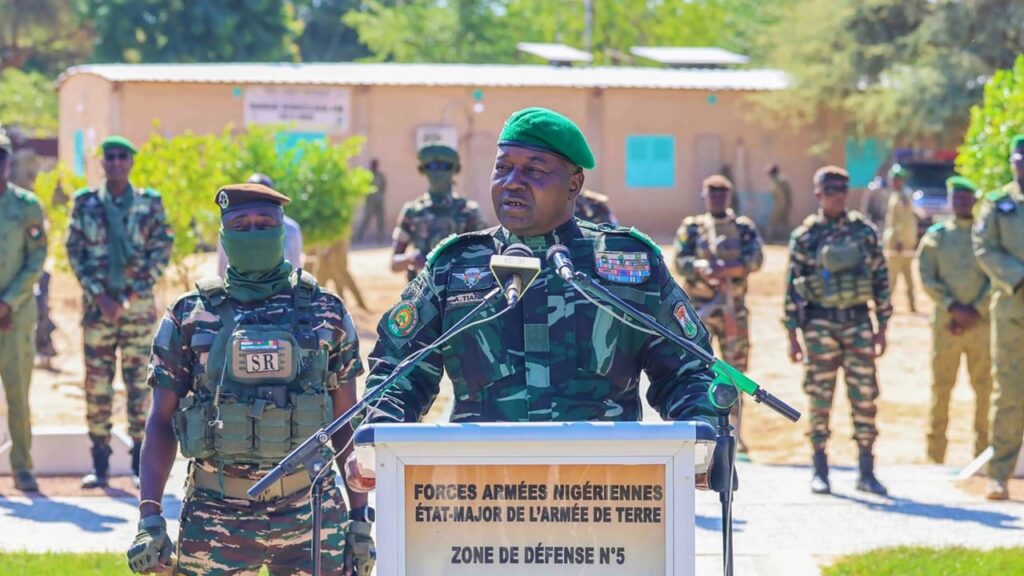
The incident has reignited debates about the security situation in Niger under the leadership of President Abdourahamane Tiani. While his administration claims significant progress against insurgent groups, critics question the effectiveness of the measures taken. Let’s examine the real security landscape in Niger today.
Understanding the security challenges in Niger
Niger continues to face persistent security threats, primarily from terrorist groups operating across the Sahel region. The EIGS remains one of the most active, frequently targeting military outposts, infrastructure, and civilian areas. Despite government efforts, including military operations and regional collaborations, attacks continue to disrupt daily life and economic stability.
The recent airport assault underscores the evolving tactics of these groups. Rather than relying solely on hit-and-run strikes, militants are now capable of coordinated, high-profile attacks on strategic locations. This shift suggests a concerning escalation in their capabilities and determination.
Military responses and their impact
The Nigerien government, led by Abdourahamane Tiani, has implemented several military strategies aimed at curbing insurgent activities. These include:
- Enhanced border security and surveillance
- Increased collaboration with neighboring countries such as Burkina Faso, Mali, and Chad
- Deployment of additional troops to hotspots
- Intelligence-sharing initiatives with international partners
While these efforts have led to some territorial gains and disrupted militant movements, critics argue that they have not translated into tangible improvements for civilians. Casualties among security forces and civilians remain high, and displaced populations continue to grow.
Civilian vulnerability and displacement
The human cost of the conflict is staggering. Thousands of Nigeriens have been forced to flee their homes due to violence, creating a humanitarian crisis. Access to basic services such as healthcare, education, and food remains severely limited in conflict-affected areas. The government’s response has been criticized for being reactive rather than proactive, leaving many communities without adequate protection or support.
The recent airport attack in Niamey highlights the vulnerability of even urban centers, which were previously considered relatively safe. This development raises serious concerns about the government’s ability to safeguard critical infrastructure and protect its citizens.
Assessing the government’s narrative
President Tiani and his administration frequently emphasize their commitment to restoring peace and security. Official statements highlight the number of militants neutralized, weapons seized, and territories recaptured. However, independent analysts and local communities often dispute these claims, pointing to the persistence of attacks and the lack of visible improvements in safety.
Transparency and accountability remain major issues. There is limited public access to detailed reports on military operations or civilian casualties. This opacity fuels skepticism and distrust among the population, who question whether the government’s efforts are genuinely aimed at their welfare or merely maintaining political control.
What’s next for Niger’s security?
The path forward is fraught with challenges. The government must address several critical areas to improve the security situation:
- Enhanced civilian protection: Implementing community-based security initiatives and ensuring the presence of security forces in vulnerable areas.
- Investment in development: Addressing root causes of insurgency, such as poverty and lack of opportunities, through targeted development programs.
- Strengthened regional cooperation: Deepening partnerships with neighboring countries to share intelligence, coordinate military operations, and address cross-border threats.
- Transparent governance: Improving communication with the public about security strategies, military operations, and humanitarian efforts.
As Niger navigates this complex security landscape, the actions of the Tiani administration will be closely scrutinized. Whether the government can deliver on its promises of peace and security remains an open question, one that will shape the future of the country and the well-being of its people.



More Stories
Côte d’Ivoire’s coffee and cocoa sector prepares for new campaign with crucial price announcements
Ebola and conflict: a deadly combination in eastern DRC
Morocco azrou college that shaped berber elite