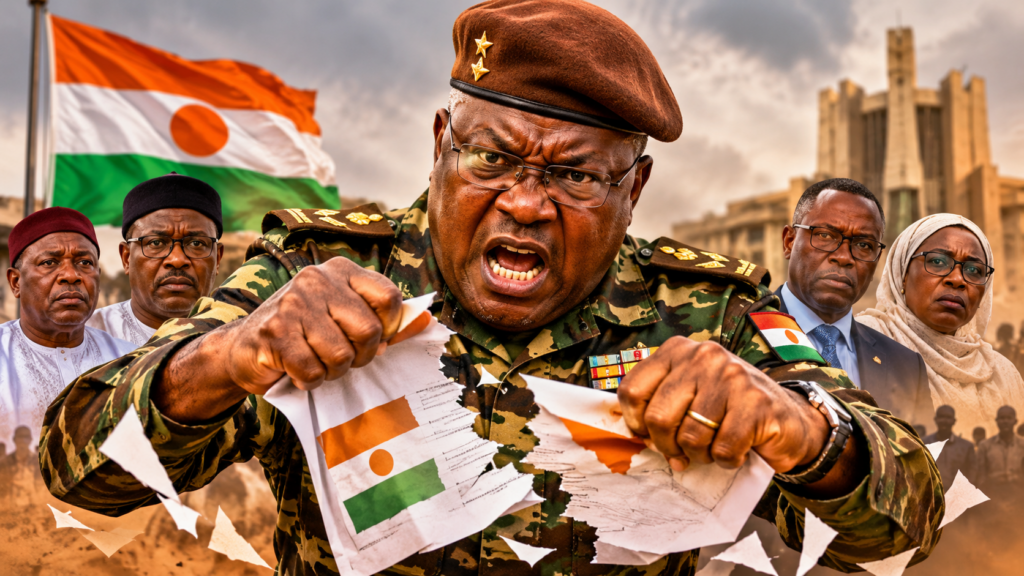
Since seizing power in July 2023, Niger’s military authorities have increasingly used nationality revocation as a political tool, raising serious concerns about its true purpose. Far beyond a legal procedure, this measure has become a means of exerting pressure on former government officials, jeopardizing their rights and fueling political tensions that threaten national cohesion.
Military regime leverages nationality revocation against former Bazoum allies
On September 17, 2026, General Abdourahamane Tiani signed a decree stripping five prominent figures of their Nigerien citizenship including Ouhoumoudou Mahamadou, former Prime Minister under ousted President Mohamed Bazoum. This brings the total number of people affected by provisional revocations to 25 since the controversial policy was introduced in October 2024.
The individuals targeted are not only accused of security-related crimes such as disseminating destabilizing information or collaborating with foreign entities, but also include former high-ranking officials who served under Bazoum. This pattern suggests a strategic move to weaken political opponents rather than merely address legal infractions.
Exile and statelessness risks for targeted leaders
The provisional nature of these revocations does not prevent severe real-world consequences for those affected. Many live abroad, where the loss of their Nigerien citizenship their sole nationality in some cases strips them of access to consular protection, travel documents, and return rights.
For veteran politicians now in exile, this creates a state of administrative vulnerability. While not all those deprived of citizenship have been rendered stateless, the risk is acute for individuals whose only legal nationality is Nigerien. Human rights organizations have warned that such measures could produce lasting obstacles in professional, familial, and civic life.
In essence, revoking nationality becomes more than a judicial sanction it transforms into a tool of control, limiting mobility and isolating critics of the current regime.
Procedural fairness in question amid dubious legal grounds
The decrees are rooted in 2024 laws targeting threats to national interests, citing electronic defamation and public order disruptions. However, simply being accused does not equate to proven guilt, and the lack of transparent evidence raises doubts about the legitimacy of these measures.
Critics argue that the framework lacks procedural safeguards. Defendants must have a chance to review charges, present counter-evidence, and appeal decisions before an independent tribunal. Without these guarantees, nationality revocation risks becoming an arbitrary weapon against dissent.
In particular, accusations tied to online statements or political criticism when not tied to verifiable harm blur the line between national security and political persecution.
Political purge disguised as national security?
The timing and profile of those stripped of citizenship indicate a broader agenda. By persistently targeting allies of Bazoum, the regime may be extending its conflict with the former government into the legal sphere. This prolongs national divisions and undermines efforts toward reconciliation.
A stable nation requires institutions that apply the law impartially, not tools that selectively punish former rivals. When citizenship revocation appears focused on political opponents rather than security threats, public confidence in justice erodes and with it, the possibility of healing national fractures.
Striking a balance: security or score-settling?
There is no dispute that Niger faces genuine security challenges. However, deploying nationality revocation against former officials especially without clear evidence or due process risks distorting justice into vengeance.
The government must demonstrate that each case is based on verifiable facts and that defendants are treated fairly. Otherwise, this policy risks entrenching political conflict, damaging institutional credibility, and weakening the very cohesion it claims to protect.
The fate of those targeted by these revocations is not just a legal matter it is a test of whether Niger can uphold justice without surrendering to political retribution.
By Emmanuel Mbarga — Journalist