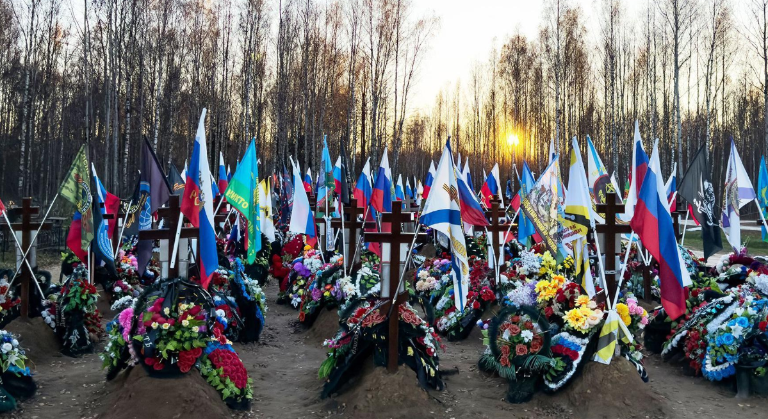
Russia’s secret military losses: a leaked document exposes staggering figures
The human toll of the war in Ukraine has taken an unprecedented turn with leaked data claiming to reveal over 412,000 Russian military deaths since February 2022. Claimed as stolen from Rosstat, Russia’s federal statistics agency, these documents—including death certificates—paint a stark contrast to Moscow’s officially acknowledged losses. The revelation forces a reckoning with the war’s true human impact on Russian society and its lingering economic consequences.
From cyber espionage to public reckoning: how the leak unfolded
In a daring cyber operation, hacker groups Silent Crow and Cyberpartisans—based in Belarus—allegedly infiltrated Rosstat’s systems and extracted sensitive administrative records. Among the files made public were military death certificates, purportedly accounting for the staggering loss of life incurred throughout the conflict. While Rosstat confirmed a cyberattack, it denies the legitimacy of the leaked files, casting doubt on their authenticity and fueling ongoing skepticism.
Why these numbers matter: transparency versus state secrecy
Moscow has consistently withheld detailed military casualty reports, offering only sparse updates such as the 5,937 deaths announced in September 2022. Independent investigations and Western intelligence estimates have long suggested far higher fatalities, raising critical questions about the Kremlin’s commitment to accountability. If verified, the leaked documents could expose not just battlefield deaths but also soldiers who succumbed to injuries, went missing, or died under disputed circumstances—categories that blur the line between combat-related and other losses.
Economic and demographic ripple effects across Russia
The impact of such massive military losses extends far beyond the battlefield. With primarily working-age men killed, wounded, or mobilized, regions like Siberia and the Russian Far East face acute labor shortages, threatening local economies and public services. The demographic strain compounds existing challenges including rural depopulation and brain drain, further undermining Russia’s long-term stability.
For families, the tragedy is personal and enduring. Families endure grief without closure, while many receive no official acknowledgment of their loved ones’ fate. The absence of recognition deepens social wounds, turning private loss into public grievance and fueling discontent in communities already bearing the weight of war.
The Kremlin’s dilemma: silence as a double-edged strategy
The Russian government has leveraged opacity as a tool to manage public perception, but silence comes at a cost. By concealing the human scale of the conflict, authorities risk eroding trust and igniting broader dissatisfaction. The leaked data, regardless of its origin, challenges the state narrative and forces a confrontation with realities that can no longer be ignored.
Can the numbers be trusted? The path to verification
Until officially authenticated, the authenticity of the leaked documents remains in question. The data could reflect selective extraction, inconsistent methodology, or even deliberate manipulation. Independent verification—whether through journalistic investigation, forensic analysis, or corroboration with multiple sources—is essential before the figures can be accepted as definitive. What is certain is that the war has exacted a devastating human price, and the true scale of Russia’s losses continues to haunt the nation’s future.
The unspoken truth behind the numbers
Behind every statistic lies a human story—families shattered, communities diminished, and a nation grappling with the long shadow of war. While political ambitions and military strategies dominate headlines, it is the lives lost, the families left behind, and the silent toll on Russian society that may ultimately define the legacy of this conflict.