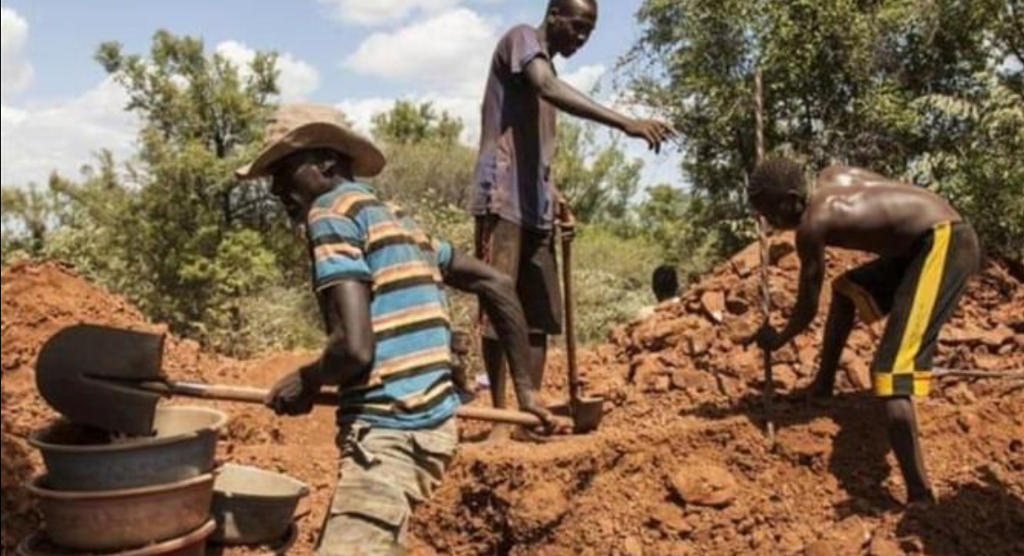
Thousands of Burkinabè gold miners who fled to Guinea to escape violence and economic hardship now face an even grimmer reality: being forcibly returned to a homeland still mired in insecurity and economic crisis. The expulsion from Guinean mining sites has not only stripped them of their livelihoods but threatens to deepen social and economic instability in Burkina Faso.
Leaving crisis behind: the false hope of a new start in Guinea
For many, migration to Guinea was not a choice but a necessity. Years of jihadist violence in Burkina Faso have displaced hundreds of thousands, destroyed villages, and crippled local economies. The promise of gold-rich regions like Siguiri drew Burkinabè miners seeking survival. Despite harsh conditions and low pay, these informal gold diggers found a way to support their families—some even sending remittances back home.
But their fragile stability in Guinea has now vanished. Guinean authorities have launched expulsions of foreign artisanal miners, branding them as illegal operators. While Guinea enforces its mining laws, the humanitarian impact on Burkinabè families has been devastating. Stripped of their income and once again uprooted, these miners now face an uncertain return to a country they had tried to escape.
No safe harbor: the dangers of returning to instability
The Burkinabè government’s struggle to protect its citizens stretches beyond its borders. Many expelled miners come from villages still under terrorist threat. Their homes may be destroyed, farmland inaccessible, and local economies shattered. Even those who reach safer areas face compounded challenges in overcrowded displacement camps and towns struggling under the weight of new arrivals.
Food, shelter, and jobs are scarce. With little savings left after Guinea, the risk of slipping into deeper poverty is real. The longer they remain without support, the greater the chance they become dependent on aid—or worse, targets for recruitment by armed groups exploiting desperation.
The shadow of radicalization: poverty as a recruitment tool
Armed groups in the Sahel have long exploited poverty and frustration. A young man with no income, no future, and no means to rebuild his life becomes vulnerable to false promises of protection, money, and belonging. While not all will join such groups, the potential for recruitment rises sharply when hope disappears and frustration sets in.
This is a delicate balance: while the state cannot condone violence, it must also prevent conditions that make violence an appealing alternative. Reversing this spiral requires more than rhetoric; it demands urgent action.
A second chance: reintegration as a path forward
Burkina Faso cannot afford to treat these returnees as an afterthought. A comprehensive reintegration program is needed—one that identifies vulnerable individuals, assesses their security risks, and provides targeted support. Cash assistance, temporary food aid, vocational training, and access to micro-loans could help restore dignity and independence.
Local governments and NGOs must play a central role. Communities hosting displaced people require resources too. Without coordinated support, the return of these miners doesn’t ease pressure—it amplifies it, risking social unrest and deeper economic fragility.
The government must also continue diplomatic efforts with Guinea. Bilateral talks on migration and mining regulations should prioritize human rights, dignity, and fair treatment. The expulsions are one country’s policy, but the consequences ripple across borders.
Beyond repatriation: restoring dignity in a time of crisis
The core question is not whether these men will return—it’s whether Burkina Faso can offer them a future worth staying for. For too long, they have been displaced, exploited, and forgotten. Their expulsion from Guinea should not mark the beginning of another cycle of despair. Instead, it must ignite a commitment to inclusion, resilience, and reconstruction.
These Burkinabè miners didn’t leave their country by choice. They didn’t deserve to be expelled. They deserve the chance to rebuild—not as refugees of a forgotten crisis, but as contributors to a nation learning to heal.