
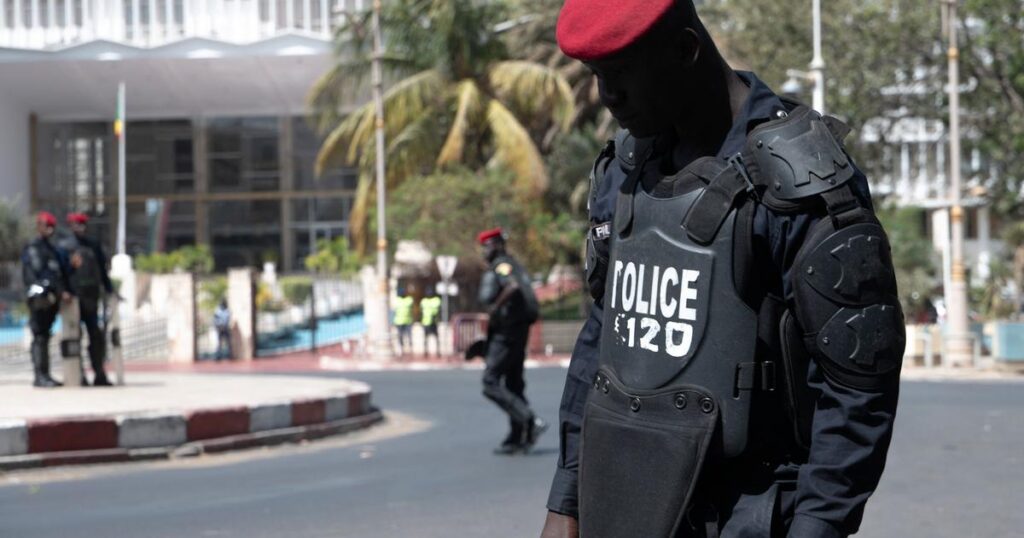
It was just past 10 p.m. when Amadou Bangoura’s evening routine took a troubling turn. The 30-year-old Beninese student, who had spent the last five years in Dakar, was walking home from his gym in the Liberté 6 district. The streets were nearly empty, shops had closed, and only the occasional vehicle headlights cut through the darkness. Then, without warning, a police patrol ordered him to stop. Two officers stepped out of their vehicle and demanded his papers.
“I still remember that night vividly,” Bangoura recalls. “I had done nothing wrong, yet I found myself staring at the possibility of being detained for no clear reason.”
a sweeping crackdown on foreigners
Between June 30 and July 8, authorities conducted 490 identity checks targeting primarily West African nationals in and around the capital. The operation, led by the Direction de la police des étrangers et des titres de voyage, resulted in the referral of 36 individuals to prosecutors for irregular stay. While officials framed the initiative as a measure to “enhance public safety,” the sweeping nature of the campaign has left many questioning its true motives.
arbitrary demands and prolonged detentions
Civil society leaders warn that the crackdown reflects a dangerous shift toward systemic suspicion of foreigners. In a July 13 statement, they condemned “disproportionate administrative demands” and “unjustified prolonged detentions.” For Bangoura, the experience shattered his trust in Senegal’s famed Teranga—the Wolof word for hospitality that has long defined the country’s welcoming spirit.
“What unsettles people isn’t just the existence of migration policies, but the normalization of a climate where foreigners are constantly viewed with suspicion,” noted one activist who requested anonymity.
rising online hostility
The tensions extend beyond police stations. Social media platforms, particularly TikTok, have become hotbeds for xenophobic rhetoric targeting specific communities. Guinean nationals, who make up over 40% of Senegal’s foreign resident population, have been repeatedly accused of “stealing jobs” from locals—a narrative echoing recent anti-immigrant movements in South Africa.
These developments unfold as Senegal assumes the presidency of the Economic Community of West African States (ECOWAS), raising questions about the country’s commitment to regional solidarity and human rights.
More Stories
Rising tensions over foreigner checks in Senegal
Burkina Faso’s Ibrahim Traoré accused of running a digital militia targeting journalists
Gabon-France relations enter a new phase after pivotal state visit