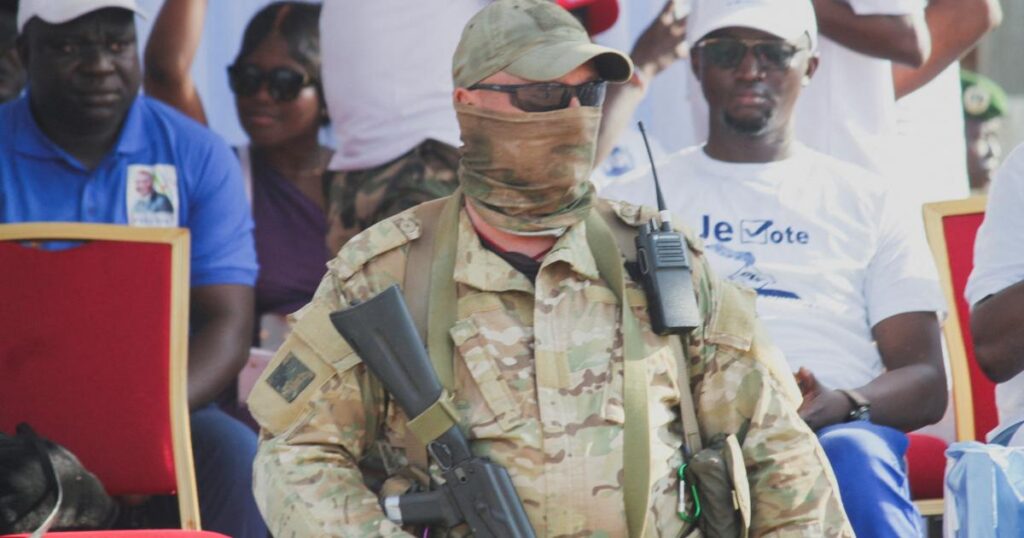
The Russian paramilitary group Wagner has transformed the Central African Republic into a “drug empire”, with tramadol trafficking fueling its resurgence. According to The Wall Street Journal, this opioid rebranded as a cheap stimulant—dubbed the “poor man’s cocaine”—has given the group a new lease on life in a region where Western scrutiny is minimal.
Originally a painkiller prescribed for mild conditions, tramadol in Central Africa is repackaged and concentrated to create a highly potent opioid. Wagner’s involvement stretches beyond smuggling; it controls its distribution across the country, from bustling markets to remote mining sites, where it is reportedly supplied to gold miners, elite presidential guards, and pro-Russia militias like the “Sharks”. These groups use the drug to enhance combat performance during operations, including counter-insurgency missions.
Since 2018, Wagner has maintained a strong foothold in the Central African Republic, now led by Evgueni Prigojine’s son, Pavel, despite the group’s decline in other African nations. While Africa Corps, Russia’s state-backed alternative, has taken over Wagner’s operations in countries like Mali, Wagner’s influence persists in Bangui. The country’s mineral wealth—gold, diamonds, uranium—and dense forests make it an ideal hub for illicit activities, including drug and mineral trafficking.
Wagner’s control over gold mines alone reportedly generates $180 million in annual profits, according to the Global Initiative. These operations, combined with its grip on state institutions, have turned the Central African Republic into a strategic stronghold for the group. Tramadol, smuggled from the Democratic Republic of Congo via river routes, is distributed not only locally but also to neighboring countries at inflated prices.
Expansion into neighboring conflict zones
Experts warn that Wagner’s tramadol network could extend into Sudan, facilitated by the Rapid Support Forces (RSF), whose operations increasingly overlap with Central African Republic’s borders. The group’s ability to adapt and exploit weak governance structures underscores its enduring presence in Africa’s volatile regions.