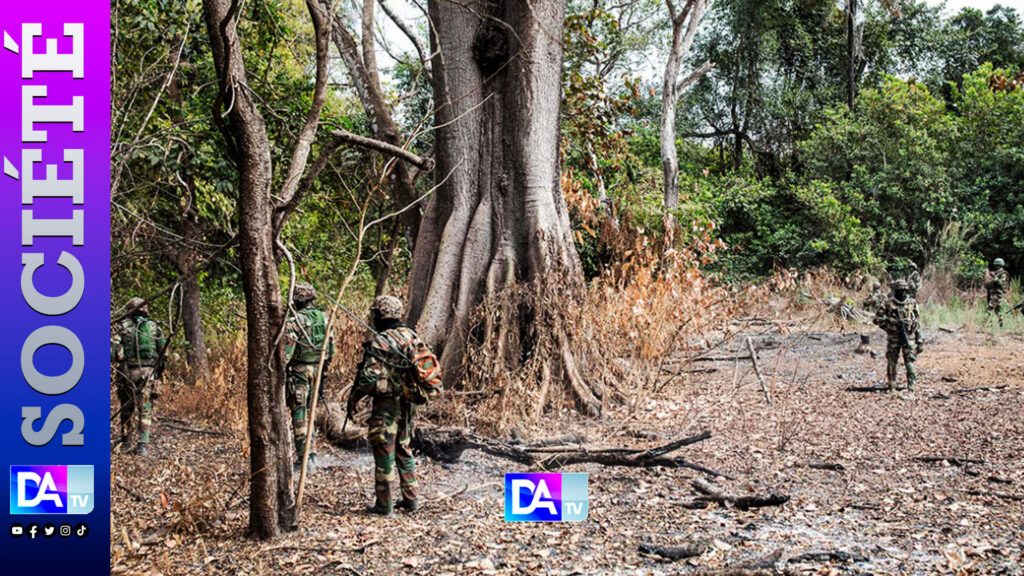
In early May, Senegalese soldiers and gendarmes, supported by drug-sniffing dogs, dismantled cannabis plantations in Casamance, southern Senegal. This latest operation marks another chapter in one of Africa’s longest-running conflicts, which has simmered for over four decades despite the decline of the separatist rebellion that once defined it.
The military action targeted areas near the Gambian border where the Movement of Democratic Forces of Casamance (MFDC) has operated since December 1982, seeking independence for the region separated from the rest of Senegal by the Gambia. Authorities reported seizing six tonnes of cannabis, multiple weapons, and making 14 arrests during the operation, described as proceeding “without major difficulties” by Colonel Cheikh Guèye, regional military commander in Ziguinchor.
The MFDC, once a formidable force, now faces severe challenges. “The rebellion is critically weakened,” noted a security analyst familiar with the dossier. “Recruitment has halted, fighters are aging, and internal divisions have splintered both political and military factions.” Logistical shortages, particularly in arms and ammunition, have further crippled its operations, especially since neighboring Guinea-Bissau and Gambia have increased cooperation with Dakar to curb rebel activities.
Local communities, once a key support base for the MFDC, have grown disillusioned. “The rebellion’s prolonged struggle has eroded its political and emotional appeal,” explained a Casamance civil society leader. “People now prioritize peace over decades of conflict.” The rise of political leaders from Casamance, including Prime Minister Ousmane Sonko, has also contributed to easing tensions, as residents feel more represented in national governance.
The conflict’s fading momentum was underscored by Sonko’s March statement in Ziguinchor, where he highlighted that the MFDC had not controlled a single village in over 40 years. His remarks followed a deadly explosion during anti-drug operations that killed three soldiers and injured three others on March 17, with another fatality and six injuries reported just days earlier. In November 2025, a soldier held captive for seven months by armed groups was finally released.
Cannabis as the rebellion’s lifeline The MFDC’s survival hinges on the cannabis trade, which funds its dwindling operations. “Cannabis cultivation provides armed groups with critical revenue,” Colonel Guèye emphasized. “The May operation aimed to cripple their economic foundation and disrupt their war machinery.”
The North Sindian area, near the Gambia, has become a hotspot for illicit activities due to its dense forests, isolation, and lack of infrastructure. Despite fertile land and agricultural potential, poverty and poor road access force many locals into illegal trade. Some have even sought religious justification for cannabis cultivation, consulting imams on its permissibility under Islamic law.
Sonko has extended an olive branch to the MFDC while firmly stating, “We cannot tolerate even an inch of our territory being carved away.” Recent peace accords offer glimmers of hope: a faction signed a peace deal in Ziguinchor this week, and another agreement was reached in Bissau in February 2025. Yet challenges persist, with some armed elements refusing to disarm entirely.
Meanwhile, displaced communities are gradually returning home as hostilities ease and weapons are partially surrendered. “Reconciliation is underway, but the path to full pacification remains fragile,” the civil society leader cautioned. “Until all factions lay down their arms, the shadow of conflict will linger over Casamance.”
From rebellion to rackets: the shifting face of Casamance’s conflict
The erosion of separatist ideals
The MFDC’s struggle for Casamance’s independence has lost its original fervor. “What began as a political movement has devolved into survival tactics,” the analyst noted. “Most fighters now cling to the cause out of habit rather than conviction.” Economic hardship and the allure of illicit trade have overshadowed the rebellion’s founding ideals, leaving a hollowed-out shell of what it once was.
Peace efforts and persistent obstacles
While some factions have embraced peace agreements, others remain defiant. The Ziguinchor accord celebrated this week marks the third anniversary of a truce with one group, but its durability is uncertain. “Partial disarmament is progress, but incomplete by definition,” the civil society figure stressed. “The absence of a unified rebel command complicates negotiations, and splinter groups continue to operate outside formal frameworks.”
Economic despair fuels instability
The lack of development in Casamance’s rural areas exacerbates the crisis. “Without roads, markets, or jobs, vulnerable populations turn to illicit economies,” Mamadou Sadio, a former elite army officer, explained. “Cannabis is just one symptom of a broader governance failure.” Addressing root causes—infrastructure, economic opportunity, and inclusive governance—may prove essential to ending the cycle of conflict and crime.