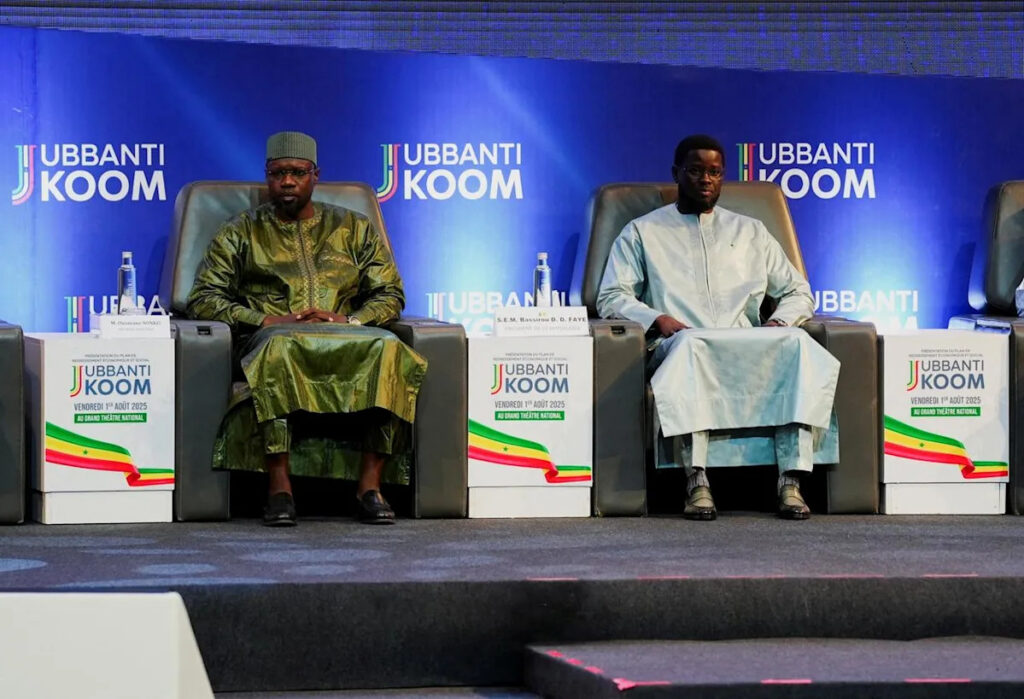
Senegal’s economic divide: Sonko vs Faye’s conflicting visions
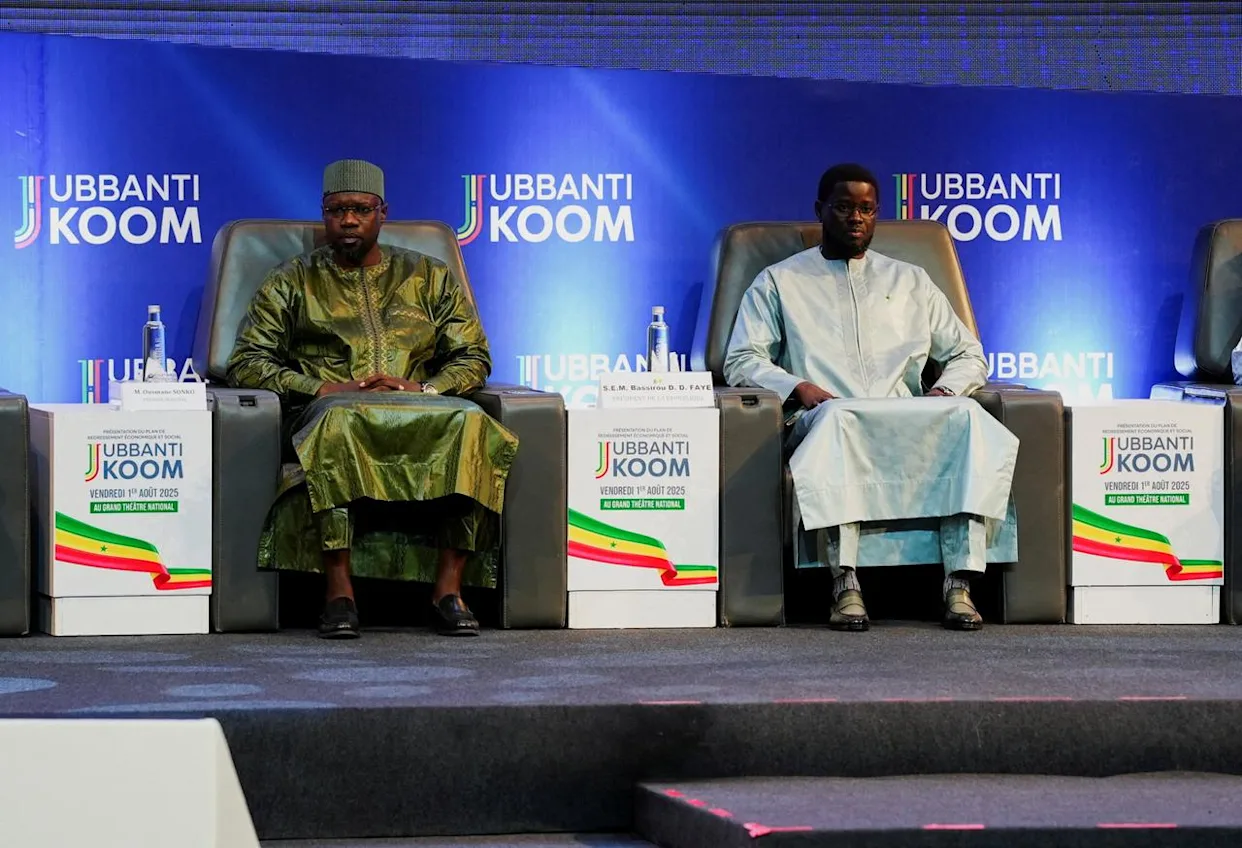
The dismissal of Ousmane Sonko by President Bassirou Diomaye Faye on May 23, 2026, marks the collapse of an uneasy alliance rather than a clash of egos. At its core lies an irreconcilable divide over Senegal’s economic future—one that has festered for over two years since Faye’s election in April 2024. The rift centers on three pivotal issues shaping the nation’s financial trajectory: debt management, hydrocarbon exploitation, and the role of foreign capital in domestic policy.
Debt: the fault line
Nowhere is the disagreement more pronounced than in how to handle Senegal’s staggering debt burden. In September 2024, Sonko exposed undisclosed liabilities inherited from the previous administration, totaling approximately €7 billion. By March 2025, an IMF assessment confirmed these findings, placing the country’s actual debt-to-GDP ratio above 100%. Annual debt servicing consumes 5.5 trillion West African CFA francs (€8.4 billion), while refinancing needs approach 6 trillion (€9.1 billion). Credit ratings have been downgraded three times within a year.
Two diametrically opposed approaches emerged. Sonko refused restructuring, framing his stance as a moral crusade against the former regime. His rhetoric resonated with grassroots supporters and the diaspora, reinforcing his image as an uncompromising leader. Faye, however, pursued a pragmatic course, engaging directly with IMF officials in November 2025 and launching a national dialogue in May 2026 to address fiscal sustainability.
With a suspended €1.55 billion IMF program, closed international markets, and looming sovereign default risks by 2028, Sonko’s position became economically unsustainable—despite its political utility for mobilizing the PASTEF [African Patriots of Senegal for Work, Ethics, and Fraternity, Sonko’s party] base.