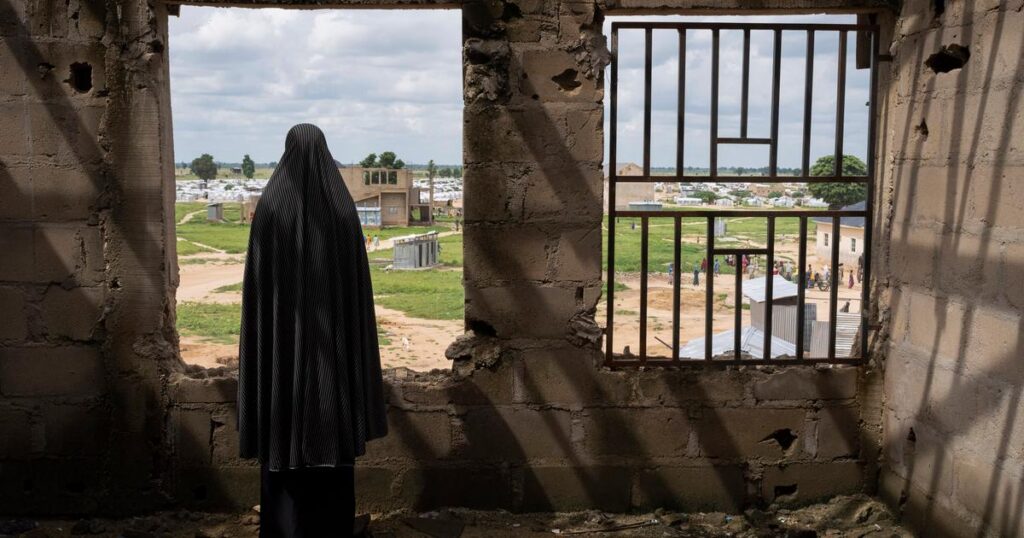
Three names echo through time—Aisha, Juliana, Hauwa—each carrying a story of suffering, resilience, and survival. In a The Republic exposé titled “surviving boko haram”, the untold narratives of these women are finally brought to light, revealing the human cost behind the headlines of mass abductions by the extremist group in northeastern Nigeria.
On a quiet Saturday evening in April 2014, Aisha was preparing a hearty stew—“her children’s favorite meal”—when armed insurgents stormed her village of Gamboru Ngala in Borno State. There was no time to flee. Her brother was killed before her eyes. Aisha, like many women in her village, was seized and taken to a makeshift camp, then forced into a tent. “A tall, bearded man entered and declared himself the commander of Boko Haram,” she recalls. “He told me I would become his wife. Every night, they dragged me from the room and raped me,” she recounts with quiet resolve.
forced marriages and lifelong scars
After two years of captivity—marked by multiple forced marriages, repeated rapes, and three pregnancies—Aisha managed to escape during a Nigerian military operation. Yet, freedom did not erase her trauma. She returned home shattered, stigmatized as “a woman of Boko Haram,” a label that clung to her like a shadow.
Juliana’s ordeal began at 15, when she and her mother were abducted in Adamawa State. Her dream of finishing high school and studying computer engineering was shattered overnight. Two years into captivity, she escaped with the unlikely help of an elderly woman who sympathized with her plight. “Before my kidnapping, I dreamed of building my future through education,” she says, her voice trembling. “Now, I live with the memory of those left behind in the forest.”
a decade of captivity and the weight of stigma
Hauwa endured the longest captivity—ten years—during which she was married off three times and bore four children. Upon returning home, she felt “soiled” and “branded” by her ordeal. Her children, too, were shunned, treated as outcasts and denied the simple joy of playing with others. “People call me a Boko Haram wife. My children are called bastards,” she shares, her pain palpable.
The report also shines a light on the harsh reality of reintegration. Many survivors, despite escaping the clutches of Boko Haram, face rejection from their own communities. Initiatives aimed at reintegration seek to address this gap, offering support to women rebuilding their lives after unspeakable violence.
Beyond personal healing, the piece examines how transitional justice can play a role in addressing the impunity surrounding gender-based violence in conflict zones. It underscores the urgent need for systems that not only punish perpetrators but also restore dignity and justice to survivors.
“People celebrate my freedom, but part of me remains trapped in those forests,” Juliana confesses. “I am haunted by the women still suffering in silence.”