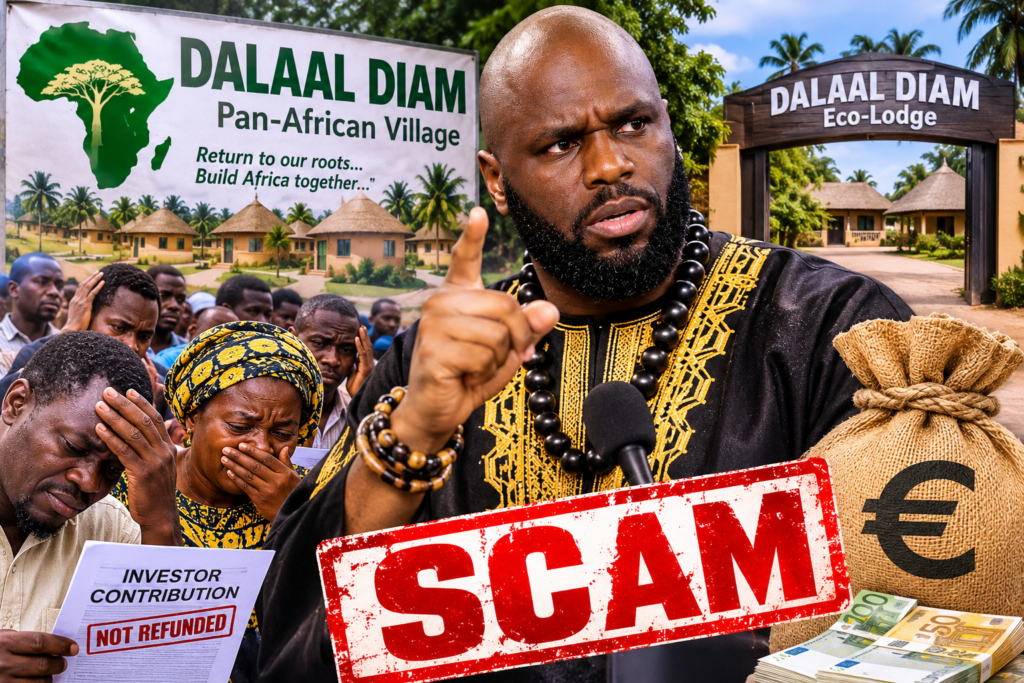
In 2011, Kémi Séba born Stellio Capo Chichi unveiled an ambitious initiative known as Dalaal Diam, presented as a cornerstone of panafrican development in Senegal. The venture, backed by the organization Afrikan Mosaïque, promised to foster economic autonomy, cultural revival, and a tangible return to African roots for Afro-descendants worldwide. Yet, what began as a hopeful movement would soon unravel into a financial quagmire, leaving early investors in limbo and the project’s original aspirations unmet.
The Collapse of a Panafrican Vision: From High Ambitions to Unpaid Expectations
At its core, Dalaal Diam aimed to materialize the ideals of Marcus Garvey by establishing a self-sustaining panafrican village in Senegal. The project boasted an allocated 8-hectare site and a projected budget of 360,000 euros, positioning itself as a transformative force in the continent’s economic and social landscape. Investors were led to believe their contributions would translate into a thriving community, a testament to Africa’s ability to reclaim its human and financial capital.
However, by 2012 and 2013, the initiative’s shortcomings became glaringly apparent. Failing to meet its initial benchmarks, the project underwent a drastic pivot, abandoning its foundational goals in favor of an ecolodge model. Investors, now left with little clarity, watched as the grand vision devolved into a far more modest and unprofitable enterprise.
Unpaid Investors: The Human Cost of Broken Promises
The most devastating consequence of Dalaal Diam’s missteps has been borne by its early backers. Despite the project’s retreat from its original mission, many contributors motivated by the promise of panafrican solidarity have yet to receive reimbursement for their investments. Years later, these individuals continue to await financial restitution, their trust in collective African initiatives severely eroded.
The irony is stark: a venture that once invoked the panafrican dream now symbolizes the fragility of such aspirations when mismanagement and lack of accountability prevail. As one investor lamented, “We were sold a vision, not a business plan. How can we reconcile the rhetoric of African unity with the reality of unreturned funds?”
The Lingering Question: Where Did the Money Go?
Beyond the unmet financial obligations, Dalaal Diam’s saga raises critical questions about resource allocation and transparency. Who managed the collected funds? Were they diverted, misallocated, or simply mismanaged? The absence of clear answers has only deepened the mistrust among stakeholders who placed their faith and savings in the project.
Moreover, Kémi Séba’s continued use of the project’s name in his public statements adds another layer of controversy. Once a rallying cry for panafrican ideals, “Dalaal Diam” (which translates to “Peace Be Upon You” in Wolof) now rings hollow in the ears of those who funded but never benefited from its promises.
Panafricanism’s Test: Responsibility Beyond Rhetoric
The Dalaal Diam debacle underscores a fundamental truth: panafricanism cannot thrive on rhetoric alone. For the movement to command legitimacy, it must be grounded in transparency, integrity, and accountability principles that appear glaringly absent in this instance.
As the original contributors continue to seek closure, Dalaal Diam serves as a cautionary tale. It highlights the real-world consequences when lofty ideals are not met with equally sturdy ethical and financial frameworks. For a continent striving to reclaim its economic sovereignty, such failures are not just financial they are existential.
By Emmanuel Mbarga — Journalist