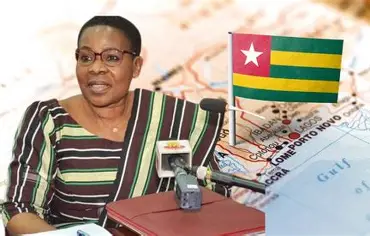
In Togo, the case of Marguerite Gnakadé has emerged as a stark illustration of the political pressures shaping the nation’s landscape. Once a prominent figure within the governing establishment, she served as Minister of Defense from 2020 to 2022—the first woman to hold the position—and has since spent 277 days in detention following her vocal opposition to Faure Gnassingbé’s leadership and her calls for a peaceful political transition.
Gnakadé, who is connected to the Gnassingbé family through marriage, had increasingly criticized the administration’s policies. She argued that the prolonged tenure of Faure Gnassingbé failed to address the aspirations of the Togolese people and advocated for systemic change through constitutional means. Her arrest on September 17, 2025, followed a raid on her residence in Lomé, where security forces took her into custody. Authorities have accused her of undermining state security and inciting rebellion.
The detention of a former government insider has amplified concerns among opposition figures and civil society. Many view her case as emblematic of a broader pattern where dissenting voices—regardless of their past affiliation with the regime—face severe consequences. Human rights organizations and activists have long condemned the erosion of public freedoms and the systematic suppression of political opponents in Togo.
Gnakadé’s situation carries particular weight given her insider status. Having contributed to state affairs for years, her shift from ally to critic has been interpreted by analysts as a signal that no dissent, even from within the ruling circle, will be tolerated. Observers note that the sluggish progression of her judicial proceedings and reports of deteriorating health among her family members further underscore the gravity of her predicament.
As she approaches the ten-month mark in detention, pressing questions persist: Why does a figure advocating for alternative governance remain incarcerated for such an extended period? To what extent can political dissent be expressed in Togo without severe repercussions? And, fundamentally, how inclusive is the country’s political space when the same family has maintained power for nearly six decades—first under Gnassingbé Eyadéma, then under his son, Faure Gnassingbé?
For her supporters, Gnakadé’s prolonged detention serves as a critical test for Togo’s adherence to the rule of law. It also highlights the challenges faced by those who dare to challenge the status quo in a system where political alternatives are systematically marginalized.