
United Nations raises alarm over escalating terror threat
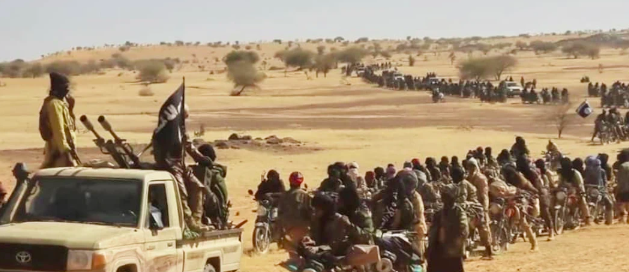
The United Nations has issued a stark warning about the rising influence of the Islamic State (ISIS) in the Sahel region and around the Lake Chad basin, describing the situation as a persistent and evolving security threat despite international counterterrorism efforts.
In a report submitted to the UN Security Council, Secretary-General António Guterres underscored that while the central leadership of ISIS has weakened, its regional affiliates are gaining unprecedented autonomy, adapting to local contexts and exploiting vulnerabilities in governance, prolonged conflicts, and economic instability.
The Sahel and Lake Chad: New epicenters of terror
The report, presented by Oguljeren Niyazberdiyeva from the United Nations Office of Counter-Terrorism (UNOCT), identifies the Sahel and the Lake Chad basin as the primary zones where ISIS’s influence is expanding most rapidly. These regions have become critical strongholds for the group, which originated as the Islamic State in Iraq and the Levant (ISIL).
The Islamic State’s West Africa Province (ISWAP), one of its most active branches globally, continues to demonstrate military resilience, increasingly deploying commercial drones to enhance surveillance and strike capabilities. Meanwhile, affiliated groups in the Democratic Republic of the Congo (DRC) and Mozambique persist in their offensives despite sustained pressure from national and regional forces.
Decentralized operations and technological adaptation
The UN’s assessment reveals a strategic shift within ISIS’s operational model. The group has transformed from a centralized command structure into a decentralized network of regional affiliates, linked by a shared ideology but operating with greater operational independence. This evolution enables ISIS to survive military campaigns and sustain its activities despite significant losses.
Oguljeren Niyazberdiyeva emphasized that the group’s survival strategy hinges on its ability to exploit local fragilities and integrate new technologies. The report highlights ISIS’s growing use of artificial intelligence, encrypted communications, digital platforms, and unmanned aerial vehicles to refine its propaganda, recruitment, financing, and attack planning.
Call for strengthened global cooperation
The UN has called for urgent international collaboration to counter this evolving threat. The report stresses the need for closer engagement with technology companies and private sector stakeholders to regulate the use of emerging tools and prevent their misuse by terrorist organizations. While these technologies pose significant risks, the UN acknowledges their potential as powerful instruments for terrorism prevention when deployed responsibly and in compliance with international law.
The findings underscore a critical reality: the fight against ISIS is far from over. The group’s adaptability and reliance on advanced technologies demand a proactive and coordinated global response to safeguard international peace and security.


More Stories
Niger: Tiani faces fallout from special forces anger after Russian intervention
Crisis in Niger, IMF agreement in Sénégal, and Moroccan elections: Five essential stories
RDC-Israël : un rapprochement aux enjeux multiples