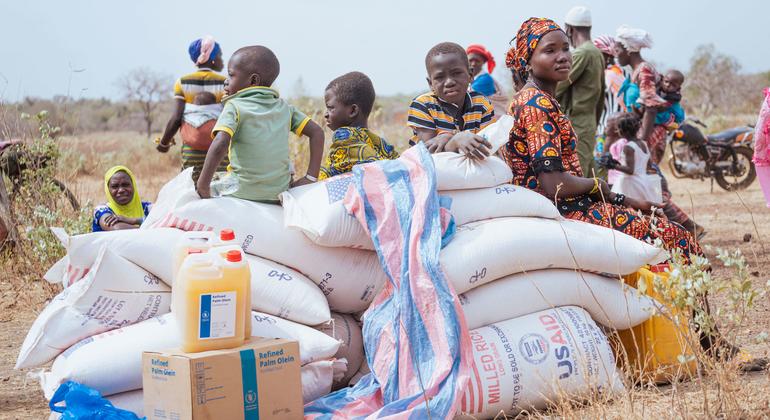
The United Nations High Commissioner for Refugees (UNHCR) has issued a critical appeal for international support to address the escalating Sahel crisis. With nearly 4 million displaced persons across Burkina Faso, Mali, Niger, and neighboring countries, the situation has worsened by two-thirds over the past five years. This surge is driven by rising insecurity, limited access to essential services, and the devastating impacts of climate change.
Most displaced individuals remain within national borders, but cross-border movements are intensifying, placing additional strain on host communities and national systems. Abdouraouf Gnon-Konde, Regional Director of UNHCR for West and Central Africa, highlighted this during a press briefing, stating, “The humanitarian needs in the Sahel have surged, while funding has plummeted since 2022.”
Essential services like registration, documentation, education, healthcare, and shelter are severely underfunded. This year, UNHCR has secured less than one-third of its $409 million funding appeal. Over 212,000 refugees and asylum seekers in Burkina Faso, Mali, and Niger remain unregistered, restricting their access to critical services and increasing risks of arbitrary detention and harassment.
Escalating violence and displacement drivers
The crisis is exacerbated by ongoing jihadist violence, which exposes populations to forced recruitment, movement restrictions, and arbitrary detention. Women and children make up 80% of forcibly displaced persons, with gender-based violence remaining a pervasive issue. The Inter-Agency Protection Monitoring System reports a significant rise in such incidents this year.
Education and healthcare under siege
Insecurity has forced the closure of over 900 health facilities, depriving millions of essential medical care. Additionally, 14,800 schools shut down by mid-2025 have left 3 million children without education or safe spaces, increasing their vulnerability to forced recruitment and human trafficking.
Food insecurity has also become a major driver of displacement, with its mention as a cause doubling in recent years. As Abdouraouf Gnon-Konde noted, “Climate-related shocks further strain scarce resources like land and water, intensifying competition and undermining social cohesion.”