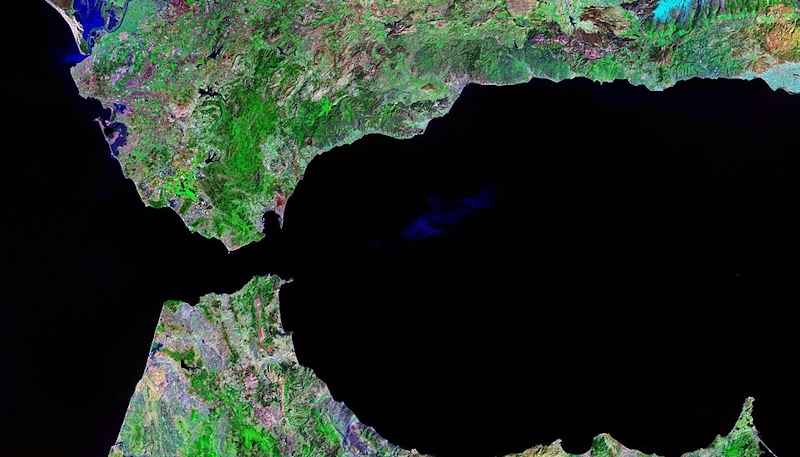
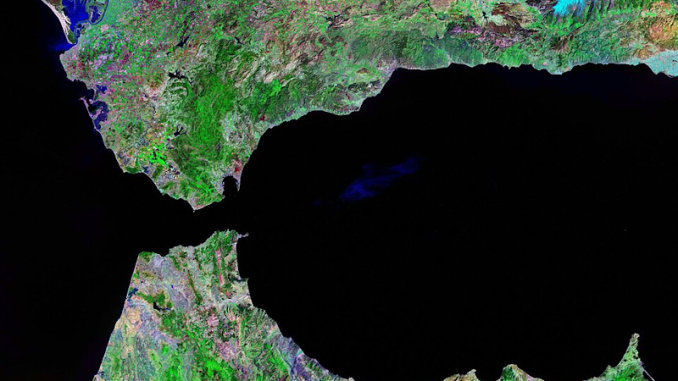
Strategic ties between Morocco and the United States are reaching new heights, with Washington’s recent positioning on key regional issues signaling a potential shift in the Western Mediterranean’s geopolitical landscape. From the Sahara Occidental dispute to the sovereignty claims over Ceuta and Melilla, the evolving dynamics between Rabat and Washington are reshaping alliances and sparking fresh tensions with Spain.
Over the past month, the United States has sent multiple signals of support to Morocco, particularly on the Sahara Occidental file, economic cooperation, regional security, and now the contested Spanish enclaves. These developments come at a time when the recent migrant surge into Ceuta has strained relations between Rabat and Madrid, with estimates suggesting up to 50,000 individuals crossed into the Spanish territory within 24 hours.
Morocco’s autonomy plan for Sahara Occidental gains momentum
In December 2020, the United States became the first major power to recognize Morocco’s sovereignty over Sahara Occidental, a move tied to the normalization of relations between Rabat and Israel. This decision marked a pivotal moment in a decades-long conflict between Morocco and the Polisario Front.
Now, Morocco is doubling down on maintaining American backing for its autonomy proposal. The recent naming of a major highway in Sahara Occidental—the “Donald J. Trump Highway”—serves as a clear political gesture, reinforcing Rabat’s strategy to secure continued U.S. support ahead of delicate international negotiations.
Analysts highlight that for Morocco, the priority remains ensuring Washington’s unwavering stance on the autonomy plan until a resolution is reached, one that aligns with Rabat’s interests.
Economic incentives strengthen Washington-Rabat partnership
Beyond political alignment, the partnership is also fueled by economic interests. In late July, the U.S. Ambassador to Morocco visited Laâyoune, the heart of Sahara Occidental, to sign an agreement for an American grant aimed at establishing a hydrogen and ammonia production unit. This project underscores the Trump administration’s focus on investments and contracts benefiting American enterprises.
The growing ties between the two nations rest on multiple pillars: political backing for Morocco’s positions, economic opportunities for U.S. companies, security cooperation, and shared strategic interests involving Israel.
Polisario Front faces scrutiny in U.S. Congress
A concerning development for supporters of the Polisario Front has emerged in Washington. Two U.S. lawmakers have proposed legislation to potentially classify the Sahrawi independence movement as a foreign terrorist organization. Additionally, they seek to investigate alleged links between the Polisario and Iran.
This initiative aligns with broader U.S. efforts to counter Iranian influence across the Middle East and North Africa. While no concrete evidence links Polisario to Iran or Hezbollah, Morocco appears to be leveraging the current anti-Iran sentiment in Washington to frame the Sahara Occidental conflict in a way that resonates with U.S. geopolitical priorities.
“Rabat consistently seeks to tie regional conflicts involving Israel to its own dispute with the Polisario,” noted a regional analyst. “The goal is to align the Sahara Occidental issue with broader U.S. strategic concerns.”
Ceuta and Melilla emerge as a new flashpoint
The most striking shift in U.S. policy concerns Ceuta and Melilla. Long considered Spanish territories by Washington, recent statements suggest a possible recalibration of the U.S. stance. Analysts argue that American officials may no longer view these enclaves as indisputably Spanish, hinting at implicit support for Morocco’s sovereignty claims.
For decades, Morocco has asserted that Ceuta and Melilla are occupied territories, while Spain maintains their status as integral parts of the national territory. If the U.S. were to formally endorse Rabat’s position, it could strain relations between Washington and Madrid, potentially altering the strategic framework of the Iberian Peninsula.
Ceuta’s migrant crisis: spontaneous or orchestrated?
The timing of these developments coincides with a dramatic migrant influx into Ceuta, where tens of thousands crossed into the Spanish enclave in a short span. The crisis triggered a massive response from Spanish security forces and raised concerns within the European Union.
While some speculate that the surge may have been facilitated by Moroccan authorities, analysts suggest the migration wave was largely spontaneous before being politically exploited by Rabat. The crisis served as a reminder to Madrid that Ceuta remains a contested issue from Rabat’s perspective.
Spain navigates shifting transatlantic dynamics
In response to these developments, Spanish Prime Minister Pedro Sánchez visited Algeria, a key regional ally of the Polisario Front, to strengthen bilateral ties, particularly in energy cooperation. While this move may raise eyebrows in Rabat, analysts suggest it does not fundamentally undermine the Spanish-Moroccan alignment on the Sahara Occidental issue.
The Ceuta crisis, however, reflects a deeper territorial dispute between Madrid and Rabat, distinct from the broader Sahara Occidental negotiations.
Potential erosion of U.S. guarantees for Spain
For Spain, the implications extend beyond its bilateral tensions with Morocco. If Washington were to adopt a more favorable stance toward Morocco’s claims on Ceuta and Melilla, it could destabilize Spain’s long-standing security alliances with the U.S. and NATO.
Analysts warn that while an immediate crisis is unlikely, the evolving U.S. position could lay the groundwork for a future political renegotiation of the enclaves’ status.
Washington, Rabat, and Madrid: a tense triangle
Behind the diplomatic maneuvers, a new power dynamic is taking shape in North Africa. Morocco is capitalizing on its partnership with the U.S. to bolster its positions on both the Sahara Occidental and the Ceuta and Melilla disputes. Washington, in turn, appears to prioritize strategic and economic interests, while Spain grapples with an increasingly unpredictable transatlantic relationship.
For Rabat, this moment presents an opportunity to solidify its diplomatic gains. For Madrid, it poses an unprecedented strategic challenge. The convergence of the Sahara Occidental and Ceuta issues into a single diplomatic battleground highlights the shifting alliances in the Western Mediterranean.


More Stories
Burkina Faso’s shrinking public payroll: a household burden as schools reopen
Simporé’s televised admission: can Burkina Faso’s army still hold the line?
Gabon’s ghost worker purge: can 11 billion CFA francs in savings really reach the people?