Published today at 7:00 PM Reading time: 3 minutes.
File generated on
Grâce Kutino’s decisive voice in the constitutional debate
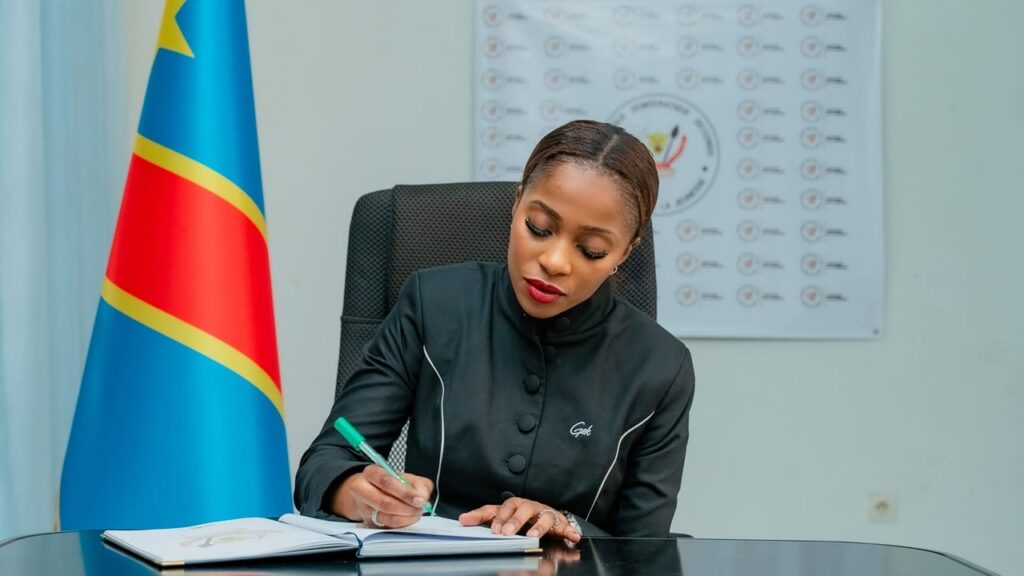
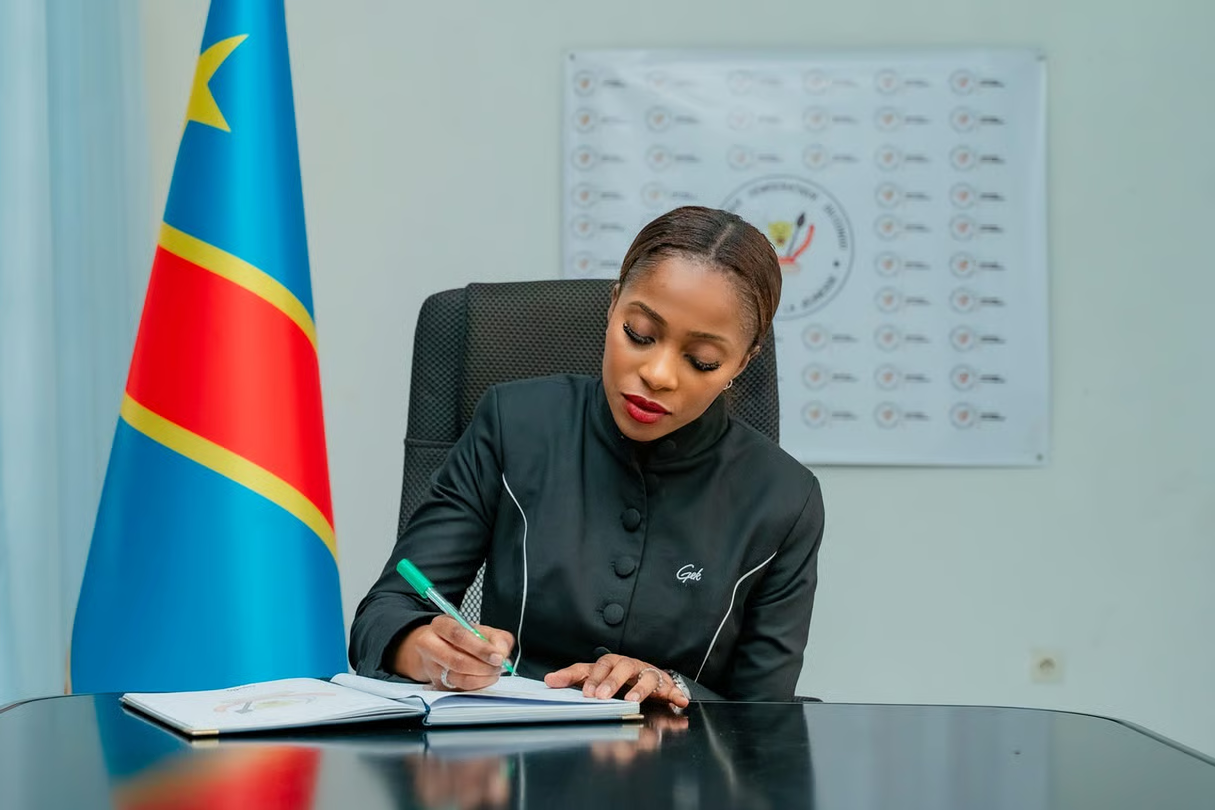
In the heart of Kinshasa, Minister Grâce Kutino has emerged as a central figure in the ongoing constitutional debate. Her recent statements, delivered with unwavering conviction, have sparked intense discussions across political circles and beyond. The phrase “Oui, je le veux”—a clear affirmation of support—has resonated widely, raising questions about the government’s official stance on proposed changes.
What the minister’s words really mean
The minister’s declaration was not merely rhetorical. It reflected a carefully considered position, aligning with broader governmental objectives. Analysts suggest that her remarks were intended to reassure both domestic and international stakeholders about the government’s commitment to constitutional reform. The timing of her statement, coming at a critical juncture in the debate, underscores its strategic importance.
Grâce Kutino, as Minister of Youth and Patriotic Awakening, holds a portfolio that bridges generational and ideological divides. Her influence extends beyond administrative duties, positioning her as a key interlocutor in national discussions. Observers note that her words carry weight, often shaping public perception and political narratives.
Reactions from political circles
The minister’s stance has elicited varied responses. While some political factions have welcomed her clarity, others remain skeptical, questioning the motives behind her intervention. Opposition leaders argue that the timing and framing of her remarks suggest an attempt to sway public opinion in favor of the government’s agenda. Meanwhile, supporters praise her courage in taking a definitive position at a pivotal moment.
The debate itself is multifaceted, touching on issues of governance, democracy, and national identity. Constitutional reforms are never simple, and the stakes are particularly high in the Democratic Republic of Congo. The minister’s involvement adds a layer of complexity, as her portfolio intersects with themes of youth engagement and civic responsibility.
Why this debate matters for the DRC
The constitutional debate in the DRC is more than a legal exercise—it is a reflection of the nation’s evolving priorities. Proposed amendments could redefine the balance of power, alter electoral processes, and reshape the relationship between citizens and institutions. In this context, the minister’s voice carries significant weight, as it may influence the trajectory of these reforms.
For the youth, whose future is directly tied to the outcomes of this debate, the minister’s stance is especially consequential. Her portfolio places her at the forefront of efforts to engage young citizens in the political process, making her position all the more relevant. The government’s approach to constitutional reform will inevitably shape the political landscape for years to come, and Grâce Kutino’s role in this process cannot be overstated.
The road ahead
As the debate unfolds, all eyes are on Minister Grâce Kutino. Her ability to articulate a coherent vision for constitutional reform—and to garner support for it—will be closely scrutinized. The government’s next moves, influenced by her advocacy, could determine the pace and direction of the reforms.
Whether her words were a deliberate signal to the government’s intentions or a personal stance remains open to interpretation. What is clear, however, is that her intervention has injected fresh energy into the debate, compelling stakeholders to re-examine their positions and strategies.
The coming weeks will reveal the true impact of her statements. One thing is certain: in a nation where constitutional changes can reshape the very fabric of society, every voice—especially those in positions of influence—matters.

More Stories
Senegal’s parliament: What power does Ousmane Sonko hold to derail the 2026 budget?
Senegal’s December 2 dilemma: can Diomaye Faye’s gamble reshape the nation’s future?
Senegal’s 2026 budget vote: can the Pastef majority survive the FMI dilemma?