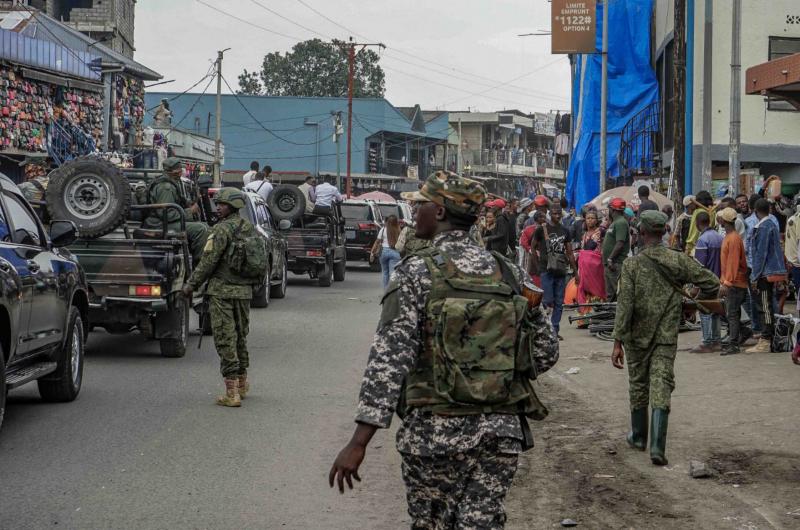
The United States has imposed targeted sanctions on high-ranking commanders of two armed groups operating in the eastern Democratic Republic of the Congo (DRC) since 2021. The move follows a growing pattern of violence and destabilization in the region, prompting Washington to take decisive action.
Who are the sanctioned commanders?
The U.S. Department of State identified Gustave Kubwayo, a senior intelligence and special operations leader within the Forces Démocratiques de Libération du Rwanda (FDLR). According to Washington, Kubwayo has been directly implicated in ethnic violence against civilians, the recruitment of child soldiers, sexual violence, and cross-border attacks that threaten Rwanda’s stability. His actions are said to have contributed to the ongoing humanitarian crisis in eastern DRC.
The sanctions also target John Imani Nzenze, the head of intelligence for the Mouvement du 23 Mars (M23)—a group widely accused of receiving support from neighboring Rwanda. Nzenze is accused of orchestrating killings, severe human rights violations, and deliberate attacks on civilians in eastern DRC, further exacerbating the conflict’s brutality.
Why are these sanctions being imposed now?
U.S. officials emphasized that these measures are part of a broader strategy to enforce peace and accountability in the Great Lakes region. The sanctions come amid renewed diplomatic efforts, including the Washington Accords of December 4, 2025, and the Doha Framework, both aimed at curbing armed group activities and restoring regional stability.
The Trump administration has signaled its unwavering commitment to ensuring all parties adhere to these agreements. In a statement, U.S. leadership warned that Washington will continue using all available tools to promote lasting peace and security in the region, signaling a firm stance against impunity for war crimes and destabilizing actions.
Impact on regional stability
The sanctions underscore growing international concern over the escalating conflict in eastern DRC, where armed groups have repeatedly targeted civilians, displaced thousands, and fueled ethnic tensions. By targeting key figures in the FDLR and M23, the U.S. aims to disrupt their operations and send a clear message against human rights abuses and cross-border aggression.
The move reflects broader geopolitical tensions in the Great Lakes, where Rwanda’s alleged support for the M23 has long been a point of contention. Washington’s actions may intensify diplomatic pressure on Kigali while reinforcing its own role as a key mediator in the crisis.